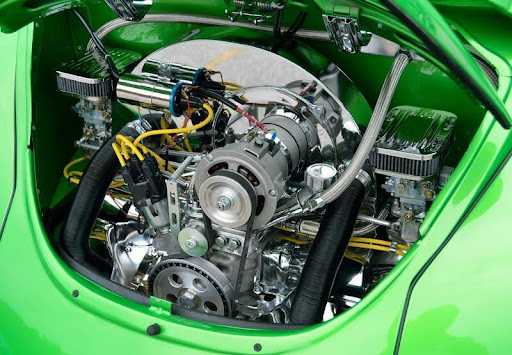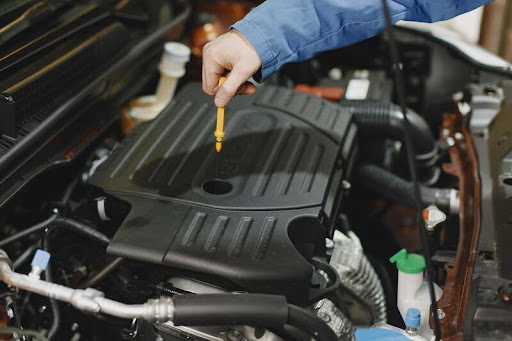
Regularly checking your engine oil is one of the easiest ways to keep your car running smoothly.
Keeping up with car maintenance doesn’t have to be complicated. One of the easiest and most important things you can do for your vehicle’s health is to stay on top of its fluids. Think of fluids as your car’s lifeblood, they keep everything running smoothly, safely, and efficiently.
But here’s the thing: most people don’t really know what all these fluids are for, how often they should check them, or when it’s time to change them out. So let’s break it down in simple, no-fuss terms.
What does engine oil do, and how often should you change it?
Engine oil lubricates the moving parts of your engine so they don’t grind against each other. It also helps keep the engine clean and cool. Without it? Things can get ugly fast.
How to check it:
- Pop the hood.
- Pull out the dipstick (usually a brightly colored handle).
- Wipe it, reinsert it, then pull it again to check the level and color.
When to replace it: Most newer cars can go between 5,000 to 7,500 miles between oil changes. Some even stretch to 10,000 with synthetic oil. But always check your owner’s manual; that’s your best guide.
Watch for: Dark, gritty oil, low levels, or dashboard warnings.
Why is transmission fluid important?
Transmission fluid keeps your transmission, automatic or manual, cool and well-lubricated. It helps your car shift gears smoothly. Skipping this one could lead to expensive repairs.
How to check it:
- Some cars have a transmission dipstick, but others are sealed (you’ll need a mechanic).
- If you can check it, the fluid should be reddish and almost sweet-smelling.
When to replace it: Typically every 30,000 to 60,000 miles. Again, the manual knows best.
Red flags: Sluggish shifting, strange noises, or a burnt smell.
What does coolant (antifreeze) do in your car?
Coolant regulates engine temperature. It keeps things from overheating in summer and freezing in winter.
How to check it:
- Wait until the engine is cool.
- Look at the coolant reservoir under the hood, it’s usually labeled.
- The level should be between the “min” and “max” lines.
When to replace it: Most vehicles need a coolant flush every 50,000 to 100,000 miles.
Warning signs: Engine running hot, sweet smell, or colored puddles under the car.
How often should you replace brake fluid?
Brake fluid is crucial for your braking system to work properly. It transfers the pressure from your foot on the pedal to the brake pads.
How to check it:
- Find the brake fluid reservoir (usually near the back of the engine bay).
What about transfer case fluid in 4WD or AWD vehicles?
Transfer case fluid keeps the gears in your four-wheel or all-wheel drive system cool and functioning properly.
How to check it:
- Like differential fluid, this usually needs a shop visit.
When to replace it: Generally, every 30,000 to 60,000 miles.
Heads-up signs: Strange grinding or issues shifting into 4WD.
Are fuel system additives necessary?
Not always. These are optional treatments you can add to your fuel tank to help clean the system.
Why people use them: To clean fuel injectors or improve gas mileage.
Best time to use them: Occasionally, especially if your car sits a lot or uses lower-quality fuel. But they’re not a substitute for real maintenance.
Wrapping it up: Stay ahead with simple checks
Staying on top of your car’s fluids can save you time, money, and a whole lot of headaches. Don’t wait for a warning light to come on or something to smell funny.
- Check if it’s within the recommended range and clear (not dark or dirty).
When to replace it: Every 2 years is a solid general rule.
Symptoms of trouble: Spongy brakes, delayed stopping, or warning lights.
Do you need to check the power steering fluid?
Yes, if your car uses hydraulic power steering (some newer ones use electric systems and don’t have fluid at all).
What it does: Helps you steer easily without having to fight the wheel.
How to check it:
- Find the power steering reservoir.
- Check the level and color (should be reddish or amber, not dark or foamy).
When to replace it: Usually every 50,000 to 100,000 miles, but again, manuals matter.
Signs it’s low or bad: Stiff steering, whining noises when you turn.
What’s the deal with windshield washer fluid?
This one’s simple but still important. Washer fluid helps keep your windshield clean for better visibility.
How to check it:
- Open the cap marked with a windshield icon.
- Fill it up if it looks low.
When to refill: Whenever it runs low. Check it monthly, especially in bug season or winter when grime builds up fast.
Extra tip: Use a winter blend in colder months so it doesn’t freeze.
What is differential fluid, and do you need to worry about it?
If you drive a rear-wheel drive, front-wheel drive, or all-wheel drive car, the differential fluid lubricates the gears that split torque between your wheels.
How to check it:
- This one usually requires a mechanic since it involves removing a fill plug.
When to replace it: Every 30,000 to 60,000 miles is typical.
When to be concerned: If you hear whining from the axle or feel the gear slipping.
Make checking your fluids a part of your regular routine, even if it’s just once a month.
Not sure about something? Your owner’s manual is your best friend. And if anything feels off or looks weird, don’t hesitate to swing by a mechanic you trust.
FAQs: Car Fluids
How often should I check my car fluids? Once a month is a good rule of thumb, or before any long trip.
Can I use water instead of coolant? Only in emergencies, and never long-term. Water doesn’t protect your engine the way coolant does.
Is synthetic oil better than regular oil? It lasts longer and handles extreme temperatures better, but it’s pricier. Check if your car requires it.
What happens if I overfill a fluid? Too much of a good thing can cause damage. Always stick to the recommended levels.
Do newer cars need less fluid maintenance? Some do have longer service intervals, but “less” doesn’t mean “none.” You still need to check them regularly.
About the Author