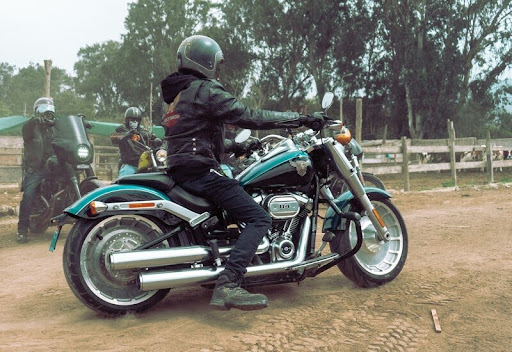
Hitting the open road—every rider’s dream starts with the right license.
Thinking about getting your motorcycle license? Whether you’re dreaming of weekend rides along scenic highways or commuting on two wheels to beat the morning traffic, there’s one thing you absolutely need to handle first: your motorcycle license. But here’s the catch: the rules aren’t the same everywhere.
That’s right. Motorcycle licensing requirements vary from state to state across the U.S., and if you’re not familiar with your state’s specific rules, you could end up with a fine or worse. So let’s break it all down in a way that’s easy to follow. No legal jargon, just real talk about what it takes to get road-legal on a motorcycle.
What’s the difference between a motorcycle license and an endorsement?
Let’s clear this up right away. A motorcycle license is exactly what it sounds like: a standalone license that allows you to operate a motorcycle. A motorcycle endorsement, on the other hand, is an add-on to your existing driver’s license that gives you motorcycle privileges.
Some states issue full-on motorcycle licenses, while others just add the endorsement to your standard Class D license. Same function, different form. Always check what your state does before heading to the DMV.
What are the basic motorcycle license requirements in most U.S. states?
While each state has its quirks, many of the basic steps are pretty consistent across the board. Here’s what you’ll likely need to do:
- Meet the minimum age requirement (usually 16, sometimes 15½ with restrictions)
- Pass a vision screening
- Take a written knowledge test about motorcycle safety and traffic laws
- Complete a skills test on a motorcycle (or take a safety course that waives the test)
- Provide the right documents, think ID, proof of residency, maybe even a Social Security number
- Pay a fee (typically between $10 and $40, depending on the state)
- Show proof of insurance once you’re licensed
Many states also offer a motorcycle learner’s permit, which comes with certain restrictions but lets you practice before taking the full test.
What is a motorcycle permit, and how does it work?
A motorcycle permit is like training wheels for your license. It lets you practice riding legally, but with limits. With a permit, you might not be allowed to:
- Ride at night
- Carry passengers
- Ride on freeways or high-speed roads
These permits are especially common for new or younger riders. Some states require you to hold the permit for a set time (like 6 months) before upgrading to a full license.
Others let you skip the permit entirely if you’re over a certain age or complete an approved safety course.
What’s the deal with motorcycle training courses?
Good question, because they’re a big deal. Many states now accept Motorcycle Safety Foundation (MSF) courses in place of the DMV skills test. Complete the course, and you can skip the dreaded parking lot maneuvers at the DMV.
Why are states leaning into this? Because it works. According to the MSF, riders who complete their Basic Rider Course are statistically less likely to be involved in serious crashes.
Plus, these courses give you real-life experience with braking, swerving, and cornering, skills that could literally save your life.
How do I get a motorcycle license in my state?
Let’s get into what you’re probably here for: the state-by-state motorcycle licensing requirements.
We won’t drag you through endless paragraphs. Instead, here’s a simplified breakdown of what you can expect in each U.S. state. For space here, we’re going with a regional overview. Be sure to visit your local DMV’s website for the fine print.
West Coast States
- California, Oregon, Washington: All require a written test, skills test or MSF course, and the minimum age is 16. California and Oregon also have specific helmet laws tied to licensing.
Southwest
- Arizona, New Mexico, Nevada, Texas: MSF courses often substitute for skills tests. The minimum age is usually 15½ or 16. Texas uses a tiered licensing system for younger riders.
Southeast
- Florida, Georgia, North Carolina, South Carolina, etc.: Many of these states make MSF courses mandatory for new riders. Florida, for example, doesn’t even offer a skills test, just the course.
Midwest
- Illinois, Ohio, Michigan, etc.: Most require written and skills tests unless waived by a safety course. Some states have unique moped or scooter rules, so check your specific vehicle class.
Northeast
- New York, Massachusetts, Pennsylvania, etc.: States here generally require both permit and license stages. Safety courses are often encouraged but not always required.
Mountain and Plains States
- Colorado, Utah, Montana, etc.: Similar pattern, permit, course, or skills test, and endorsement. Wide variation in test formats and road test scheduling.
Alaska & Hawaii
- Alaska has some seasonal road test limitations due to weather, while Hawaii often relies on MSF course partners due to limited DMV locations.
How do I renew or transfer a motorcycle license?
Already licensed in another state and just moved?
Good news: Most states will let you transfer your motorcycle license or endorsement, but they may ask for proof of a safety course, your out-of-state license, and a few documents to prove residency.
Renewals are generally every 4 to 8 years, depending on your state. Some states require a brief vision screening, but you typically won’t have to retake any written or road tests unless your license has expired for a while.
What documents do I need to get a motorcycle license?
While it varies a bit by state, here’s a checklist that will cover you in most places:
- Valid government-issued photo ID
- Proof of Social Security number
- Proof of state residency (like a utility bill or lease)
- Completed application form (online or in-person)
- Certificate of course completion (if applicable)
- Payment for fees
Heads-up: some states now require Real ID-compliant documentation, so be sure to double-check before you go.
Best way to prep for the written and road tests?
If you’re stressing about the tests, don’t worry, it’s manageable if you prep smart. Here’s what helps:
- Study the motorcycle handbook from your state DMV
- Take practice tests online; lots of free ones are available
- Practice basic skills in a safe parking lot: think turning, stopping, and quick maneuvers
- Use YouTube tutorials for visual learners (just make sure they’re based on U.S. laws)
And seriously, if you have the time and cash, take the MSF Basic RiderCourse. You’ll learn the skills, potentially skip the test, and might even get an insurance discount.
Why it’s so important to stay licensed
Riding without a valid motorcycle license isn’t just illegal, it’s dangerous. If you’re in a crash without the proper license, insurance might not cover you. You could also face fines, license suspension, or even criminal charges in some states.
Besides, motorcycle training makes you a better, more confident rider. And that confidence? It shows on the road.
Quick FAQ: Motorcycle License Requirements (U.S.)
Do I need a motorcycle license to ride a 50cc scooter? Depends on the state. Some require a motorcycle license for anything over 49cc, while others classify scooters differently. Always check local laws.
Can I ride a motorcycle with just a driver’s license? Nope. You need a motorcycle endorsement or license in every U.S. state to legally ride on public roads.
Is a motorcycle safety course required? Not everywhere, but it’s often recommended or used to waive the skills test.
How long does it take to get a motorcycle license? It could be a few days or a few months, depending on your state’s process, whether you need a permit first, and how soon you can schedule a test or class.
Do motorcycle licenses expire? Yes. They usually follow the same expiration schedule as your regular driver’s license.
Final Thoughts: Get Legal, Ride Safe
Every state handles motorcycle licensing a little differently, but the goal is the same: safe, skilled riders who know what they’re doing. Before you hit the throttle, take a few hours to understand your state’s rules, gather your documents, and maybe even sign up for a safety course.
You’ll not only stay on the right side of the law, you’ll ride with confidence, knowing you earned that license.
About the Author