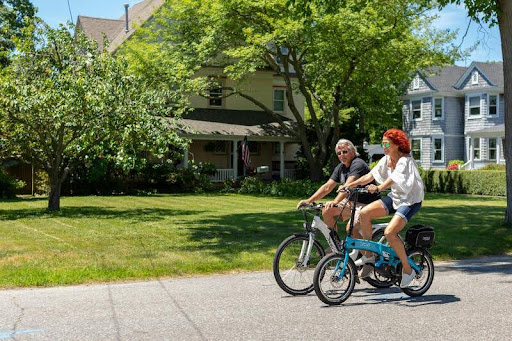
Cruising together—electric bikes make shared rides on bike paths more fun and accessible
Electric bikes, or e-bikes, are everywhere these days. You see them cruising down city streets, parked near coffee shops, or zipping past on your favorite weekend trail. But as they get more popular, a big question keeps popping up: Are electric bikes actually legal to ride on roads and trails in the U.S.? The answer isn’t super straightforward, but don’t worry, we’re breaking it all down in plain English.
Let’s dig into where you can ride, what rules apply, and how to stay legal (and safe) no matter what state you’re in.
What Exactly Is an Electric Bike?
Before we get into laws, let’s clarify what we’re even talking about. An electric bike is basically a bicycle with a motor that gives you a little extra boost as you pedal. You still have to pedal, it’s not a scooter or a motorcycle, but the motor makes it easier to climb hills or ride longer distances without wearing yourself out.
Now, e-bikes aren’t all the same. They’re usually grouped into three classes:
- Class 1: Pedal-assist only (the motor kicks in only when you pedal), and it stops helping at 20 mph.
- Class 2: Throttle-assisted, meaning you can use the motor without pedaling. But it also tops out at 20 mph.
- Class 3: Pedal-assist only, but the motor helps you up to 28 mph. These often have more rules around where you can ride.
These classifications matter a lot when it comes to legal stuff. More on that soon.
What Are the Federal Rules for E-Bikes?
So here’s the deal: at the federal level, e-bikes are treated more like bicycles than motor vehicles, at least in terms of product safety. The U.S. Consumer Product Safety Commission (CPSC) says an e-bike is legal as long as it has a motor of 750 watts or less and doesn’t go over 20 mph on motor power alone.
That said, these federal rules mostly apply to manufacturing and sales, not where or how you ride. The riding rules? Those are mostly up to the states.
Why Do E-Bike Classifications Matter So Much?
E-bike classifications are more than just labels. They determine where you can legally ride. For example:
- Class 1 bikes are allowed on most bike lanes and multi-use paths.
- Class 2 bikes might be banned from certain trails because of their throttle feature.
- Class 3 bikes are usually limited to roadways or bike lanes next to roads, not shared trails.
Understanding your e-bike’s class helps you avoid tickets or run-ins with local enforcement.
Can You Ride Electric Bikes on Public Roads?
In most cases, yes. E-bikes are generally allowed on public roads just like traditional bikes. You can ride in bike lanes, on the shoulder, or in the street, depending on local laws.
However, some states require:
- A minimum rider age (often 14 or 16).
- Helmets (especially for Class 3 bikes).
- Restrictions on where Class 3 bikes can go.
Also, while registration and licensing aren’t usually required, a few places do make exceptions. That’s why it pays to double-check your local DMV or transportation department’s rules.
Are E-Bikes Allowed on Trails and Bike Paths?
This one’s trickier. When it comes to trails, the rules are all over the map.
Generally:
- Paved bike paths: Class 1 and 2 are usually allowed. Class 3? Not so much.
- Shared-use trails (with hikers, runners, etc.): Many areas restrict e-bikes or limit them to certain classes.
- Natural-surface or mountain biking trails: These are often off-limits to any motorized bikes, including e-bikes.
And then there’s the land ownership angle: who manages the trail? City parks, state parks, national forests, and federal lands (like those overseen by the National Park Service or BLM) all have different policies.
How Do E-Bike Laws Vary from State to State?
Here’s the bottom line: e-bike laws aren’t the same everywhere.
Some states have embraced the three-class system and updated their laws to match. Others still lump e-bikes in with mopeds or treat them more like scooters. And a few don’t have clear laws at all.
Common state-level rules include:
- Helmet requirements are based on rider age and e-bike class.
- Whether or not Class 3 bikes are allowed on paths.
- Local authority to further restrict (or allow) access.
It’s not just state laws, either. Cities and counties can set their own rules, too. So yeah, it gets confusing.
What Are the Most Common E-Bike Restrictions?
While laws differ, some restrictions pop up again and again:
- Age limits (especially for Class 3 bikes).
- Helmet laws (for minors or all riders of certain classes).
- Prohibited areas like sidewalks, certain parks, or nature trails.
- Speed limits on shared-use paths or bike lanes.
Violating these rules can get you fined or even banned from local trails. Not fun.
How Can You Make Sure You’re Riding Legally?
The best way to stay out of trouble? Know your local laws. Here’s how:
- Look up your state’s e-bike rules via your DMV or transportation department.
- Check with local park departments or trail managers before heading out.
- Know your e-bike’s class and stick to the right paths.
Also, consider labeling your e-bike with its class if it didn’t come that way. Some states require it. Even if they don’t, it helps avoid misunderstandings.
And of course, always ride respectfully. Just because your e-bike can go fast doesn’t mean you should, especially on crowded paths.
Wrapping It All Up
So, are electric bikes legal on U.S. roads and trails? In most cases, yes—but it depends. E-bike legality is a patchwork of rules that vary by state, city, and even individual trails.
The key is knowing your bike’s classification, following local rules, and staying updated as laws continue to evolve. If you’re ever unsure, take a minute to check. It’ll save you a lot of hassle.
Want to enjoy your e-bike without worrying about fines or bans? Do a little homework upfront, ride smart, and share the trail.
FAQs: Electric Bike Laws in the U.S.
Are electric bikes street legal in the U.S.? Yes, most electric bikes are street legal as long as they meet state-specific definitions and follow road use rules.
Do I need a license or registration to ride an e-bike? Usually no, but a few states make exceptions, especially for faster (Class 3) models.
Can I ride an e-bike on sidewalks? It depends on your local laws. Many places don’t allow e-bikes on sidewalks, especially Class 2 or 3 bikes.
What class of e-bike is best for trail riding? Class 1 is the most widely accepted on trails and multi-use paths.
How do I know which class my e-bike is? Check the manufacturer’s label or your owner’s manual. If there’s no label, you can usually figure it out based on whether it has a throttle and its top assisted speed.
About the Author