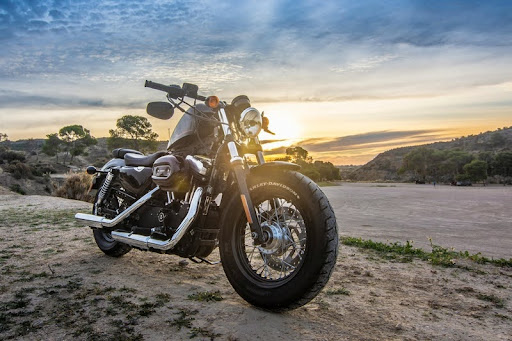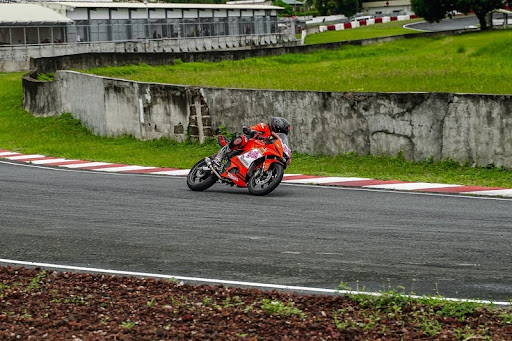
Carving corners at top speed—motorcycle racing in full motion.
Motorcycle racing isn’t just a sport in the U.S., it’s a full-blown culture. The roar of engines, the smell of fuel, the thrill of high-speed turns, it all adds up to something uniquely American. From the dusty ovals of flat track racing to the precision and speed of MotoAmerica road courses, this country has a serious passion for two-wheeled competition.
So what makes motorcycle racing in America so special? Let’s take a ride through the history, types, and future of this high-octane sport.
How Did Motorcycle Racing Start in the U.S.?
Motorcycle racing in America goes way back, with roots in the early 1900s. It started with basic dirt tracks, where thrill-seekers would race stripped-down bikes in front of growing crowds. These weren’t fancy stadiums, we’re talking about fairgrounds and makeshift tracks carved out of farmland.
Flat track racing quickly took hold. Why? Because it was accessible. You didn’t need a high-end sportbike to compete, just guts, grit, and a bike that could take a beating. The American landscape, with its wide-open spaces and rural traditions, made flat track racing feel right at home.
As the years rolled on, things got more organized. Sanctioning bodies formed, rules were written, and national events began to emerge. Flat track racing became the backbone of American motorcycle competition.
What Is Flat Track Racing?
Flat track racing is exactly what it sounds like: riders race around a flat, oval dirt track. No jumps, no hills, just flat-out speed and control. The tracks vary in size, from short quarter-mile sprints to mile-long circuits that push bikes to the limit.
Riders slide their bikes through corners at breakneck speed, using throttle control and body positioning to keep from wiping out. There’s no front brake allowed in many classes, which means racers have to master the art of drifting without overcooking it.
Flat track bikes are stripped-down machines built for balance and torque, not flashy looks or top-end horsepower. It’s racing in its rawest form, no-frills, no-nonsense, and full of action.
How Did Road Racing Evolve in the U.S.?
As motorcycle tech advanced, so did the urge to race on pavement. Road racing in America grew as more riders looked to test their skills on paved circuits instead of just dirt ovals.
These courses offered new challenges: high-speed straights, technical turns, and elevation changes that demanded more from both bike and rider.
Over the years, the United States established a vibrant scene for road racing, encompassing everything from community club events to major national competitions.
The expansion wasn’t solely focused on speed; it also prioritized safety. Paved circuits provided improved control, uniform conditions, and a reduction in the unpredictable dangers associated with dirt tracks. As spectators engaged with the thrilling action, new locations and events began emerging nationwide.
What Is MotoAmerica and Why Is It Significant?
MotoAmerica serves as the leading motorcycle road racing series in the United States. It was established to revive high-caliber racing in the public eye and to support American riders aspiring to compete globally.
You can think of it as the motorcycle road racing equivalent of the NFL, a platform where top-tier competitors clash across various classes, ranging from beginner motorcycles to advanced superbikes capable of exceeding 200 mph. The series also acts as an essential stepping stone for riders aiming for international competition.
MotoAmerica prioritizes professionalism, safety, and rider development. The series collaborates with youth racing initiatives and entry-level divisions to ensure a steady flow of talent. Additionally, with television contracts and online streaming options, fans can catch the excitement from anywhere.
If you’re curious about entering the world of motorcycle racing or simply want to witness some of the fastest bikes in the nation compete, MotoAmerica is an excellent starting point.
Flat Track vs. Road Racing: What Sets Them Apart?
At first sight, flat track racing and road racing may appear to be entirely different. However, both require incredible skill and courage. Here’s a comparison:
Surface: Flat track uses dirt. Road racing utilizes pavement.
Lap design: Flat tracks are oval-shaped. Road racing features intricate circuits with numerous turns.
Motorcycle configuration: Flat track bikes are geared for torque and handling. Road racing motorcycles emphasize aerodynamics, velocity, and cornering performance.
Riding techniques: Flat track competitors slide through turns. Road racers lean into corners and brake aggressively.
In essence, flat track is about instinct and rhythm, while road racing revolves around accuracy and strategy. Riders talented enough to excel in both disciplines are truly exceptional.
What Sustains the Motorcycle Racing Culture?
The essence of motorcycle racing in America extends beyond the competitions. It flourishes due to community engagement. Riders, teams, families, and fans unite every weekend to celebrate the thrill, share experiences, and cheer for their favorites.
Numerous local events carry a relaxed, grassroots vibe. Whether at a small-town fairground or a prominent racetrack, you’ll find individuals who are passionate about the sport.
It’s a way of life, centered around velocity, talent, and a collective passion for motorcycles.
This community impacts everything from motorcycle apparel to custom builds crafted in garages. Here, racing transcends mere competition; it serves as a wellspring of creativity.
What Is the Future of Motorcycle Racing in the U.S.?
Like many motorsports, motorcycle racing is undergoing significant changes. Electric motorcycles are gradually making their way into the sport. Safety regulations are stricter than they’ve ever been. Additionally, digital platforms are transforming fan interaction with the sport.
There’s also an increased emphasis on developing young talent. Initiatives designed to get younger riders onto the track are cultivating the next wave of skills. More women are joining the sport, infusing it with new energy and challenging established norms.
And we can’t overlook the role of media coverage. With improved streaming services and social media, following races, riders, and the ongoing excitement has never been easier.
What does the future hold for American motorcycle racing? It appears fast, inclusive, and increasingly connected through technology.
Final Thoughts: The Significance of Motorcycle Racing
Whether it’s the chaotic thrill of a dirt track or the meticulous art of a road race, motorcycle racing resonates on a fundamental level. It’s swift, daring, and captivating. In America, it’s not just a hobby, it’s a legacy.
So, if you’ve ever been curious about what it feels like to push a motorcycle to its extremes or are eager to experience the adrenaline from the audience, take a closer look at American motorcycle racing. It boasts a rich history, deep passion, and plenty of horsepower.
FAQs About Motorcycle Racing in America
What kind of motorcycle racing is the most popular in the U.S.? Flat track and MotoAmerica road racing are among the most popular forms, each with a dedicated following.
How do I get started in motorcycle racing in the U.S.? Begin by attending local races, becoming part of a club, and completing rider safety courses. Many regional organizations provide beginner classes.
Is MotoAmerica exclusive to professional riders? Not at all. MotoAmerica includes various classes, including an entry-level series aimed at fostering new riders.
Are there programs for youth interested in motorcycle racing? Absolutely. Numerous regions offer youth racing through specialized leagues and training initiatives.
Can I watch MotoAmerica online? Yes. Races are typically streamed online or broadcast through motorsports channels.
Interested in witnessing the excitement firsthand? Attend a local event, follow MotoAmerica online, or consider registering for a track day. You might just discover your passion for it.
About the Author