Racing in full throttle—where skill, speed, and strategy collide.
If you’re diving into the world of racing in the U.S., there’s a big question you might be asking yourself: Should you go for road racing or oval racing? They might seem similar at a glance, after all, both involve cars going fast around a track, but they’re two very different beasts. Understanding those differences can make or break your driving journey.
So, let’s break it all down.
What is road racing vs. oval racing?
Here’s the short version: road racing involves twisty tracks with lots of turns, elevation changes, and braking zones. Oval racing takes place on (you guessed it) oval-shaped tracks, usually with banked turns and high-speed straights.
Road racing is more like navigating a puzzle. Oval racing? Think high-speed chess.
Both styles require serious skill, but the kind of skill you need is where things start to differ.
How are the tracks different?
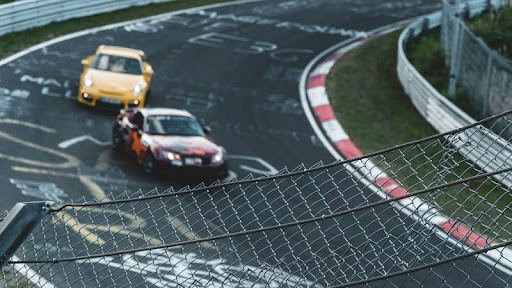
Road courses are built to challenge drivers with sharp turns, long straights, chicanes, and elevation changes. They come in a lot of shapes and sizes, and you rarely take the same type of turn twice in a lap.
Oval tracks, on the other hand, are generally much simpler in layout. Most have four turns, all in the same direction (usually left), and are built for speed. But that simplicity is deceiving; it takes real finesse to master.
In the U.S., oval tracks can range from a short quarter-mile to massive superspeedways over 2.5 miles long.
What driving skills do you need for each?
Road racing demands a wide range of skills: precise braking, throttle control, quick reflexes, and the ability to handle unexpected twists (literally). You’ll be shifting gears constantly and braking hard into corners.
Oval racing is all about consistency, maintaining momentum, and knowing how to draft (that’s when you tuck in behind another car to reduce drag). You need laser focus and nerves of steel. You’re on the edge for hundreds of laps.
It might look easy from the stands, but ask any oval driver, and there’s a lot more going on than just turning left.
How do vehicle setups change between road and oval racing?
Great question, because car setup plays a massive role in both formats.
In road racing, the suspension needs to handle uneven surfaces and quick direction changes. The brakes have to be strong and reliable, and the tires need grip across a range of corners.
Oval setups, in contrast, are more about balance for high-speed cornering.
You might even hear about teams running an “asymmetric” setup, where one side of the car is tuned differently from the other to handle constant left turns.
Tire wear, downforce, and gear ratios are all fine-tuned depending on the length and banking of the oval track.
How does strategy differ in oval vs. road racing?
Strategy is huge in both, but the approach is totally different.
In road racing, you’re planning around fuel stops, tire degradation, and possible weather changes. It’s about timing pit stops and managing your car over a variety of track conditions.
Oval racing strategies are more influenced by caution flags, drafting lines, and maintaining position in traffic. Pit stops happen quickly and frequently, and drivers rely heavily on their spotters to avoid chaos.
And yes, one wrong move can cost you the race in either case.
What does the training path look like for each type?
Most drivers start small, go-karts, local races, or amateur leagues. But the training and career path often split depending on whether you’re eyeing a road racing or oval career.
Road racers tend to build experience on a variety of track types and often move up through classes that test technical skill. Oval racers usually start on short tracks and work their way up to larger, faster ovals, learning racecraft and drafting techniques as they go.
If you’re considering both, know that switching disciplines isn’t impossible, but it does take time to adjust.
Why does location matter in the U.S.?
In the U.S., geography plays a role in which type of racing is more popular.
Oval racing is deeply rooted in American motorsport culture, especially in the South and Midwest. You’ll find tons of local oval tracks and a strong community around them.
Road racing has a solid following too, often tied to road courses and club racing groups scattered across the country, especially near metro areas or coastal regions.
Where you live (or plan to race) might influence which path feels more accessible.
Which racing style is right for you?
That depends on what kind of challenges you enjoy. Do you love technical driving, solving track puzzles, and constantly adapting? Road racing might be your thing.
Or maybe you crave high-speed intensity, razor-thin margins, and wheel-to-wheel action. Oval racing could be your calling.
Think about what excites you behind the wheel. That’s usually a good clue.
Final thoughts: it’s not one-size-fits-all
There’s no “better” between road and oval racing, just different. Both are thrilling in their own way. Some drivers stick to one, while others jump between styles over their careers.
If you’re just getting started, try both. See what clicks. You don’t have to decide everything today.
Curious what racing schools or local tracks offer in your area? That’s a great place to start.
FAQ: Road Racing vs. Oval Racing in the U.S.
What’s the main difference between road and oval racing? Road racing involves twisty, multi-turn tracks with elevation changes. Oval racing takes place on simpler, looped tracks focused on high-speed turns.
Is one type of racing harder than the other? They both present unique challenges. Road racing is more technical; oval racing is more about speed, strategy, and endurance.
Can a driver switch between road and oval racing? Yes, but it takes training and time to adapt. Each style requires different skills and car setups.
Where is oval racing most popular in the U.S.? Oval racing is especially big in the South and Midwest, where local tracks and events are common.
Which type of racing is more beginner-friendly? It depends on access. Many beginners find oval racing more approachable due to local availability, but road racing offers great learning opportunities too.
About the Author