Next-gen drivers are already in the seat—virtually.
Do you think racing simulators are merely sophisticated video games? Think again. These advanced systems go far beyond just allowing drivers to relax between races. They’re transforming the entire world of motorsports, impacting everything from driver training to vehicle design.
In this article, we’ll explore how racing simulators are becoming a driving force, pun intended, in the future of the sport. Whether you’re a motorsport enthusiast, an inquisitive gamer, or someone curious about the direction racing is heading, you’re in the right spot.
What is a racing simulator, exactly?
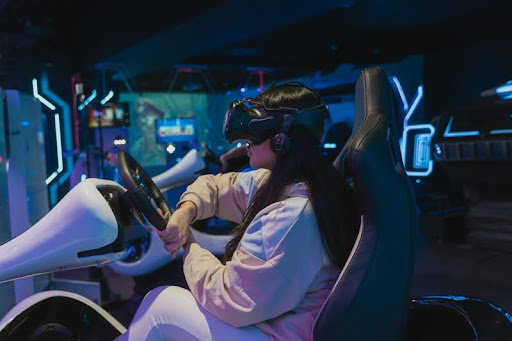
A racing simulator is a platform that replicates real-life driving conditions using computer software and hardware. It typically consists of a steering wheel, pedals, gear shifters, seat rigs, and often multiple screens or even full-motion setups.
However, it’s not just about cool equipment. At the professional level, simulators utilize sophisticated physics engines and telemetry data to mimic actual track conditions, vehicle dynamics, and even tire degradation. The outcome? A training experience so realistic that many drivers consider it as valuable as time spent in a real car.
How are racing simulators enhancing the way drivers train?
They function like a digital training facility for racers. Simulators enable drivers to rehearse track layouts, master braking points, and sharpen their reflexes, all without leaving the garage. This means more practice time without the expenses or wear and tear associated with a real vehicle.
Want to experience a wet track at midnight? No issue. Want to repeat a challenging corner 20 times until you perfect it? Simple. This level of practice just isn’t feasible on a real track without incurring substantial costs.
Additionally, it fosters mental resilience. Drivers can simulate race-day situations, navigate high-pressure moments, and maintain mental acuity during lengthy breaks between races.
Can simulators truly help reduce motorsport expenses?
Definitely. Time on the track is costly; we’re talking thousands of dollars per day when factoring in travel, tires, fuel, crew, and car upkeep. Simulators drastically lower those costs.
By completing virtual laps, teams conserve resources while still gathering essential data. They can experiment with various strategies, test new configurations, and improve communication between drivers and engineers without using any fuel.
For emerging drivers or smaller teams, simulators create a level playing field. Instead of requiring significant funds for countless test sessions, they can gain experience virtually and arrive at real tracks more prepared.
What role does data play in simulation training?
Data is everything. Every lap in a simulator produces telemetry, brake pressure, throttle input, steering angle, gear selection, lap time, and much more.
Drivers and engineers can analyze that info to see where time is gained or lost. Did you brake too early into Turn 3? Was your exit speed on the back straight slower than optimal? The data doesn’t lie.
By studying these details, drivers can make precise adjustments to their technique, and teams can tweak car setups before hitting the actual track. It’s a feedback loop that makes everyone better.
How are simulators helping engineers build better race cars?
Simulators aren’t just for drivers. Engineers use them to model how a car will behave with different configurations, like suspension settings, tire compounds, or aerodynamic tweaks.
Instead of guessing how a change will feel on track, they can simulate it. That speeds up the development process and helps teams arrive at race weekends with a setup that’s already close to ideal.
It’s also safer. New parts can be tested in a virtual environment first, reducing the risk of mechanical failure or unsafe handling during live tests.
Are simulators making motorsports more accessible?
Yes, and that might be the most exciting part. Racing has always had a high barrier to entry. It’s expensive, competitive, and often limited by geography.
But now? With a decent simulator rig and internet connection, talented drivers from anywhere can get noticed. Virtual racing leagues, online tournaments, and simulation academies are giving people a real shot at launching a motorsport career.
It’s not just a pipe dream anymore. The gap between virtual and real-world racing is shrinking fast.
What does the future of motorsports look like with simulation technology?
Hybrid events. Virtual championships. AI-integrated coaching. The future is already unfolding.
Simulation technology is evolving fast. Some platforms now include machine learning to adapt to a driver’s style and offer real-time coaching. Others are experimenting with VR headsets and haptic feedback to enhance immersion.
We’re also seeing crossover events where virtual and real drivers compete in shared formats. The line is blurring, and that’s opening up new ways for fans, drivers, and teams to engage with the sport.
And let’s not forget sustainability. As motorsports looks for ways to go green, simulators offer a low-emissions, high-impact alternative for training and competition.
Final reflections: Is simulation the way forward for racing? In many respects, it already is. Although nothing can replicate the sensation of real tires on real pavement, racing simulators are bridging the gap more quickly than ever.
They’re enhancing the sport by making it smarter, safer, and more accessible. They’re allowing teams to explore new avenues without overwhelming expenses. Moreover, they’re creating opportunities for aspiring drivers who may not have had a chance otherwise.
So, the next time you spot someone using a simulator, don’t underestimate it as merely a game. It could be the future of racing unfolding right in front of you.
FAQ: Racing Simulators and the Future of Motorsports
What is the best way to begin with racing simulators? Start with a basic setup: a force-feedback steering wheel, pedals, and either a PC or a console. Select a realistic racing simulation game and start practicing.
Are racing simulators realistic enough for professional training? Definitely. Numerous professionals utilize them to prepare for races, familiarize themselves with tracks, and enhance their skills. The accuracy of physics and data tracking makes them extremely effective.
Can racing simulators assist me in becoming a professional driver? They can certainly provide opportunities. Many drivers now emerge from virtual leagues and catch the attention of teams searching for untapped talent.
Do racing simulators benefit engineers as well? Yes. Simulators enable engineers to evaluate car setups, assess vehicle dynamics, and fine-tune configurations without needing access to an actual track.
Why are simulators regarded as essential for the future of racing? They reduce expenses, enhance safety, foster inclusivity in racing, and encourage technological advancement. This is why they are increasingly influential in the
About the Author