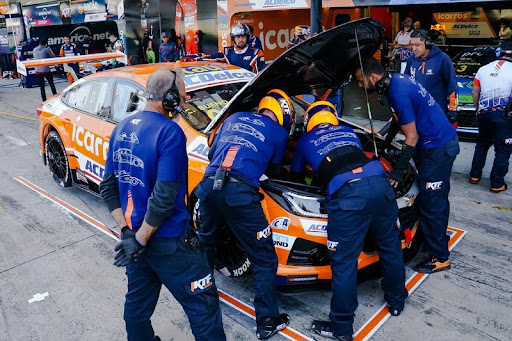
Precision in motion—pit crew members work in perfect sync during a high-stakes race stop.
Race day. It’s loud, it’s fast, and it’s absolutely electric. But what most fans see, the roaring engines, the photo finishes, the champagne sprays, is only the tip of the iceberg. Behind every car flying down the track is a finely tuned machine of its own: the racing team.
So what really happens behind the scenes on race day? How do racing teams keep everything running like clockwork when every second counts? Let’s pop the hood and take a look inside the pit.
What does a racing team look like on race day?
A racing team is a small army of specialists, each with a clear mission. Sure, the driver gets the spotlight, but they’re never out there alone. Here’s a quick breakdown:
- Driver: The one in the car, calling on skill, instinct, and razor-sharp focus.
- Crew Chief: The boss of the pit. They manage race strategy, make big decisions, and call the shots.
- Pit Crew: These are the fast hands during pit stops, tire changers, fuelers, jack operators, and more.
- Engineers and Strategists: The data brains. They analyze performance, tweak car settings, and monitor everything from tire wear to weather.
- Telemetry and Communications Team: Constantly feeding info to and from the driver.
Every member has a role, and there’s no room for freelancing. It’s all about teamwork and execution.
How do teams prepare before the race starts?
Race day doesn’t start when the green flag waves; it starts hours (and sometimes days) earlier.
Before the car even hits the track, the team has already:
- Held multiple strategy meetings to go over scenarios.
- Inspected and tuned the car for the specific track and weather.
- Analyzed data from simulations and past races.
- Briefed every team member on their responsibilities.
Think of it like a theater production. Everyone has cues. There’s no room for ad-libbing. By the time the race starts, the plan is set, and every tool is in place.
What happens in the pit lane before the race?
The pit lane is basically home base. It’s where the magic happens during the race, and it has to be dialed in perfectly.
- Tools are laid out like surgical instruments.
- Tires, fuel rigs, jacks, all double-checked and easy to grab.
- Fire extinguishers and safety gear? Ready.
- Radio checks and backups? Done.
Each pit box is organized down to the inch. It might look chaotic when cars come flying in, but everything is actually choreographed.
How do teams communicate during the race?
Communication is everything.
Without it, the race turns into a guessing game, and no one wants that.
Drivers wear radio headsets that keep them in constant touch with the crew chief and spotters. The spotter’s job? Keep eyes on the track and warn the driver about traffic, crashes, or strategy updates.
Meanwhile, engineers monitor live data (also called telemetry) in real time. They’re watching fuel levels, brake temperatures, tire wear, you name it. When something looks off, they relay it instantly.
It’s not just about talking. It’s about saying the right thing, at the right time, in the fewest possible words.
What really happens during a pit stop?
A pit stop looks like chaos. It’s not. It’s choreography.
Here’s a typical stop:
- The car screeches in.
- One crew member jacks up the car.
- Four others change all tires simultaneously.
- Another refuels the car (if allowed in that race series).
- All this happens in 2 to 15 seconds, depending on the type of race.
That kind of speed doesn’t happen by accident. Crews practice for hours. Every move is drilled until it’s second nature.
And mistakes? They’re costly. A loose tire or slow stop can knock a driver out of contention in a flash.
How do racing teams make mid-race decisions?
Races are unpredictable. Weather shifts. Crashes happen. Tires wear differently than expected. So, how do teams adapt?
This is where strategy comes into play. The crew chief is always weighing options:
- Should they pit early or wait?
- Switch to a different tire compound?
- Go for speed or play it safe?
They make these decisions using real-time data, experience, and sometimes gut instinct. One bold move can win the race. One bad call can end it.
What do teams do after the race?
Once the checkered flag drops, the work doesn’t stop.
Teams immediately go into debrief mode. They review:
- Car performance
- Pit stop execution
- Strategy success or failure
- Driver feedback
They also pull tons of data to analyze what worked, what didn’t, and how to improve next time.
And let’s not forget recovery. Race days are physically and mentally draining, not just for drivers but for the entire crew. Hydration, rest, and stretching routines are often part of the cool-down.
Why does pit crew teamwork matter so much?
Because races are often decided by tenths of a second. That’s less time than it takes to blink. And if the crew isn’t working in perfect harmony, the whole operation falls apart.
Pit crews aren’t just mechanics. They’re athletes. Many train with pro coaches, practice sprint drills, and lift weights to stay in top shape.
When the pressure is on, they need to be fast, focused, and flawless.
How do racing teams stay sharp all season?
Consistency is key. Winning one race is great. Staying competitive over a whole season? That takes next-level discipline.
- Teams constantly tweak their processes.
- They analyze footage and data like coaches reviewing game tape.
- They learn from mistakes and celebrate the wins, but never rest on them.
And yes, there’s always pressure. Sponsors, fans, and internal expectations keep everyone pushing hard.
Final Thoughts: It’s More Than Just the Driver
It’s easy to focus on the car or the person behind the wheel. But racing is a team sport in every sense.
From the engineers crunching numbers to the crew hustling on the pit lane, success depends on total synchronization. The pit might not get the glory, but without it, there is no race.
So next time you’re watching the action, take a second to appreciate the people behind the scenes. They’re the unsung heroes making the magic happen.
FAQs About Racing Teams and Pit Crew Operations
How many people are on a pit crew? Most pit crews have 5 to 20 members on race day, depending on the racing series.
How long does a pit stop take? Pit stops can range from 2 to 15 seconds. Formula-style stops are faster, while others vary based on rules.
What does a crew chief do? The crew chief manages overall race strategy, pit stop timing, and communication with the driver.
How do pit crews train? Crews practice pit stops daily, work on strength and speed, and often use simulations to prepare.
What is telemetry in racing? Telemetry is real-time data sent from the car to engineers, helping teams monitor performance and make decisions.
About the Author