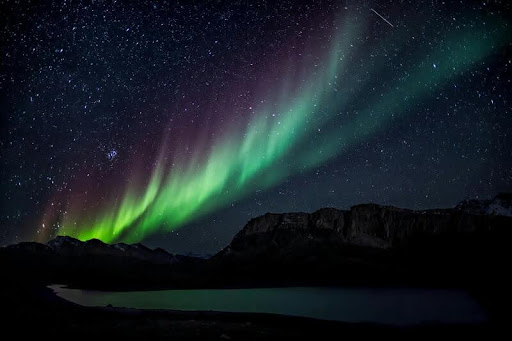
A breathtaking display of the northern lights dancing across a clear night sky—one of nature’s most unforgettable sights.
Ever dream of seeing the northern lights but think you’d have to hop on a plane to Iceland or Norway to catch them? Good news, you don’t. The U.S. actually offers several great spots for watching the aurora borealis dance across the night sky. You just have to know when and where to look.
This guide breaks it all down: why the northern lights happen, the best conditions for seeing them, and which U.S. regions give you the highest chance of catching the show. No travel hype. No unrealistic expectations. Just clear, useful info so you can plan smart, and maybe even check this one off your bucket list.
What Exactly Are the Northern Lights?
The northern lights, or aurora borealis, are a natural light show that happens when charged particles from the sun hit Earth’s magnetic field. Sounds a little sci-fi, right? But it’s totally real, and seriously stunning.
Here’s the quick version: when those solar particles collide with gases in our atmosphere (mostly oxygen and nitrogen), they light up the sky with streaks of green, purple, and sometimes red or yellow. It’s nature’s neon, and it mostly happens near the magnetic poles.
That’s why the farther north you are, the better your chances of seeing them.
Why Are the Northern Lights Visible in the U.S.?
We tend to think of the northern lights as an Arctic phenomenon, but the aurora oval, the area around the magnetic pole where they’re visible, actually dips into the northern parts of the United States.
In fact, during strong solar storms, they can be seen as far south as the Midwest or even the Plains. That’s rare, though. Most of the time, your best bet is heading north and getting away from city lights.
So yes, you can stay stateside and still get a front-row seat.
When Is the Best Time to See the Northern Lights in the U.S.?
Late fall through early spring is your sweet spot. Think September to April, when the nights are longer and darker.
Within that window, the best time of night is usually between 10 p.m. and 2 a.m., though auroras can show up earlier or later depending on conditions.
Clear skies are a must. Cloud cover will block your view completely. Cold, crisp nights tend to offer the clearest visibility, especially in northern areas.
Also, the aurora follows an 11-year solar cycle, and we’re currently approaching a peak period (expected around 2025). That means more frequent and intense displays are likely in the coming seasons.
What Conditions Make for Great Northern Lights Viewing?
It’s not just about being in the right place; it’s about catching the right moment. Here’s what to look for:
- Dark skies: Get away from city lights. Light pollution will kill the experience fast.
- Minimal moonlight: A full moon can wash out the colors. Try planning around new moon phases.
- Clear weather: No clouds, fog, or snowstorms, check the forecast before you go.
- High KP Index: This is the number that measures geomagnetic activity. A KP of 5 or higher means the aurora could be visible farther south than usual.
You can use apps like My Aurora Forecast or websites like NOAA’s Space Weather Prediction Center to track real-time conditions.
Where Are the Best Places in the U.S. to See the Northern Lights?
Let’s get one thing out of the way: no, you’re probably not going to see the aurora from your downtown apartment in Chicago or New York City. You need to go north and rural.
The best areas for aurora viewing in the U.S. share a few things in common:
- Higher latitudes (closer to the Canadian border)
- Low light pollution
- Open skies and minimal obstructions
Look for state parks, national forests, or rural stretches of road that face north. Elevation can help, but what really matters is how dark and clear your view is.
Want to increase your chances? Stay flexible. If you’re already in a northern region and see reports of increased solar activity, be ready to jump in the car and chase a clear patch of sky. That’s part of the adventure.
How Do You Photograph the Northern Lights?
Let’s be honest: if you’re going to make the trip, you’ll probably want some proof. But capturing the aurora isn’t quite the same as snapping a selfie.
Here’s a basic setup to get you started:
- A DSLR or mirrorless camera with manual settings
- Wide-angle lens (something with f/2.8 or lower for low-light conditions)
- Tripod (non-negotiable if you want clear shots)
- Remote shutter or timer to avoid camera shake
Set your ISO high (800–3200), open your aperture wide, and experiment with exposure times (start with 10–30 seconds). You might need to tweak depending on the brightness of the aurora and the surrounding conditions.
And don’t forget extra batteries, cold weather drains them fast.
What Should You Bring for an Aurora Trip?
Planning to spend a few hours outside in winter? Prep like you mean it. Here’s what to pack:
- Warm, layered clothing: Think thermal base layers, fleece, insulated jackets, and waterproof outerwear.
- Gloves, hat, and warm boots: You’ll need all three.
- Snacks and hot drinks: Nothing like hot cocoa under the stars.
- A headlamp with a red light mode: So you can see without messing up your night vision.
- Portable power bank: For your phone, camera, or Aurora tracking app.
Optional but awesome: a thermos, a blanket, and a camp chair. Comfort counts when you’re standing in the cold for hours.
Is Seeing the Northern Lights in the U.S. Guaranteed?
Here’s the truth: nope.
Even if you hit all the right notes, perfect timing, great location, awesome weather, the aurora is still unpredictable. It might show up. It might not.
But that’s what makes seeing it so magical. It’s not just something you check off a list. It’s something you wait for, hope for, and finally experience. And when it happens, it’s unforgettable.
How to View the Northern Lights Responsibly
If you’re heading into nature, leave no trace. That means:
- Stick to designated trails and roads
- Don’t leave trash or food behind
- Keep noise levels down, wildlife and other watchers will thank you
- Use red lights instead of bright white flashlights to preserve the night sky for everyone
Also, make sure you’re parked safely if viewing from a roadside, and always let someone know where you’re going if you’re heading into remote areas.
So, Should You Plan a Northern Lights Trip in the U.S.?
If you’ve got a sense of adventure, a love of the night sky, and some flexibility in your plans, absolutely.
You don’t need to fly halfway across the world to see something amazing. The U.S. has its own slice of the aurora magic; you just have to go find it.
So grab your warmest coat, download a forecast app, and keep your eyes on the northern horizon. The sky might just put on a show.
FAQs: Northern Lights in the U.S.
Where can I see the northern lights in the U.S.?
You can see them in northern regions of the U.S., especially near the Canadian border and in areas with low light pollution.
When is the best time to see the aurora borealis in the U.S.?
Late fall through early spring, especially between 10 p.m. and 2 a.m. during clear, dark nights.
How likely am I to see the northern lights on a weekend trip?
It depends on solar activity and sky conditions. Use aurora forecasts to improve your odds.
Can I see the Northern Lights with the naked eye?
Yes, if conditions are right, the lights are clearly visible without any special equipment.
Do I need a fancy camera to take pictures of the northern lights?
Nope. A DSLR or mirrorless camera helps, but newer smartphones with night mode can work too.
Final Thoughts + Quick Tip
Want to boost your chances? Sign up for Aurora alerts or follow a space weather app. When the KP index spikes, that’s your cue to get outside and look north. And remember, sometimes the best adventures happen when you’re chasing the sky.
About the Author