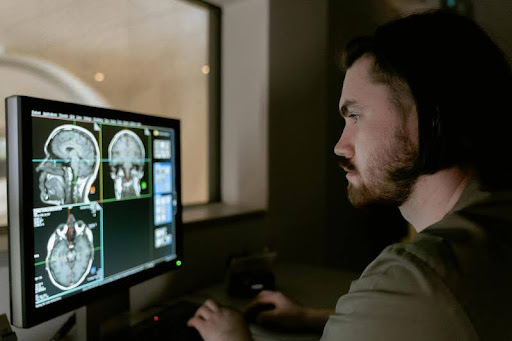
Exploring the intersection of neuroscience and digital tech—where human thought meets machine intelligence.
Exploring the future of mind-powered internet experiences
What Is Web4 and Why Should You Care?
Let’s start simple, Web4 is the next big leap in how we connect with the internet. It’s not just an upgrade from Web3; it’s a whole mindset shift. If Web1 was about reading, Web2 was about interacting, and Web3 was about owning digital stuff, then Web4? It’s about merging. Think seamless experiences where machines don’t just respond, they anticipate and evolve alongside us.
At its core, Web4 aims to blur the line between human and machine. It’s a vision of the internet that responds not just to clicks or swipes but to who we are, what we feel, and how we think, in real-time.
That’s where Brain-Computer Interfaces (BCIs) come into play.
What Are Brain-Computer Interfaces (BCIs) and How Do They Work?
A brain-computer interface is exactly what it sounds like: a system that allows direct communication between your brain and a computer or digital device. No hands, no voice, no keyboard, just thought-driven interaction.
Here’s how it works in a nutshell: your brain sends out electrical signals. A BCI picks up those signals, translates them, and turns them into digital commands. This can be done through wearable headsets or, in more advanced cases, tiny implants. But don’t worry, we’re not diving into sci-fi surgery scenes today.
The point is, BCIs give your brain a direct line to tech. And that changes everything when we start thinking about the future of the internet.
How Do BCIs Fit into the Vision of Web4?
Web4 is all about creating a more intuitive, immersive internet, one that responds to you as naturally as another person might. BCIs are tailor-made for this kind of world.
They remove friction. Instead of typing, clicking, or tapping, you could navigate digital spaces with a thought. Imagine scrolling through your favorite app or composing a message just by thinking. That’s not some far-off dream. That’s the potential BCIs bring to Web4.
Plus, this tech supports the human-machine symbiosis that Web4 is aiming for. Instead of you adjusting to the interface, the interface adjusts to you. It learns your rhythms, adapts to your intentions, and even predicts your needs.
Kind of like a smart assistant that knows what you want before you say a word, but now, it’s powered by your brainwaves.
Can BCIs Really Enhance Digital Experiences?
Absolutely, and not just in flashy ways. Think about how much time we spend doing repetitive digital tasks.
Logging in. Filling forms. Switching between tabs. Now imagine if your brain could shortcut all that. No typing. No waiting. Just thinking and doing.
BCIs make this possible by offering real-time feedback loops. Your brain signals what you want, the system responds instantly, and the loop keeps learning and adapting.
This kind of tight feedback system could lead to faster, more natural interactions online. And it’s a perfect match for Web4’s goal of creating an internet that feels less like a tool and more like an extension of your own mind.
How Do BCIs Support Web4’s Decentralized and Personalized Nature?
Web4 doesn’t live on giant servers in a faraway data center. It’s built on decentralization, where users own their data and control their digital identity. BCIs can reinforce this by providing unique, personal biometric input; your brain signals, after all, are as individual as your fingerprint.
This kind of input could make identity verification smoother and more secure. No passwords to remember. No two-factor codes to juggle. Just you being you.
Even more, BCIs could enable hyper-personalized experiences. Because when your brainwaves feed into the system, platforms can customize not just what you see, but how you see it, when, and why. That’s personalization on a whole new level.
What Ethical and Technical Issues Come With BCIs in Web4?
Okay, let’s slow down a bit. While all this sounds amazing, it also raises some serious questions.
First: privacy. Your brain data is deeply personal. More so than your browsing history, search queries, or even your social posts. If BCIs are collecting and analyzing brain activity, who owns that data? How is it stored? Who gets access?
Second: consent. How do we make sure users truly understand what they’re sharing and what’s being done with it? Especially when brain signals could reveal thoughts or feelings that users didn’t intend to share?
Third: accessibility. Will this tech be affordable and available to everyone? Or will it create a deeper digital divide between those who can access mind-enhancing tools and those who can’t?
Web4 wants to be more equitable. But BCIs will need strict ethical guidelines and thoughtful design to make that vision real.
What Could Everyday Life Look Like With BCIs in Web4?
Let’s paint a picture. You sit down in front of your laptop, or maybe you don’t need a screen at all. You think about opening your calendar, and it pops up. You feel a little stressed, and your device dims the lights, plays calming music, or pauses notifications without being asked.
You join a virtual meeting, and instead of typing or talking, your ideas flow directly into a shared digital space. Collaboration feels natural, even effortless.
That’s the kind of mind-machine merge Web4 and BCIs are working toward. It’s not about replacing human interaction; it’s about enhancing it. Making it smoother. Less clunky. More you.
Are We Ready for a Brain-Connected Web?
Let’s be real. We’re not all the way there yet. BCIs are still evolving, and most current versions aren’t mainstream or affordable for everyday use. But the direction is clear, and it’s speeding up.
Tech companies, researchers, and developers are already laying the groundwork. As both the hardware (like sensors) and the software (like signal processing) improve, we’ll start to see more mind-powered features woven into our digital lives.
And when that happens, Web4 won’t just be an upgrade. It’ll be a transformation, one that turns the internet from something you use into something you experience.
So, What’s Next?
The internet has come a long way, from static pages to personalized feeds. Web4 is the next frontier, and brain-computer interfaces are a big part of making that frontier real.
They help us ditch the clunky middlemen, keyboards, touchscreens, and passwords, and let us interact with the digital world using what we already have: our minds.
It’s exciting. A little scary. But mostly? It’s empowering.
FAQ: Brain-Computer Interfaces and Web4
(Formatted for schema markup and search engines)
What is a brain-computer interface (BCI)? A BCI is a system that allows direct communication between your brain and a digital device, using brain signals to control or interact with technology.
How does a BCI work in Web4? BCIs pick up electrical signals from your brain and convert them into commands, enabling more intuitive and personalized digital experiences in Web4 environments.
Are brain-computer interfaces safe to use? Non-invasive BCIs, like wearable headsets, are generally considered safe. However, data privacy and ethical concerns remain important issues.
What’s the main benefit of using BCIs in Web4? The biggest advantage is seamless, hands-free interaction. BCIs offer faster, more personalized experiences and enable deeper integration with technology.
Will BCIs replace traditional devices? Not entirely, at least not right away.
But they’ll likely complement or enhance how we interact with current tech, especially in immersive Web4 applications.
About the Author