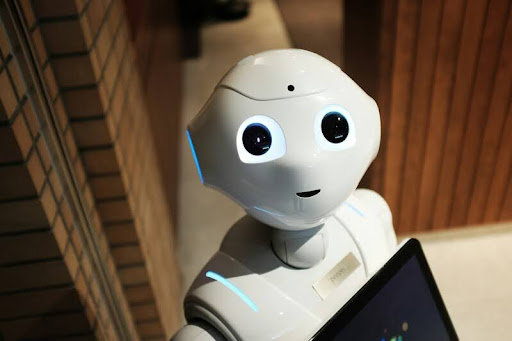
A sleek white robot — a reminder that AI’s abilities are powerful, but still far from human.
Artificial Intelligence is everywhere right now, from the headlines you scroll through on your phone to the tools quietly running in the background of your favorite apps. It’s fast, it’s powerful, and it’s getting smarter by the day. But here’s the thing: AI isn’t magic, and it’s not a human brain in disguise.
If you’ve ever wondered exactly what AI can handle like a champ, and where it still falls flat, you’re in the right place. Let’s cut through the hype and get to the facts.
What Can AI Do Right Now?
Despite the futuristic vibes, AI is still grounded in some pretty practical abilities. It’s not about having “feelings” or “dreams” (yet). Instead, AI shines in specific areas where speed, scale, and data crunching are everything.
1. Process Massive Amounts of Data in Seconds
One of AI’s biggest superpowers? Handling data. We’re talking about millions of lines, thousands of variables, and endless connections, all processed in the time it takes you to sip your coffee. This makes AI a natural fit for spotting patterns that would take humans weeks (or months) to uncover.
Research from IDC shows that the world creates over 120 zettabytes of data annually. Without AI, making sense of that volume would be nearly impossible.
2. Automate Repetitive, Time-Consuming Tasks
Let’s be honest, humans get bored with repetitive work. AI doesn’t. It can execute the same action a thousand times without losing focus or energy. Whether it’s sorting information, categorizing images, or flagging anomalies, AI thrives in environments where consistency is key.
3. Recognize Complex Patterns Across Different Inputs
Pattern recognition is one of AI’s bread-and-butter skills. Whether it’s identifying recurring trends in text, detecting similarities in audio clips, or sorting visual data into categories, AI excels at connecting the dots.
The important thing to remember? AI isn’t “understanding” in the human sense. It’s identifying relationships in data based on training, and it’s good at it.
4. Generate Content and Ideas on Demand
If you’ve ever used a chatbot to draft a note or an image generator to mock up a design, you’ve seen AI’s generative skills at work.
It can pull together words, images, and even music based on what it’s been trained on. This makes it a handy brainstorming partner, especially when you’re stuck staring at a blank page.
5. Make Predictions Using Past Data
AI can’t tell the future in a mystical way, but it can make educated guesses based on patterns from the past. Whether it’s forecasting demand, anticipating traffic flows, or suggesting what you might want to watch next, these predictions come from crunching historical data and finding trends.
What Can’t AI Do Yet?
Here’s where things get interesting. For all its power, AI has some very real limits, and these limits matter when deciding how (and when) to use it.
1. Understand Context the Way Humans Do
AI can mimic understanding, but it doesn’t truly “get” nuance. A subtle joke, a cultural reference, or the tone in someone’s voice? AI might misinterpret those. Context is tricky because it’s shaped by experiences, emotions, and cultural background, things AI doesn’t have.
2. Think or Reason Independently
Despite what sci-fi might suggest, AI isn’t out there making its plans. It operates within the boundaries of its programming and training data. Without human prompts or goals, AI isn’t going to “decide” to do something new on its own.
3. Feel or Show Genuine Emotions
Sure, AI can write something that sounds warm or empathetic, but there’s no actual feeling behind it. Emotional intelligence, the ability to understand and respond to human emotions authentically, is still a uniquely human trait.
4. Make Ethical Judgments Without Human Input
Here’s the truth: AI doesn’t have a moral compass. It can follow ethical rules programmed into it, but it can’t weigh moral dilemmas in the same way a human can. And if the data it learns from is biased, that bias can show up in its output.
5. Adapt Seamlessly to Completely New Situations
Throw AI into an unfamiliar scenario with no relevant training data, and you’ll quickly see its limits. Humans can improvise, experiment, and learn on the fly. AI, for now, struggles with that kind of creative problem-solving in the absence of prior examples.
Why Do AI’s Limits Matter?
It’s easy to get caught up in the excitement around AI, but overestimating what it can do leads to real problems. In the workplace, it could mean handing off decisions to AI that it’s not equipped to make. In education, it could lead to overreliance on generated content without critical review.
Human oversight isn’t just nice to have; it’s essential. Think of AI as a high-powered tool, not an all-knowing brain. When humans and AI work together, each playing to their strengths, the results are far better than letting either one operate alone.
Where Could AI Go Next?
Researchers are constantly working on AI systems that are better at understanding, reasoning, and adapting. Natural language models are improving their grasp of context. Machine learning methods are being designed to require less data. And there’s a growing push for AI to explain its reasoning so humans can trust its outputs.
But here’s the catch: progress isn’t just about pushing technical boundaries. It’s also about creating systems that are transparent, fair, and aligned with human values. That balance is going to define the future of AI just as much as any breakthrough in speed or accuracy.
Final Thoughts: Setting Realistic Expectations
AI can do incredible things, process mountains of data, recognize patterns you’d never spot, and generate creative ideas in seconds. But it’s not a human replacement, and it’s not flawless. Knowing where AI shines and where it struggles is the key to using it wisely.
The next time you see a headline about AI “taking over,” ask yourself: Is it replacing human thought, or just supercharging it? More often than not, it’s the latter.
FAQ: What People Often Ask About AI
Q: What is AI best used for right now? A: AI works best for processing large data sets, automating repetitive tasks, recognizing patterns, and generating ideas quickly.
Q: Can AI think like a human? A: No. AI can simulate reasoning based on data, but it doesn’t have independent thought or consciousness.
Q: Why can’t AI understand emotions? A: AI can detect emotional cues in language or tone, but it doesn’t feel emotions; it only mimics them based on training data.
Q: Will AI eventually be able to make ethical decisions? A: Possibly, but it would require advances in contextual understanding and value alignment, which are still in early stages.
Q: How should people use AI today? A: As a tool to enhance productivity, creativity, and decision-making, always with human oversight.
About the Author




