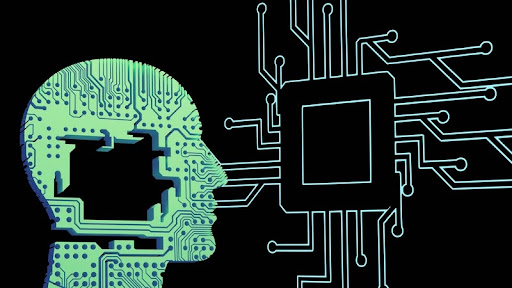
A visual take on machine intelligence—where algorithms meet digital “thinking.”
Artificial intelligence has moved from being a science fiction fantasy to something that quietly shapes our everyday lives. But deep learning, the technology that helps machines “think” in a way that mimics how we learn, still feels like a mystery to many people.
So, how do deep learning algorithms work? And what’s going on behind all those layers of digital “neurons”? Let’s break it down in plain English, without getting lost in overly technical rabbit holes.
What Is Deep Learning and Why Does It Matter?
Deep learning is a branch of machine learning that uses structures called neural networks, inspired by the human brain, to process information, identify patterns, and make decisions.
Here’s the quick hierarchy:
- Artificial intelligence (AI) is the big umbrella.
- Machine learning (ML) is a subset where machines learn from data.
- Deep learning (DL) is a specialized form of ML that uses multi-layered neural networks.
Why does it matter? Because deep learning is what allows machines to go beyond simple “if-this-then-that” logic. Instead, they can adapt, improve, and spot patterns in a way that feels much closer to human reasoning.
How Does Deep Learning Fit Into AI and Machine Learning?
Think of AI as the overall concept of machines being “smart.” Machine learning is one approach to achieving that, where we teach machines using data instead of coding every possible rule. Deep learning takes this one step further; it’s like giving the machine a brain-like network that can handle incredibly complex patterns and relationships in data.
The main difference is in the scale and complexity: deep learning networks often have dozens, or even hundreds, of layers, allowing them to pick up on subtle nuances that simpler models would miss.
What Are the Core Parts of a Deep Learning Algorithm?
At the heart of any deep learning system are neurons, layers, and weights. Here’s what each does:
- Input Layer – The data first enters here. Think of it as the network’s “eyes and ears.”
- Hidden Layers – These layers process the information, extracting deeper patterns as the data passes through.
- Output Layer – The final layer produces a prediction, classification, or result.
Two key players keep this process running:
- Activation Functions – These decide whether a neuron should be “activated” based on incoming information.
- Weights and Biases – These numbers adjust during training to improve accuracy.
How Do Machines Learn in Deep Learning?
The process starts with training, feeding the network large amounts of data so it can find relationships between inputs and outputs.
- Forward Propagation – Data flows from the input layer through the hidden layers to make a prediction.
- Loss Calculation – The system checks how far its prediction is from the correct answer.
- Backpropagation – The network adjusts its weights and biases to improve future predictions.
- Optimization – Algorithms like stochastic gradient descent fine-tune the adjustments.
This cycle repeats thousands, or even millions, of times until the model learns to make accurate predictions.
What Are the Main Types of Deep Learning Architectures?
While there are many variations, here are the main architectures you’ll come across:
- Feedforward Neural Networks (FNN) – The simplest form, where data flows in one direction from input to output.
- Convolutional Neural Networks (CNN) – Great for identifying patterns in structured data, often used in image-related tasks.
- Recurrent Neural Networks (RNN) – Designed to handle sequences, like time-series data or natural language.
- Generative Adversarial Networks (GANs) – Pairs of networks that compete against each other to create realistic outputs.
Each type is built for specific kinds of problems, but they all share the same learning principles.
How Do You Train a Deep Learning Model Effectively?
Training a model is like preparing an athlete; you need the right data, a clear goal, and ways to avoid bad habits.
- Data Preprocessing – Cleaning, normalizing, and structuring data before feeding it into the network.
- Choosing a Loss Function – This measures how far off the predictions are. Different problems need different loss functions.
- Avoiding Overfitting – When a model memorizes training data instead of truly learning patterns, it performs poorly on new data.
- Regularization Techniques – Methods like dropout or weight decay help the model generalize better.
Good training means balancing accuracy with the ability to adapt to new data.
What Challenges Does Deep Learning Face?
Deep learning has a lot of potential, but it’s not without hurdles:
- Computational Power – Training large models requires significant processing capability, often using specialized hardware like GPUs or TPUs.
- Data Requirements – Models often need massive datasets to perform well.
- Transparency – It can be difficult to explain exactly how a model arrived at a decision.
- Bias – If the training data is biased, the model’s output will be too.
Addressing these challenges is a key focus for researchers and engineers.
Where Is Deep Learning Headed Next?
The future of deep learning is pushing toward more efficiency, interpretability, and human-like reasoning. New research is focusing on:
- Smaller, more efficient models that can run on everyday devices.
- Better interpretability so humans can understand why a model makes certain decisions.
- Cross-domain learning, where models can apply knowledge from one task to another.
The ultimate goal? Systems that can learn faster, adapt more flexibly, and reason more like humans, without requiring massive datasets or supercomputers.
Key Takeaways
Deep learning is all about teaching machines to learn and adapt in ways that mimic our thought processes, without needing explicit instructions for every single situation.
By understanding the basics, neurons, layers, activation functions, and learning cycles, you can start to see how the digital “brain” works. And while the field faces challenges like computation limits and transparency, ongoing research is making it more accessible, efficient, and trustworthy.
Frequently Asked Questions (FAQ)
Q: What is the difference between machine learning and deep learning? A: Machine learning is about teaching machines to learn from data, while deep learning uses multi-layered neural networks to learn more complex patterns.
Q: How long does it take to train a deep learning model? A: It depends on the size of the model, dataset, and available computing power; it can range from minutes to weeks.
Q: Do deep learning models always require huge datasets? A: Not always. While large datasets help, techniques like transfer learning can work with smaller datasets.
Q: Why is deep learning sometimes called a “black box”? A: Because it’s often hard to see exactly how the model processes data and makes decisions internally.
Q: Can deep learning work in real time? A: Yes, especially with optimized models and fast hardware, deep learning can process data and produce results almost instantly.
About the Author