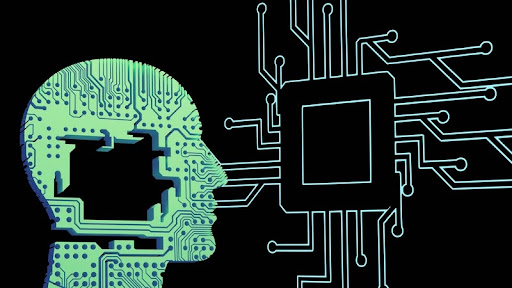
AI shapes what we see — even in everyday search results.
Artificial intelligence isn’t just a futuristic concept anymore; it’s in your phone, your streaming service, your online shopping cart, and even in how some companies decide who to hire. AI algorithms have woven themselves into everyday life, often without us even realizing it.
And here’s the thing: when these algorithms work well, they can be incredibly helpful. But when they don’t? The results can be frustrating, unfair, or downright harmful. That’s why it’s worth taking a closer look at the good, the bad, and the biased sides of AI.
What are AI algorithms and why should you care?
AI algorithms are essentially step-by-step instructions that help computers “learn” from data and make predictions or decisions. Instead of following a fixed set of commands, they adapt based on patterns in the information they’re fed.
Think of it as teaching a dog tricks. You give the dog examples, rewards, and repetition, and over time, it gets better at responding. But if you give the wrong signals or train inconsistently, things can go south quickly.
Why should you care? Because AI doesn’t just recommend movies. It can influence hiring decisions, credit approvals, healthcare diagnostics, and more. That’s a lot of responsibility for something that can make mistakes.
The Good: How AI algorithms help us every day
When AI works well, it’s like having a super-efficient assistant who never sleeps. It can process massive amounts of data in seconds, something no human could realistically do.
Here are a few ways AI brings value:
- Speed and efficiency – Need to sort through millions of emails for spam? AI’s got it. Want weather forecasts updated every hour? AI makes it happen.
- Consistency – Humans get tired, distracted, or emotionally influenced. AI sticks to the same process every single time.
- Pattern recognition – Whether it’s spotting a security threat or flagging suspicious activity in a bank account, AI can catch patterns that might slip past human eyes.
When designed and monitored correctly, AI can reduce human error and lead to better outcomes. It’s not perfect, but it can be a serious productivity boost.
The Bad: Why do AI algorithms sometimes fail?
Even the smartest algorithms have blind spots. And no matter how advanced they get, they’re still only as good as the data and rules they’re built on.
Some common reasons AI goes wrong include:
- Bad or incomplete training data – If the system isn’t trained with enough relevant data, it won’t understand the full picture.
- Over-reliance on automation – People sometimes treat AI outputs as the absolute truth, forgetting that it’s just a tool, not an all-knowing entity.
- Lack of context – AI can spot patterns, but it can’t always understand why those patterns exist.
Transparency is another challenge. Many AI models operate like “black boxes”; you see the results but have no idea how they got there. That makes it hard to trust or verify the decisions being made.
The Biased: Can AI algorithms be fair?
Here’s a reality check: AI doesn’t create bias out of thin air. It picks up bias from somewhere, usually from the data it’s trained on or the way it’s designed.
Bias can creep in through:
- Data collection – If the data mostly represents one group or perspective, the AI will reflect that imbalance.
- Labeling errors – Human mistakes in categorizing or tagging data can introduce skewed results.
- Societal patterns – AI mirrors the society it learns from, meaning historical inequalities can get baked into its decision-making.
The problem is that biased algorithms can unintentionally reinforce unfair treatment, giving certain groups more opportunities while shutting others out. And once bias is in the system, it’s not easy to remove without deliberate effort
Why does AI bias matter in everyday life?
Bias in AI isn’t just a tech issue; it’s a fairness issue. If an algorithm is used in hiring, education, or financial decisions, bias can limit opportunities for people who deserve them.
Even when AI is used for seemingly harmless purposes like recommending products, bias can still shape what we see and don’t see. That affects everything from the news we consume to the way we view the world.
When enough biased decisions pile up, trust in technology starts to erode. And that’s bad news, because without trust, people resist innovation, even the kinds that could help them.
How can we reduce AI mistakes and bias?
The good news? We’re not powerless here. There are ways to make AI more reliable, transparent, and fair.
- Better data quality – Using diverse, representative data sets helps reduce skewed results.
- Human oversight – AI should assist decisions, not make them entirely on its own.
- Regular audits – Periodic checks help catch bias or errors before they cause harm.
- Explainable AI – Designing systems that can clearly show how they reached a It’s a bit like quality control in manufacturing; if you keep checking the product, you’re more likely to catch defects early.
What’s the human role in making AI work?
Here’s the truth: AI isn’t here to replace humans. It’s here to work with us. But for that to happen smoothly, we need to stay in the loop.
That means:
- Questioning AI results instead of blindly trusting them.
- Providing feedback to improve systems.
- Learning enough about how AI works to spot red flags.
Think of AI as a skilled but inexperienced intern. It can do amazing things, but it still needs guidance, oversight, and context from a human who understands the bigger picture.
The balancing act: innovation vs. responsibility
AI is evolving fast, maybe faster than regulations and ethics can keep up. That means we all have a role to play in pushing for responsible development.
Companies building AI need to prioritize fairness, accuracy, and transparency, not just speed and profit. Policymakers need to create rules that protect people without stifling innovation. And everyday users? We need to stay informed, ask questions, and demand better from the tools we use.
When we balance innovation with accountability, AI has a much better chance of being a force for good.
Conclusion
The story of AI isn’t just about technology; it’s about people. AI can be efficient, accurate, and helpful, but it can also make mistakes and carry bias. The difference between the good, the bad, and the biased often comes down to how carefully it’s designed, monitored, and guided.
We don’t have to fear AI. But we do have to respect its power and its flaws. If we build it thoughtfully and use it responsibly, we can shape a future where algorithms work for everyone, not just a select few.
FAQ: AI Algorithms and Bias
Q1: What is an AI algorithm in simple terms? An AI algorithm is a set of instructions that helps computers learn from data and make predictions or decisions without being explicitly told what to do every time.
Q2: Why do AI algorithms make mistakes? They make mistakes when trained on incomplete, inaccurate, or biased data, or when they’re applied to situations they weren’t designed for.
Q3: How does bias get into AI systems? Bias usually comes from the data; if the data reflects existing inequalities or lacks diversity, the AI will inherit those biases.
Q4: Can AI ever be completely unbiased? Probably not entirely, but we can significantly reduce bias through diverse data sets, careful system design, and ongoing monitoring.
About the Author