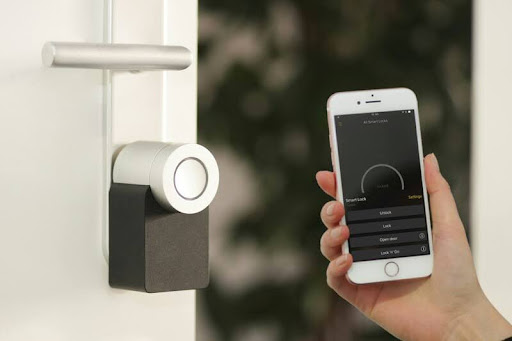
Unlock your home with a tap—where modern design meets effortless security and smart living.
Introduction
Let’s be honest, homes are evolving. The stylish kitchen and open-concept living area are no longer the only elements making a splash. Now more than ever, buyers desire homes that think, react, and offer more than just walls and a roof. Welcome to the age of the connected home. In this article, we’ll explore why the “smart home” is no longer merely a luxury addition; it is swiftly transforming into the standard for contemporary home buyers. Are you ready to dive in?
So, what is a “smart home,” and what do we mean by connected features?
Answer: A “smart home” is a residence fitted with devices that are connected to the internet, automated or controllable remotely, and interlinked to create a more adaptive living space. “Connected upgrades” include features such as smart lighting, voice-activated controls, automated thermostats, security systems, and appliances that integrate into this network. Picture it this way: rather than manually flipping a switch or adjusting the thermostat, you can give a voice command, use an app, or allow the system to adjust itself automatically.
It’s a shift from manual to automated, from reactive to proactive. And in the U.S., this shift is already underway. Industry data shows that the global market for smart homes is expected to grow from about $127.7 billion in 2024 to as much as $1.4 trillion by 2034, representing a compound annual growth rate (CAGR) of roughly 27%. (Today’s Homeowner) For the U.S. market specifically, projections show a CAGR of over 23% from 2025 to 2030. (Grand View Research) So yes, the smart home revolution is real and gaining traction.
Why is the shift happening? (What’s driving this change?)
We often wonder: Why now? Why are connected upgrades moving from “good to have” to “must have”? Here are the key forces at work:
- Convenience & lifestyle expectations. We live in a world where our phones control everything, from music to cars to meals. Why wouldn’t we expect our homes to keep up?
- Security & peace of mind. Smart locks, monitoring systems, and cameras offer a sense of safety that today’s buyers value deeply.
- Energy efficiency and cost savings. With utilities rising and sustainability becoming more important, smart systems that help manage usage are attractive.
- Resale value & market differentiation. For sellers and developers, homes with connected features stand out in a crowded market. In short: buyers don’t just want a “nice house” anymore; they want a home that’s smart, responsive, and future‑ready.
What are the key connected upgrades shaping modern homes?
Let’s break down the major categories of connected upgrades that are becoming staples in modern homes.
Smart Security Systems
Smart locks, doorbell cameras, motion sensors, and remote monitoring. These upgrades give homeowners control and visibility, even when they’re away. They’re becoming more intuitive, more integrated, and more expected by prospective buyers.
Automated Climate Control & Energy Management
Smart thermostats, automated HVAC controls, connected sensors that learn patterns. These systems aim to maintain comfort while optimizing energy usage. For many buyers, this isn’t just a feature; it’s part of a smarter living blueprint.
Voice‑Activated Assistants & Integrated Controls
Devices like voice speakers, whole‑home hubs, and unified control platforms. These allow users to say “turn off the lights,” “set the scene,” or “lock the front door,” and it just happens. It’s less about gimmicks and more about seamless living.
Smart Lighting & Smart Appliances
From LED lighting systems that change ambience to appliances that connect to the internet and adapt their functions, these upgrades hint at lifestyle, comfort, and modern design sensibility. As homes become more connected, the idea of “smart kitchen” or “smart laundry” is no longer fringe; it’s mainstream.
Connected Entertainment & Networking
With streaming, gaming, home networks, and multiple devices per household, the infrastructure to support it all becomes important. High‑speed networks, mesh WiFi, and device management underpin what “connected” really means today.
Why do smart features matter to homebuyers?
Great question. Let’s look at the “why” from a buyer’s perspective.
- Desirability. When modern buyers walk through a home and see smart features, they think forward‑thinking, tech‑savvy, and convenient. It hits a “modern lifestyle” expectation.
- Perceived value. Even if the upgrade cost was incremental, the perceived benefit can be substantial: easier living, lower bills, better security.
- Signaling. A home with smart upgrades signals design and build quality, that the house has been cared for and kept current. So if you’re selling, building, or renovating, integrating smart connected upgrades is less optional and more aligned with buyer expectations.
What are the benefits of smart home upgrades?
Let’s be specific about what homeowners actually gain.
Convenience and Ease of Use
It’s simple: fewer manual tasks, more automation. Want the living room to dim the lights and start the music at 7 p.m.? Done. Want the front door locked and the thermostat set when you leave? Just say the word (or tap the app). Living becomes a bit smoother.
Energy Efficiency and Cost Savings
Smart systems can learn your patterns, adjust temperatures, turn off unneeded appliances, and reduce phantom draws. Over time, that adds up. Given current energy cost concerns in the U.S., this benefit resonates strongly.
Enhanced Safety and Security
Remote monitoring, alerts on your phone, smart locks, cameras, these aren’t just tech toys. They offer real practical value. For many buyers (especially families or older homeowners), this is a strong selling point.
Adaptability for the Future
Here’s a major one: smart upgrades help homes stay relevant. As technology evolves, homes that are set up for connectivity adapt more easily. Instead of a one‑time feature, think long‑term. When a home can evolve, it holds value.
Are there misconceptions holding people back?
Absolutely. Let’s address some common concerns.
“It’s too complicated.”
Truth: tech used to be geeky, but it’s getting simpler. Many systems now have user‑friendly apps, voice assistants, and plug‑and‑play devices. The barrier to entry is lower than ever. Still, the key is thoughtful planning, not tossing in random gadgets.
“It might break or become obsolete.”
Yes, any tech can. But much of the smart home framework is built around standards and integration. And because the market is growing fast (CAGR in the 20‑30% range) (rootsanalysis.com), the odds that connectivity will only increase are good. Buyers are more confident of longevity.
“It’s just a gimmick / expensive.”
Some upgrades may be over‑hyped. But when planned with purpose (security, energy, ease), the features deliver meaningful value. It’s about smart integration, not gimmicks. And since many buyers expect connected features now, the cost might be less of a “luxury” and more of a baseline.
What does the future hold for connected homes?
Let’s look ahead.
- Integration everywhere. Devices no longer isolated, lighting, HVAC, entertainment, security, all talking to each other. That ecosystem mindset is already taking hold.
- Personalization & intelligence. Think systems that learn habits, adjust automatically, and suggest optimizations. AI and machine learning will increasingly play a role.
- Standardization becomes baseline. Just like a two‑car garage is expected in certain markets, connected upgrades may soon be seen as standard. Homes without them risk feeling dated.
- Resale and appreciation implications. As more homes adopt connectivity, buyers may begin expecting it, and homes without it will feel lacking. Building forward‑thinking into homes now may pay off later.
Conclusion
Okay, so what does this mean for you, whether you’re buying, selling, building, or renovating? The takeaway is clear: connected upgrades aren’t fringe anymore. They’re part of how homes are defined in 2025 and beyond. When a home can respond to you instead of you responding to it, that’s a shift in how we live. Ask yourself: will your home feel modern in five years? Will it still meet expectations in a world where “smart” is assumed? If the answer is “maybe not,” then this is your invitation to lean in. Consider the upgrades. Plan the connectivity. Make the smart home revolution work for you, and for the value of your home. Want help exploring specific upgrades or what to prioritize? I’m happy to dive into that with you. Let’s bring your home into the connected age.
FAQ
Q. What does it mean to have a connected home? A connected home refers to one that features devices capable of communicating over the internet, enabling remote or automated management, and integrating these systems to enhance the overall living experience.
Q. Why are smart home upgrades essential for today’s buyers? They are significant because buyers look for homes that provide convenience, security, energy efficiency, and readiness for the future. Smart upgrades indicate that a property fulfills those criteria.
Q. Are the expenses associated with smart home upgrades justified? When selected carefully, such as for enhanced security, better energy management, or improved lifestyle, they usually offer value in terms of functionality, savings, and appeal on the market.
Q. Which smart upgrades are most valuable? Critical categories include security systems, smart thermostats/climate control, voice-activated hubs, smart lighting/appliances, and entertainment/network infrastructure.
Q. Will smart home features become commonplace in residences? Yes, market research indicates that connected home technologies are expanding swiftly and may soon be a standard in many areas instead of an optional feature. (Grand View Research) If you have particular queries (e.g., which upgrades to prioritize, estimated costs, and how to retrofit older homes), I can compile a follow-up guide
About the Author




