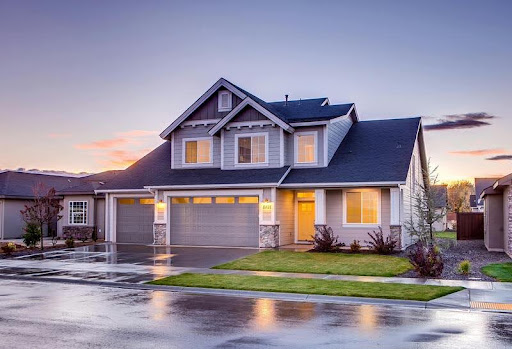
Sleek, modern concrete living: where minimalist design meets timeless luxury and architectural elegance.
Building a house has always been one of those big, exciting, and daunting projects. In 2025, though, it’s especially so. With shifting costs, new trends, and plenty of uncertainty, knowing what to expect is more important than ever. If you’re thinking “how much does it cost to build a home in 2025?” or “what should I budget?”, good. You’re asking the right questions. Let’s walk through what’s changed, what’s coming next, and how you can create a budget you actually stick to.
How have home construction costs changed recently?
Answer: They’ve gone up overall, with more variation by region and by choice of materials/finishes.
Here’s the lay of the land: in the U.S., the average cost of building a new single‑family home was about $323,026 (construction only, excluding land) per data from March 2025. (Bankrate) In a broader measure, one infographic noted the average cost was $428,215 for a new home in 2024. (The Trust Company of Kansas)
What does that mean per square foot? One source estimates $100 to $200 per square foot nationally, with some higher‑cost markets exceeding $350 per square foot. (Autodesk) Another project $125 to $300 per square foot in 2025, factoring in materials, labor, and location. (Strand Consulting Corporation)
Translation: if you’re building, say a 2,000 sq ft home, you might be looking at somewhere in the ballpark of $250,000‑$600,000 for construction alone (plus land and other costs).
Why the rise? A few factors: materials costs continue to climb, labor rates are higher, and supply chain disruptions or tight material availability still ripple through the industry.
For instance, basic materials like lumber, steel, and concrete are being impacted. (Strand Consulting Corporation) Also, regional differences matter a lot. In the Northeast vs. the Midwest vs. the South, you’ll see quite different cost curves. (Bankrate)
So yeah, costs have changed, notably upward, and more unpredictably than they used to.
What emerging trends are affecting building costs in 2025?
Answer: New tech, sustainability demands, modular methods, regulatory shifts, all pushing costs (and possibilities) in new directions.
Thinking ahead: what’s different now compared with five or ten years ago? Here are some big ones:
1. Sustainable and energy‑efficient building practices
More people want homes that use less energy, stay comfortable, and have smaller utility bills. That’s great, but it also means a higher upfront cost. Using higher‑grade insulation, energy‑efficient windows, solar-ready wiring or panels, and better HVAC systems all add to the build cost. One article noted that choosing eco‑friendly materials tends to raise the initial cost, though it may lower long‑term operational costs. (Strand Consulting Corporation)
2. Smart home technologies
Smart thermostats, integrated systems, automated lighting, and advanced wiring, all coming more standard in modern builds. While desirable, they add cost. If you ask, “What’s the best way to plan for smart tech in my new home?” you’ll need to budget for those upfront.
3. Prefabrication and modular construction
These methods are gaining traction because they can speed up timelines and reduce waste. But depending on the region and builder, they might require specialized components or transport logistics, which can add cost.
4. Regulatory changes and permitting impacts
Building codes are getting stricter in many places (energy, sustainability, safety). Permitting, inspections, and site regulations increasingly add to the cost and timeline. The longer the process or the more complex the permit environment, the higher your soft costs (architect, engineer, consultant) and the higher your risk of delays or budget creep.
In short: if you want a modern build in 2025, expect that “standard” doesn’t mean simple. These trends are pushing what “basic home build” looks like, and what you pay for it.
What are the main cost components when building a home?
Answer: Land acquisition & site work, materials, labor, design/permit costs, and interior finishes all stack up, and each one has its own variables.
Breaking it down helps you understand where the dollars go. Ask yourself: “What am I really paying for?”
Land acquisition and site preparation
Before you build anything, you need a lot: a site, utilities, and foundation prep. Land cost varies hugely depending on location (urban vs. rural), lot slope, and access to services. Site preparation, grading, clearing, and utilities hookup can throw surprises your way.
Building materials
This is a big chunk of the budget. Framing, concrete, roofing, windows, all of it. With supply chain issues and material inflation, this category is more volatile than ever. For example, one source puts rough lumber, gypsum wallboard, wiring, and roofing as substantial cost drivers. (Bankrate)
Labor and contractor fees
Even if your materials are stable, labor costs are rising. Skilled trades are in demand and face wage pressure. If your crew has to wait on material deliveries or correct errors, you’ll pay for that idle time too.
Design, architectural, permits & inspections
Don’t skip this. If you’re customizing your home, hiring an architect might cost 5‑20% of your final build cost (depending on complexity), especially in high‑cost markets like California. (HomeLight) Permits and associated soft costs can add a meaningful chunk.
Interior finishes and fixtures
Here’s where you get to personalize, but choose carefully because this category can drive your cost per square foot upward. Flooring, cabinetry, lighting, and countertops; each decision affects the total cost. In California, for instance, custom finishes make building costs $400+ per square foot in many locales. (HomeLight)
Putting it all together: you’ll want to map each of these categories out, perhaps in a spreadsheet, so nothing catches you off guard in your build.
How to budget wisely for your build?
Answer: Set a realistic budget, prioritize what matters most, plan for contingencies, and monitor your spending throughout the process.
Let’s talk about the practical steps.
Set a realistic overall budget
Start by estimating your full cost: land + construction + soft costs + contingency. Use the national and regional metrics as guideposts (for example: $125‑$300 per sq ft, $323K average construction cost), then adjust for your region and plan.
Prioritize must‑haves vs. nice‑to‑haves
You want that luxe kitchen and spa bath? Fine. But identify what you need versus what you can live without. A smart budget separates these, so if you hit cost pressures, you can re‑allocate. Ask: “What features deliver the greatest value now and later?”
Contingency planning for unexpected costs
Unexpected things will happen. Weather delays. Material price jumps. Permitting hiccups. One rule of thumb: include 10‑15% contingency, though in volatile markets you might allow more. Better to budget K extra than scramble when your builder says, “We hit a snag.”
Comparing quotes and understanding cost breakdowns
When builders give you quotes, ask for detailed breakdowns: materials, labor, finishes, allowances. Don’t accept “all-in-one” quotes without seeing the line items. Be comfortable asking what’s excluded or likely to change.
Tracking expenses throughout the construction process
Once you’ve locked in contracts, keep tabs. Use a spreadsheet or construction budget tool. Monitor change orders, keep receipts, and track expenses against budget. Don’t wait until the end to see your final cost; stay on it.
Planning your financing and timing
Consider how you will pay: construction loans, build‑to‑permanent loans, or savings. Also, think about timing, construction may take 6‑12 + months depending on scope and region. The more accurate your timeline, the less likely you are to face surprise carrying costs (interest, rent, etc.).
What should you plan for in the future?
Answer: Consider long‑term maintenance, energy costs, flexibility, and how your build will serve you five to ten years down the road. Building a home is more than getting walls and a roof up; it’s about how you’ll live in it, use it, and maintain it. So:
Consider long‑term maintenance and energy costs
If you invest in high‑efficiency systems or premium materials, you may spend more upfront but save on utility bills and maintenance later. A well‑designed home can cost less to own over time. Ask: “What’s the best way to build so I’m not shelling out big for upkeep in year five or ten?”
Flexibility for future upgrades or expansions
Maybe you don’t need a full basement now, but you might want one later. Plan your site, HVAC, wiring, and structural to allow for that. Future‑proofing can cost a bit more now, but save more later.
How planning prevents budget overruns
The more decisions you make ahead of breaking ground, site selection, plan finalization, finishes, contingencies, the fewer surprises. Surprises almost always cost more. Staying proactive keeps you in control.
Conclusion
Building a home in 2025 comes with its share of challenges, but also opportunities. Costs have shifted, new trends are shaping what “standard” means, and budgeting wisely is key. You’ve got to go in eyes open: know the trends, break down the major cost categories, craft a realistic budget, and plan for the future.
If you do that, you’ll be better equipped to bring your dream home into reality, without budget shock at the end.
Thinking of starting soon? Good. The best time to plan is right now. Want help digging into cost‑per‑square‑foot in your state or getting a checklist going? I can help with that, too, just ask.
FAQ
Here are some common questions people ask when planning a home build in 2025, with quick answers to help you out.
Q: What is the average cost per square foot to build a house in 2025?
A: It varies a lot by region and finish quality, but a reasonable estimate for many parts of the U.S. is between $125 and $300 per square foot. Strand Consulting Corporation+1
Q: How much should I budget for unexpected costs when building a home?
A: A good rule of thumb is to plan for about 10‑15% of your overall construction budget as contingency. If your project is especially complex or materials are volatile, consider budgeting more.
Q: Is building a home cheaper than buying an existing one in 2025?
A: Not necessarily. Building often gives you more control and customization, but because of rising materials and labor costs, it can cost as much, or more, than buying an existing home, especially when you factor in land, design, and delays. For example, one source noted that construction alone averaged around $323,000, excluding land. Bankrate
Q: What are the biggest cost drivers when building a home in 2025?
A: Key drivers include: location/land cost, materials (especially lumber/steel/concrete), labor cost, design complexity, and finishes. Also, permit/regulation costs and smart/sustainable features can push things up.
Q: How can I reduce building costs without sacrificing quality?
A: Focus on smart choices: choose efficient design (optimize square footage), pick materials that offer value (not just premium for premium’s sake), lock in pricing early when possible, avoid major site complications (steep slopes, difficult access), and monitor change orders strictly.
About the Author




