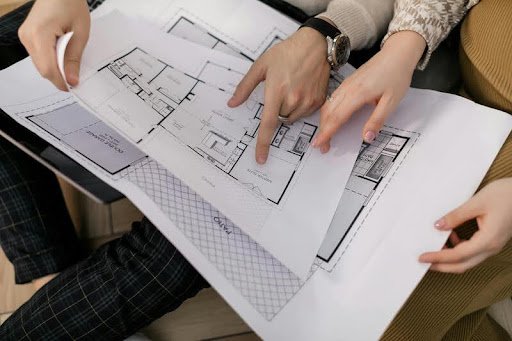
Planning your dream home starts with thoughtful sketches and inspired design ideas.
Introduction
Imagine walking onto a construction site in 2035. What do you see? Drones buzzing, robots lifting beams, buildings adapting to weather in real time? It’s not sci‑fi, it’s where the construction industry could be heading. In this article, we’ve gathered insights from leading builders and industry voices about what the next decade of construction innovation might bring. Whether you’re in development, design, contracting, or just curious about how our buildings will evolve, these predictions offer a clear view of what to expect and how to prepare.
We will look at new technologies, eco-friendly practices, smart buildings, changes in jobs, design, city development, and the important challenges and opportunities ahead. So, grab a drink, relax, and let’s explore what the future of construction might be like and how it impacts you.
What new construction technologies should we keep an eye on?
Answer: In the next ten years, we can expect to see more use of AI and automation, digital models, 3D printing, and robots in building projects.
Let’s go into more detail. One big trend is that we’ll see more robots and automation at construction sites. Tools that used to be specialized are now becoming useful and affordable. For instance, recent studies indicate that by 2030, global construction output could increase by 85%, reaching around 14 trillion dollars, mostly due to innovations.
Another important technology is the idea of a “digital twin”, which means creating a virtual version of a building or infrastructure so you can test how it works, plan future maintenance, and track its progress. Using digital twin technology in construction helps with visualization, better planning, safety checks, and predicting when maintenance will be needed.
Then we have 3D printing and prefabrication. Although traditional building methods are still the most common, incorporating 3D printing and modular designs can lower the need for labor, cut down on waste, reduce costs, and save time.
In summary: If you’re curious about how construction practices might change, expect to see robots, AI-driven planning, virtual models, and off-site building becoming everyday practices instead of just ideas.
Why is eco-friendliness and green building becoming so important in construction?
Answer: The need to protect the environment, comply with regulations, and save money is pushing the use of sustainable materials, energy-efficient designs, and green building techniques.
Here’s the situation: Construction has been known to produce a lot of pollution. It was reported that this industry is responsible for nearly 40% of all carbon emissions around the world. Because of this, builders and developers are feeling the pressure to improve, and many are coming up with new solutions.
In the coming decade, we can expect to see more trends like using eco-friendly materials (such as cross-laminated timber instead of steel or concrete), buildings that produce as much energy as they use, and smart systems that make the best use of energy.
In the United States, green building isn’t just popular, it’s becoming more affordable. Using materials that cost less over their lifetime, designs that lower energy bills, and possible financial incentives all contribute to this shift. So, if you’re wondering about the best ways to make a building environmentally friendly, think about how it’s designed, what materials are chosen, and how it’s monitored.
In other words: Sustainability isn’t a side‑project anymore, it’s entering the core of how buildings get made.
How will smart infrastructure and digital integration reshape construction?
Answer: Smart buildings, connected infrastructure, Internet of Things (IoT) sensors, and data analytics will create more efficient, adaptable projects and operations.
Think of a building that adjusts its lighting and temperature based on occupancy, or a jobsite where sensors track material movement and worker safety in real time. These are no longer hypothetical.
According to recent industry outlooks, the push toward digital integration is accelerating, construction firms are leveraging data and connectivity to improve decision‑making, reduce rework, and boost productivity. (Autodesk)
For example, using IoT and sensors means you can monitor things like structural health, wear‑and‑tear, energy use, and trigger maintenance before problems balloon. That’s huge when you consider lifecycle costs.
And here’s an important point: Smart infrastructure isn’t just about fancy tech, it’s about using connectivity to make construction better, faster, safer. If a builder asks, “What’s the best way to integrate digital systems onsite?”, the answer is: start small, connect tools, analyze data, then scale.
What’s happening with labor, skills, and the construction workforce?
Answer: The workforce is evolving: skilled‑trade shortages, technology adoption, upskilling, and human‑machine collaboration are becoming the norm.
You’ve probably heard it: labor shortages have plagued construction for years. And that trend isn’t going away. Mid‑2025 data shows that while the broader economy slowed, demand for skilled trades, especially in electrical, HVAC, and specialized construction, remains strong. (Outlook, Challenges …”>Deltek)
What does this mean for the next decade? Builders expect more reliance on technology to fill gaps (automation, prefabrication) and greater emphasis on training and upskilling workers so they can handle new tech. In other words, a carpenter of 2030 might also be comfortable with drones, ergonomics sensors, or augmented reality (AR) overlays.
It also means the industry needs to rethink how it attracts talent, retains workers, and builds a culture of innovation. So the question isn’t just “how do we build the workforce of the future?” but “how do we build with the workforce of the future?”
How will design and urban development trends impact what gets built and how?
Answer: We’ll see more modular and prefabricated construction, flexible urban spaces designed for changing needs, and design that responds to societal and environmental shifts.
In the next decade, it won’t just be what we build, but how we build and why we build. Modular construction is one major trend: off-site manufacture of building components, then assembling onsite. This method cuts time, reduces waste, and adapts well to labor shortages. (fieldex.com)
Flexibility is key. Urban living is changing; people want mixed‑use spaces, work-from-home-ready apartments, and adaptive spaces that can switch from office to residential to retail as needs evolve. Builders are expecting design priorities to shift accordingly.
Another dimension: the impact of environmental resilience and climate change. Builders will consider flooding, extreme weather, and energy scarcity and design accordingly. Ever ask, “What’s the best way to future‑proof a building?” The answer lies in flexible, resilient design plus smart materials.
In short: As cities evolve and lifestyles change, the built environment will follow.
What are the main challenges and opportunities for the next decade?
Answer: Challenges include cost pressures, supply‑chain issues, regulatory complexity, and technology adoption barriers. Opportunities lie in early adoption, differentiation, efficiency gains, and sustainability leadership.
Let’s talk real. Innovation sounds great, but it’s rarely a plug‑and‑play situation. Many construction companies face rising material costs, inflation, interest‑rate pressures, and supply‑chain bottlenecks. For example, one mid‑2025 report noted that commercial and manufacturing construction spending in the U.S. showed “mixed signals” and labour challenges remain acute. (Outlook, Challenges …”>Deltek)
Adopting new tech is also harder than it seems: integration issues, upfront investment, training needs, risk aversion. Plus, regulatory frameworks around new materials or methods (like 3D printing) are still catching up.
But here’s the flip side: For firms that embrace innovation early, the opportunity to stand out is big. Faster project delivery, lower waste, better energy performance, and distinctive design all become competitive advantages.
If you ask, “What’s the best way to create value in construction?” one answer: integrate innovation with operational discipline.
And from a sustainability angle, firms that build green now get ahead of regulation and investor expectations. That means long‑term value, not just short‑term cost.
Conclusion
So, what does the next decade of construction innovation look like? It’s robotics, AI, and sensors. It’s eco‑materials, net‑zero designs, and connected infrastructure. It’s a workforce that mixes tradespeople and tech‑savvy operators. It’s modular builds, flexible spaces, and hyper‑aware designs.
If you’re in construction, owner, contractor, designer, or developer, you’d do well to ask: Are we prepared? Are we adapting? Because the pace of change is real. And those who stay nimble will not just survive, they’ll lead.
If you’re curious about how to apply these trends in your own projects, drop a line in the comments. I’d love to help you dive deeper. Let’s build smarter, together.
FAQ
Here are some frequently asked questions in a format that’s easy to parse and great for search.
Q1: What construction technologies will dominate in the next 10 years? A: Technologies like generative AI for design, robotics for onsite tasks, digital twins for lifecycle management, modular and prefabricated construction, and IoT/sensor networks will dominate. (Epicflow)
Q2: Why is sustainable building becoming more important? A: Because of rising environmental regulations, increased investor and occupant demand for green buildings, and cost savings from efficient energy use and materials
. Construction drives about 40% of global carbon emissions. (Info-Tech Research Group)
Q3: How will the construction workforce change? A: There will be more demand for tech‑savvy workers, greater use of automation and prefabrication, and a need for upskilling existing trades to work alongside machines and digital tools. (Deltek)
Q4: What are the biggest obstacles to innovation in construction? A: Challenges include high material and labour costs, supply‑chain disruption, regulatory uncertainty, risk aversion, and integrating new tech into established workflows. (Deloitte)
Q5: What are the opportunities for builders in the next decade?A: Early adopters of technology and sustainability can deliver faster, cheaper, better‑performing buildings. They can also differentiate themselves in a competitive market and meet evolving client expectations.
About the Author




