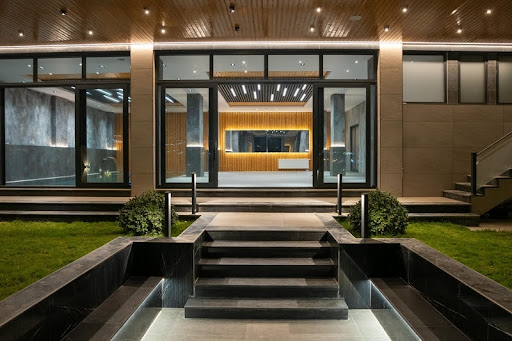
Reflecting the future of real estate — bold, modern, and built for what’s next.
Introduction
Let’s face it, the commercial real estate (CRE) world is going through a phase of change. If you’re an investor, developer, or someone tracking property markets, you’re probably asking: What’s next for CRE in 2025? Good question. With interest rates higher than a few years ago, supply chains still adjusting, and tenant behaviours evolving fast, the landscape is shifting beneath our feet. This article’s purpose is simple: give you a clear snapshot of which CRE sectors look like winners in 2025, which ones warrant caution, and how you can think strategically about your position. Let’s dive in.
What’s shaping the CRE climate in 2025?
Answer: Several major economic and market forces are moving the needle, including interest rates, supply & demand trends, investor sentiment, and technology/sustainability. Here’s a breakdown:
- Interest rates & borrowing costs. The higher the cost of debt, the tougher it is to finance property deals. In 2025, we’re still operating in a higher-rate environment compared to the ultra-low rates of preceding years. (Agora)
- Supply and demand shifts. Across many CRE sectors, the pipeline of new development is shrinking in the U.S. and North America generally, which can reduce oversupply risk. (JLL)
- Investor sentiment and capital flows. With more caution around legacy loans and refinancing risk, investors are being selective, preferring sectors with stable income streams. (Agora)
- Technology, sustainability & tenant behaviour. Tenants now expect real-estate assets to be efficient, flexible, tech-enabled, and green. That influences demand for newer builds versus older, inefficient stock. (PwC)
In short, the stage is set for some sectors to thrive, and others may struggle unless they adapt.
Which sectors are poised to watch in 2025?
Here are the asset types that are catching favourable wind in 2025.
Industrial & Logistics Spaces: Why are they strong?
Answer: E-commerce, supply-chain reorganisation, the push for faster deliveries, and the reshoring of manufacturing are all helping this sector. In the U.S., new supply is projected to hit around 217 million sq ft in 2025 for industrial/logistics, though that’s about 37% lower than 2024. (Real Estate Market Outlook Midyear Review”>CBRE) While that suggests supply is cooling, it also means vacancy pressures are lower than they might have been. Plus, as companies shift to shorter leases and prefer newer, high-quality space, older assets may be challenged. So, the winners will be the new, well-located, and efficiently built-out industrial/logistics facilities.
Multifamily & Residential Rentals, What’s driving demand?
Answer: Affordability issues in home-buying, lifestyle changes favouring renting (or built-to-rent models), and demographic trends (like millennials, Gen Z, urban migration) are all pushing multifamily demand upward. According to a mid-2025 update, for U.S. multifamily, net absorption, occupied new units were expected to match pre-pandemic averages over the next few years. (Cushman & Wakefield) That kind of stability is attractive when other sectors feel shaky. In other words: rental housing isn’t as sexy as a tech startup, but it offers resilience in turbulent markets.
Data Centers & Digital Infrastructure: What’s the opportunity?
Answer: As cloud computing, AI, edge data, and high-speed connectivity proliferate, more physical space is required to house servers and network gear. This drives demand for data centres and digital infrastructure. Globally (and in the U.S.), the supply of new data-centre space is constrained, creating potential upside for well-placed properties. (JLL) Investors who recognise this big-picture trend (digitisation + real estate) may find interesting plays here.
Healthcare & Life Sciences Facilities: Why should you watch?
Answer: Aging populations, increasing healthcare demand, and growth in biotech and life sciences research are pushing specialised real estate up the agenda. Developers and investors are taking note of lab space, medical offices, and other health-oriented facilities as resilient alternatives. While data for every segment is still emerging, many reports consider these “alternative” asset types more insulated from the typical swings in traditional CRE. (Agora)
Which sectors should you approach with caution?
Not all property types are under the same headwinds. Some deserve extra scrutiny.
Traditional Office Space: What’s the challenge?
Answer: Office real estate is in the spotlight for the wrong reasons. Hybrid work, higher vacancy rates, and less need for traditional footprints are all affecting this sector. In the U.S., the office vacancy rate is forecast to end 2025 around 18.9%. (Real Estate Market Outlook Midyear Review”>CBRE) New office deliveries for 2025 in the U.S. are set to hit a 13-year low of about 13 million sq ft. (Real Estate Market Outlook Midyear Review, CBRE). That drop might sound positive (less supply), but it’s also a reflection of weak demand and great uncertainty around leasing. So if you’re eyeing office properties, you’ll want to think: Is the building “flight-to-quality” (premium, amenity-rich, well located)? Or is it older, less competitive?
Retail Real Estate: Why caution is needed?
Answer: The retail space has been through disruption, online shopping, changing consumer habits, and even experiences replacing traditional retail footprints. While some segments (experience-driven retail, mixed-use) remain viable, many traditional shopping centres face headwinds. One global outlook noted that retail is “rightsized” and more balanced, but that doesn’t mean it’s free of risk. (World Economic Forum) If you get in, careful selection is key. Location, format, tenant quality, and adaptability (think flexible use) matter a lot.
Hospitality Sector, What to watch?
Answer: The hospitality (hotels, resorts) asset class is highly sensitive to travel patterns, business activity cycles, and operational costs (staff, utilities, debt servicing). 2025 looks like a recovery year in many markets, but costs are elevated, competition is strong, and capital is fickle. Thus, unless you have a niche, prime location, or operational advantage, hospitality investments carry more risk than “steady-income” CRE types in this environment.
What are the emerging themes across CRE in 2025?
Beyond individual sectors, certain cross-cutting trends are shaping the landscape.
Keep these in mind; they’ll help you connect the dots between sectors.
- Mixed-Use Developments: Combining residential, office, retail, logistics, and even life sciences in one campus is becoming more common. This helps diversify income streams and spread risk.
- ESG & Sustainability: Green buildings, energy efficiency, and carbon reduction aren’t just “nice to have” anymore; they’re increasingly demanded by tenants, investors, and regulators. (Agora)
- Data Analytics & PropTech: Using smart-building sensors, analytics, and AI for tenant engagement and operations is shaping the winners. The old way of offering four-wall space with no flexibility is fading.
- Regional Diversification & Secondary Markets: While gateway cities still get headlines, many investors are watching Sun Belt and secondary markets (think: Austin, Nashville, Charlotte) for better supply/demand dynamics. (U.S. Real Estate Market Outlook Midyear Review”>CBRE)
- Portfolio Flexibility & Risk Management: In an environment with higher rates and macro uncertainty, flexibility (e.g., ability to repurpose space, shift uses) matters more than ever.
Strategic Takeaways: How to position for 2025
Here’s where I speak directly to you, whether you’re investing, developing, or just watching the market.
- Build a flexible mindset. Don’t commit to long-term bets in sectors without an exit or transformation option. Property that can adapt (reuse, repurpose) has a premium.
- Balance risk and opportunity. The sectors to watch offer growth. The ones to approach with caution carry structural risk. Diversification across sectors/types helps.
- Focus on quality and location. “Location, location, location” is still true, but now add “tenant quality” and “building adaptability” to the mix.
- Stay ahead of tenant needs. Whether it’s industrial firms wanting automation-ready warehousing, tenants wanting shorter leases, or users wanting green features, anticipate what your space must offer.
- Use data and credible research. Reports show that supply pipelines are shrinking, vacancy risks vary widely, and interest rates remain a key factor. For example, the U.S. office vacancy is expected to hit ~18.9% in 2025. (CBRE)
- Don’t ignore capital cost. High interest rates and tougher refinancing mean that just assuming “the market always goes up” is risky.
Look for assets where income is stable and growth drivers are clear.
Conclusion
So, here we are. The 2025 CRE environment isn’t about “business as usual.” It’s about change, adaptation, and smart decision-making. If you invest in industrial/logistics, multifamily, data centres, or life sciences, you’re aligning with strong secular trends. If you’re in office, retail, or hospitality, you’ll want to be very selective and willing to pivot. The theme? Stay informed, stay flexible, and think ahead.
Want to stay in the loop? Drop a comment, ask a question, or share what sector you’re watching. Let’s keep the conversation going.
FAQ
Q: What is the best way to evaluate which CRE sector to invest in for 2025? A: Look at demand drivers (tenant base, demographics), supply pipeline, financing conditions (interest rate, debt maturity), and asset adaptability (can it shift uses if needed).
Q: Why is industrial/logistics expected to perform well in 2025? A: Because of e-commerce growth, supply-chain shifts, and demand for modern warehouse/distribution facilities. Also, new supply is slowing, which reduces oversupply risk. (Real Estate Market Outlook Midyear Review”>CBRE)
Q: Should I avoid office real estate altogether? A: Not necessarily, but you should be very cautious. The office market has higher vacancy rates, changing tenant needs (hybrid work), and may require significant repositioning to remain competitive.
Q: How does sustainability / ESG impact CRE in 2025? A: Strongly. Tenants and investors increasingly demand efficient, tech-enabled, low-carbon buildings. Assets that don’t deliver may see lower demand or higher costs. (Agora)Q: What regions in the U.S. should I consider for CRE investment in 2025? A: Secondary and Sun Belt markets (e.g., Austin, Nashville, Charlotte) are drawing attention thanks to population growth, job creation, and less supply pressure.
About the Author




