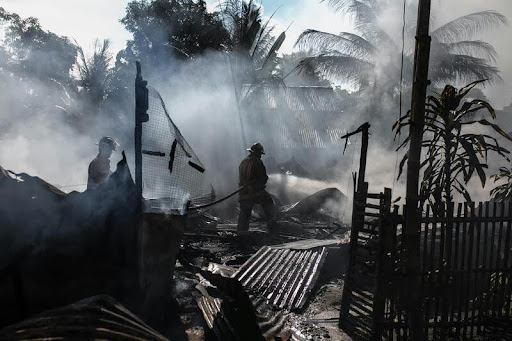
The aftermath of a wildfire, leaving homes in ashes and communities in need of recovery.
When disaster strikes, every second counts. From hurricanes sweeping across the coast to wildfires tearing through dry landscapes, emergencies in the U.S. can escalate quickly. In these moments, response time and efficiency often mean the difference between chaos and control. That’s where artificial intelligence (AI) is stepping in, not as some futuristic sci-fi gimmick, but as a very real tool that’s already reshaping how the country prepares for, responds to, and recovers from disasters.
Think about it: What if there was a way to spot a storm’s path earlier, coordinate relief faster, and make sure supplies get exactly where they’re needed, all without human teams having to crunch every number by hand? That’s AI’s promise in disaster relief. Let’s break down how it works, why it matters, and where it’s headed.
What Does AI Mean in Disaster Relief?
AI in disaster relief refers to using computer systems that can learn from data, spot patterns, and make predictions to assist in emergency management. Unlike traditional systems that follow a fixed set of instructions, AI adapts as it processes new information.
In a U.S. disaster setting, AI might be used to:
- Predict the likelihood of certain disasters based on historical and real-time data.
- Track ongoing events like storms, floods, or earthquakes as they unfold.
- Help relief teams decide where to focus their efforts.
It’s not about replacing human decision-makers; it’s about giving them better tools so they can make smarter, faster calls.
How Does AI Predict and Monitor Disasters?
The best way to prepare for a disaster is to see it coming as early as possible. AI does this by analyzing massive datasets, weather patterns, seismic activity, temperature changes, and satellite images to find warning signs that humans might miss.
For example, machine learning algorithms can sift through decades of hurricane data in seconds, spotting similarities between past events and current weather systems. This makes it easier to predict not only if a storm is coming but also how strong it might be and where it’s likely to hit.
In the U.S., this kind of predictive modeling can mean earlier evacuation notices, better supply stocking, and more targeted safety messaging. It’s all about buying precious time before disaster hits.
How Can AI Help Coordinate Emergency Response?
Once a disaster is in motion, things move fast, and not always in a good way.
Information comes in from dozens of sources: local authorities, news outlets, citizen reports, and emergency sensors. It’s a lot for any one person (or even a large team) to manage.
AI systems can quickly sort through all this incoming data and highlight the most urgent needs. For example, if multiple alerts indicate a neighborhood is flooded and people are trapped, AI can flag it for immediate attention. It can also map out the fastest and safest routes for rescue teams based on real-time road and weather conditions.
This streamlining keeps emergency services focused on what matters most, saving lives and reducing damage.
What Role Does AI Play in Managing Relief Logistics?
After the immediate danger passes, another challenge begins: getting supplies and aid where they’re needed most. And here’s the thing, disaster zones aren’t neat, organized places. Roads may be blocked, communication lines may be down, and the demand for essentials often outweighs the available resources.
AI helps by optimizing supply chain logistics. It can:
- Calculate the fastest delivery routes given current conditions.
- Track inventory levels of crucial supplies like water, food, and medical kits.
- Predict future demand so restocking happens before shortages occur.
This makes relief operations smoother and reduces waste, something especially important when every gallon of fuel or box of medicine counts.
How Does AI Support Decision-Making During a Crisis?
In an emergency, leaders need clear information, not just a pile of numbers. AI transforms raw data into actionable insights through dashboards, maps, and visual reports.
For example, if flooding is predicted to worsen in a certain area, AI might overlay that forecast with data on population density and evacuation routes. That way, decision-makers can see not just where water levels are rising, but how many people are affected and what their options are.
It’s like going from looking at a messy spreadsheet to having a clear, color-coded map that shows exactly where help is needed.
What About Recovery After the Disaster?
Recovery isn’t just about clearing debris; it’s about rebuilding smarter. AI supports this phase by analyzing post-disaster conditions. Using aerial imagery, sensors, and data from relief teams, it can assess the extent of the damage and track progress over time.
By identifying patterns, such as which areas take the longest to recover or which resources are most in demand, AI helps communities prepare better for the next event.
Put differently, it transforms adversity into preparedness for the future.
What Dangers and Difficulties Come with Applying AI to Disaster Relief?
The advantages of AI are intriguing, but there are drawbacks as well.
Data Privacy: Concerns regarding the storage and use of personal data may arise from the collection and analysis of information during a disaster.
Algorithm bias: AI may produce poor recommendations that have an impact on people’s lives if it is trained on skewed or incomplete data.
Over-reliance on technology: AI should inform decisions, not take their place; human judgment is still crucial.
Building transparent, updated, and ethically sound AI systems is necessary to address these problems.
How Will AI Affect Disaster Relief in the US?
The potential of AI in disaster response is still in its infancy. Potential developments in the future could include:
utilizing richer, more comprehensive datasets to create predictive models even more quickly.
Drones powered by AI for supply delivery and damage assessment in real time.
improved emergency communication technologies that overcome language barriers.
Having dependable, flexible AI systems could be revolutionary for communities throughout the United States as climate change increases the frequency and severity of natural disasters.
Concluding remarks
While AI isn’t a panacea, it is a potent weapon in the fight against loss brought on by disasters. AI has the potential to save lives and safeguard communities by anticipating threats earlier, coordinating responses more efficiently, managing resources more intelligently, and learning from every incident.
When technology and human knowledge coexist, the true magic occurs. Since people ultimately provide the heart, the bravery, and the hands-on action, AI can ultimately process the data.
FAQ: Artificial Intelligence in Disaster Relief
Q1: How does AI enhance disaster forecasting? AI gives agencies more time to plan and react by analyzing enormous volumes of historical and real-time data to find early warning indicators.
Q2: Is it possible for AI to take the place of human judgment in an emergency? No. Human judgment is still crucial for making decisions in complex situations, even though AI is a support tool that offers insights.
Q3: Does AI play a role in all kinds of U.S. disasters? Although adoption varies by region and resources, it can be used in a variety of situations, such as earthquakes, hurricanes, floods, and wildfires.
Q4: What are the primary obstacles to applying AI to disaster relief? Data privacy, algorithm bias, and making sure technology enhances human responders rather than replaces them are important concerns.
Q5: How will artificial intelligence affect disaster relief in the future? As technology and data sources advance, anticipate better coordination tools, AI-assisted drones, and quicker, more accurate predictions.
About the Author




