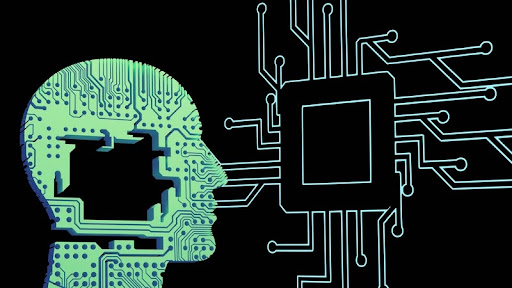
When the face doesn’t look quite right—spotting the subtle signs of deepfakes.
Let’s get straight to it. A deepfake is an audio, video, or image that’s been digitally manipulated using AI to appear real, even though it’s not. Think someone saying or doing something they never actually did. It’s crazy how convincing they’ve become. And here’s why you should care: deepfakes are fueling scams, identity theft, political manipulation, and even fraud that can cost big bucks.
Across the U.S., deepfake-based identity fraud skyrocketed from just 0.2 % to 2.6 % in early 2023 (Keepnet Labs). Fraud losses linked to deepfakes are projected to hit over a billion in 2025 (Views4You). That’s not small change. And right now, only about 0.1 % of people can reliably detect deepfakes, yikes (ZeroThreat).
Scary stuff, right? But don’t worry, this guide gives you clear signs to watch for and smart habits to protect yourself.
What visual clues tip you off to a deepfake?
You might notice flickering artifacts around the face, especially near the hairline or jaw. Lighting that doesn’t match the rest of the scene is a dead giveaway. Eyes that don’t blink naturally. Facial expressions that feel just a tad stiff. Those little glitches don’t happen by accident.
If something looks off, it probably is. It’s okay to pause and think: “Wait, is this even real?”
What about audio? When does a voice tell the truth?
Deepfake voices can sound robotic or eerily flat. The tone can feel just a little “off,” even if the words are normal. Sometimes the lip movement doesn’t sync with the audio, especially in poorly made versions. And here’s a mind-blower: just three seconds of audio can get you an 85 % voice match from the original, crazy, right? (Security.org)
Ask yourself: “Does that voice belong to the person I think?”
Are there tech tools that can help catch deepfakes?
There are, but beware. AI detectors, browser plugins, and reverse-image/video search can flag suspicious media. But many of these tools struggle with newer, more realistic fakes. A 2025 study testing real-world deepfakes found that many detectors drop below 60 % accuracy, some even hit as low as 50 % AUC (arXiv). Another report points out that many models fail when faced with newer fakes; they’re outdated (cjr.org).
So: use tech tools, but don’t rely solely on them. Think of them like one lens in a toolkit.
Why should you even care about deepfakes?
Because they’re everywhere, and they’re effective. Some perpetrators use deepfake voices and videos to impersonate CEOs, trick employees into wiring money, or hack systems.
In one Hong Kong case, an entire company lost $25 million dealing with a fake CFO on a video call (Business Insider). In contact centers, synthetic-voice fraud surged 680 % year-over-year. One in every 127 customer-service calls was fraudulent (Pindrop).
Even everyday people are targets. You might ignore a generic scam, but what if it comes in Mom’s voice? Or
How real has this issue become in the U.S.?
sounds like your bank?
It’s hitting home fast. Over half of finance pros report being targeted by deepfake scams, and many admitted they fell for it (IBM). Meanwhile, the U.S. is seeing deepfake fraud cause billions in losses, and fraud losses overall are projected to rise sharply through 2027, maybe even billions (Business Insider, Wikipedia).
This isn’t sci-fi. It’s here, now. And it’s grabbing headlines, from banks to DC.
What’s the role of laws and awareness?
There’s movement on both fronts. In May 2025, the U.S. passed the TAKE IT DOWN Act, requiring platforms to remove non-consensual deepfake imagery (think revenge porn) (Wikipedia). But broader laws on deepfakes are still being debated. Some bills address non-consensual imagery; others target political or fraud uses, but enforcement is still playing catch-up (Financial Times, Wikipedia).
As for awareness, many people still don’t know deepfakes exist, up to 71 % in some surveys (Home, ZeroThreat). Educating friends and family matters a lot.
So, what’s the best way to protect yourself?
- Always question the source. Did it come from a verified account or an unknown link?
- Trust, but verify. If something feels off, check with the person directly through a separate channel.
- Use verification tools, but stay skeptical. Complement them with your gut and common sense.
- Think before you share. Taking a split-second to pause can save a lot of trouble.
- Stay informed. Laws, tech, and threats are evolving fast. Keep up.
You’re already ahead by reading this. Share it with someone else, help them stay sharp, too.
FAQ
(Formatted for schema markup)
Q: What is a deepfake? A: A deepfake is synthetic media, like audio, video, or images, generated or manipulated using AI to appear real but showing or saying things that never happened.
Q: How common are deepfakes? A: In 2025, deepfake fraud accounted for around 6.5 % of all fraud attacks, a 2,137 % rise since 2022 (2025 Statistics”>ZeroThreat, programs.com).
Q: Can people tell deepfakes apart from real content? A: Very few. Only about 0.1 % of people reliably detect deepfakes. Human accuracy for high-quality deepfake videos can be as low as 24.5 % (ZeroThreat, eftsure).
Q: Are detection tools reliable? A: Not by themselves. Many struggle with newer deepfakes, which can mislead. Use them as one tool in a broader verification process (cjr.org).
Q: What laws protect against deepfakes? A: The U.S. passed the TAKE IT DOWN Act in May 2025, requiring the removal of non-consensual deepfake content. But regulations on other uses, like political or fraud-related deepfakes, are still developing (Wikipedia, Financial Times).
You’re doing the right thing by staying alert. Keep asking questions, sharing what you learn, and trusting your instincts. If you’d like help making visuals, checklists, or a simplified “spot-a-deepfake” go-sheet, I’d be happy to help!
About the Author