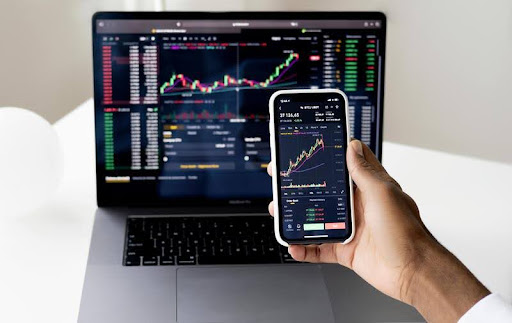
Market insights at your fingertips—AI tools make it easy to track trends across devices.
Market trends aren’t just for economists or corporate executives; they shape everything from product launches to marketing campaigns. But here’s the thing: spotting these trends early is hard when you’re buried in spreadsheets and raw data. That’s where artificial intelligence (AI) changes the game.
AI doesn’t just crunch numbers faster. It finds patterns you didn’t even know to look for. And the best part? You don’t have to be a tech wizard to use it.
So, let’s walk through exactly how you can use AI to analyze market trends, without drowning in jargon or overcomplicating the process.
What Does AI Do in Market Trend Analysis?
At its core, AI is a set of tools and algorithms designed to learn from data and make predictions. In market trend analysis, that means taking massive amounts of information, sales data, customer behavior, and social media chatter, and turning it into clear, actionable insights.
Instead of manually digging through reports, AI can:
- Recognize patterns in consumer habits.
- Spot shifts in demand before they’re obvious.
- Predict future market behavior with surprising accuracy.
For U.S. businesses, this is a big deal. A 2024 McKinsey report found that companies using AI in market analysis improved forecast accuracy by up to 50% compared to traditional methods. That kind of edge can mean the difference between leading a trend or missing it entirely.
Why Use AI Instead of Just Traditional Analysis?
Traditional market analysis still has value. But let’s be honest, it’s slow, and it’s limited by human bandwidth. AI flips that equation.
Here’s why AI makes sense:
- Speed – AI processes data in minutes, not weeks.
- Scale – It can handle millions of data points at once.
- Accuracy – It minimizes human bias and catches details you might overlook.
- Predictive Power – AI doesn’t just tell you what happened; it estimates what’s likely to happen next.
Think about it: if you’re running a retail store, wouldn’t you want to know before a buying trend spikes so you can stock up? AI gives you that kind of foresight.
What AI Tools and Techniques Are Best for Spotting Trends?
Not all AI is created equal, and “AI” can mean a lot of different things. Here are some key tools and methods you’ll hear about when it comes to market trends:
- Natural Language Processing (NLP): Helps AI understand and analyze written or spoken language, making it perfect for scanning social media posts, reviews, and news articles.
- Machine Learning Models: These learn from historical data to predict future patterns, like sales trends or seasonal demand.
- Sentiment Analysis: Determines whether people are talking about something in a positive, negative, or neutral way, helpful for gauging public mood.
- AI-Driven Data Visualization: Turns raw numbers into easy-to-read charts and dashboards so you can see trends at a glance.
Many businesses use a mix of these methods, depending on their goals and the data available.
How Do You Use AI to Analyze Market Trends?
Let’s break it down into a straightforward process you can follow.
1. Define your research goals. Know what you’re trying to find out. Are you looking for new customer preferences? Seasonal demand shifts? Competitor activity? Clarity here saves time later.
2. Collect the right data. This might include transaction histories, website analytics, customer surveys, or even public social media data. The richer and more relevant your data, the better your AI results will be.
3. Clean and prepare the data. AI can’t work well with messy, incomplete, or duplicate data. Preprocessing is essential; think of it as tidying the kitchen before cooking.
4. Choose your AI tools or platforms. You can go with user-friendly AI analytics tools or build custom models if you have technical expertise. Many cloud services like Google Cloud AI, Microsoft Azure AI, or open-source tools like Python libraries make this accessible.
5. Run your analysis. Feed the cleaned data into your AI system, select the models you need, and let it work.
6. Interpret the results. AI will give you patterns, forecasts, and probabilities. Your job is to connect them to real business strategies.
7. Take action. Use the insights to adjust marketing strategies, inventory decisions, or even product design.
What Are the Biggest Challenges When Using AI for Trend Analysis?
Like any tool, AI has its quirks and pitfalls. Common issues include:
- Data Quality Problems: Bad data equals bad results. Outdated or incomplete information can skew forecasts.
- Over-Reliance on AI: AI isn’t perfect. You still need human judgment to interpret results and avoid missteps.
- Understanding the Output: Some AI tools are so technical that it’s hard for non-specialists to make sense of the findings.
- Privacy Concerns: Make sure any data you use complies with regulations like GDPR or U.S. privacy laws.
Overcoming these challenges often comes down to combining AI insights with experienced
Best Practices for Getting the Most Out of AI in Market Analysis
If you want reliable, actionable results, here’s what works:
- Keep your AI models updated with fresh, relevant data.
- Cross-check AI findings with industry knowledge and human intuition.
- Track performance to see if AI predictions match real-world outcomes.
- Avoid data overload by focusing only on the metrics that matter for your goals.
What’s the Future of AI in Market Trend Analysis?
We’re heading toward a world where AI-powered market analysis is real-time. Instead of quarterly or monthly reports, you’ll be able to see trend shifts as they happen.
Other emerging developments include:
- Smarter predictive analytics that adapt instantly to new data.
- Integration with everyday business tools like CRMs and e-commerce platforms.
- Better explainability, so AI outputs are easier for non-technical users to understand.
That means decisions can be faster, more precise, and less risky.
Final Thoughts: Why AI is Worth Your Attention
AI isn’t here to replace human decision-making; it’s here to supercharge it. By combining AI’s speed and accuracy with your business knowledge, you can make smarter moves, faster.
The companies that learn to blend these strengths will be the ones shaping the future, not just reacting to it. So whether you’re a small startup or an established business, now’s the time to start experimenting with AI for market trend analysis.
FAQ: AI in Market Trend Analysis
Q: Can small businesses use AI for market trend analysis? A: Yes. Many affordable and even free AI tools are available that don’t require advanced technical skills.
Q: How accurate are AI market predictions? A: Accuracy depends on the quality and quantity of data, but well-trained AI models can outperform traditional methods by a significant margin.
Q: Do I need a data scientist to use AI for market trends? A: Not necessarily. Many modern AI platforms have user-friendly interfaces designed for non-technical users.
Q: Is AI market analysis only for tech companies? A: No. AI cahuman decision-making.n benefit any industry, retail, healthcare, finance, entertainment, and beyond human decision-making.
About the Author




