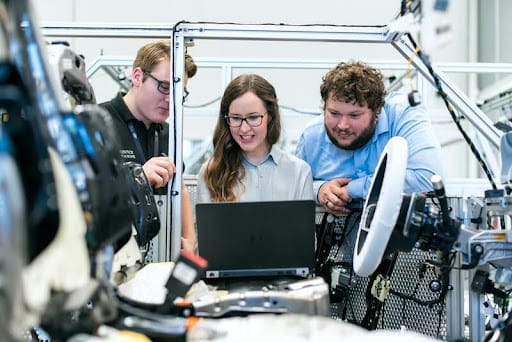
Bridging machines and minds—engineers tap into smart tech for real-time diagnostics
The internet’s come a long way. Remember the days when you had to wait five minutes for a single image to load? Yeah, we’ve come pretty far. First, there was Web1, static pages, and dial-up tones. Then came Web2, where social media took over and we all became content creators. Web3 brought the promise of decentralization and more control over our data.
Now? We’re heading straight into Web4, and it’s all about creating a world where humans and machines work together effortlessly.
But what does that actually mean? How will this next version of the web blur the lines between tech and human life even more? Let’s break it down.
What is Web4, and how is it different from Web3?
Web4 is the next step in the internet’s evolution, focusing on seamless human-machine interaction. Where Web3 prioritized decentralization and blockchain, Web4 turns its attention to context-aware systems, smart environments that respond to human intent in real time.
Think of it as the shift from smart apps to smart everything. Web4 blends AI, machine learning, IoT (Internet of Things), and ambient computing to make tech feel more like an extension of you, intuitive, personalized, and always there when you need it (without needing to tap a screen).
While Web3 was about users controlling their data, Web4 is about technology understanding you so well, it knows what you need before you even ask. That might sound a bit eerie, but it’s also kind of exciting.
How will human-centered design shape Web4?
Human-centered design puts people, not devices, at the core of technology. In Web4, it’s no longer just about how things look; it’s about how things feel when you interact with them.
Instead of navigating through buttons or swiping through apps, you might speak, gesture, or even use facial expressions to interact with tech. It’s the kind of stuff that feels futuristic, but we’re already inching toward it. The goal is to reduce friction, to make tech easier, more natural, and less “techy.”
This kind of design isn’t just a UX buzzword. It matters because the more natural it feels to interact with machines, the more they can genuinely enhance our daily lives, without us having to work so hard to make them work.
What does it mean for machines to understand human intent?
Understanding intent means machines don’t just hear what you say; they grasp what you mean.
Web4 systems use a mix of contextual awareness, emotional intelligence, and real-time data to figure out what you’re trying to do, even if you’re not saying it directly
That’s a huge leap from today’s tech, which mostly responds to clear, specific commands.
For example, instead of telling your smart speaker, “Play relaxing music,” a Web4-enabled system could notice you’ve had a stressful day based on your calendar, tone of voice, and maybe even your posture, and then play music to help you decompress. Automatically.
So yeah, it’s not just smart. It’s attuned.
How will Web4 be integrated into daily life?
This is where things get really interesting.
Web4 won’t just live in your phone or your laptop, it’ll be woven into your entire environment. That includes your home, your car, your workplace, and even public spaces. The internet will no longer be something you “log onto.” It’ll just be there, working quietly in the background, enhancing how you move through the world.
This kind of integration allows for personalized, adaptive experiences across your entire day. Your home could adjust the lighting and temperature based on your mood. Your commute could dynamically change based on real-time traffic, weather, and your meeting schedule. Your health data could inform your meal choices or suggest when it’s time for a walk.
What’s key here is seamlessness. Web4 isn’t about flashy gadgets. It’s about tech that gets out of your way and just works fluidly and intuitively.
What role does AI play in Web4?
AI is the brain behind Web4. Artificial Intelligence powers the real-time decisions, automation, and adaptability that define this next-gen internet.
We’re talking about machine learning models that constantly evolve as they interact with people. These systems can:
- Predict user needs
- Detect emotions or stress levels
- Automate repetitive tasks
- Offer personalized recommendations in any context
Plus, AI works hand-in-hand with IoT devices (think smart sensors, wearables, etc.) to gather and interpret data about the physical world. Combined, they create environments that respond to you as naturally as a human assistant might.
Why is privacy and ethics a big deal in Web4?
Let’s be real: if machines are going to understand you on a deeper level, they’ll need access to a lot of personal data. That brings up big questions about privacy, surveillance, and consent.
Who owns that data? How is it being used? And how can users be sure their information isn’t being misused?
Web4 must be built on transparent, ethical design principles, ones that give users control and clarity. Think: opt-ins, explainable AI, and decentralized storage that lets users choose where their data goes.
If not approached with caution, all this integrated technology could evolve into a surveillance disaster. However, if executed correctly, it might revolutionize convenience, safety, and overall well-being.
In what ways will Web4 transform our daily lives and work?
In a nutshell, it could alter nearly everything.
Workspaces may become increasingly adaptable, responding to your productivity patterns, alleviating stress, or providing tools exactly when you need them. Collaboration might feel more personal, even with remote work, through enhanced virtual environments that replicate in-person interactions.
At home, Web4 could take care of everyday tasks, passively track your health, or assist with financial management. In urban areas, transportation systems and infrastructure might be self-regulating, reactive, and eco-friendly.
The central idea? Less friction, more flow.
Web4 isn’t focused on speeding up life. It’s aimed at making life more intelligent, liberating more time and energy for what truly counts.
Are there potential downsides to such a comprehensive integration?
Certainly. With any significant technological advancement, there are associated risks, and Web4 is no different.
The most apparent risks include:
Loss of personal privacy
Dependency on automated systems
Digital divide (if only the affluent can access Web4 technology)
Exploitation of data by malicious entities or corporations
Moreover, there’s the potential emotional and psychological effect. What occurs when machines possess more knowledge about us than we do ourselves? That’s a substantial query. Some individuals may appreciate the convenience, whereas others may feel uneasy or excessively monitored.
The effectiveness of Web4 will hinge on establishing a balance, one that permits intelligent support without violating personal space.
What does the future hold for Web4 and the partnership between humans and machines?
As Web4 evolves, anticipate stronger, more intuitive connections between individuals and technology. Machines will not just execute commands, they’ll collaborate. They’ll foresee, adjust, and react in real-time, as though they are members of your team.
This transformation doesn’t imply that robots will dominate our lives. It means we’ll have systems that enhance human capabilities instead of replacing them. It could democratize information, improve accessibility, and facilitate life for those managing numerous responsibilities, be it parents, caregivers, freelancers, or students.
Ultimately, Web4 is not about having more screens or quicker devices. It’s about a more streamlined, intelligent way to exist.
FAQ: Frequently Asked Questions About Web4 and Human-Machine Interactions
What is Web4 in simple terms? Web4 represents the forthcoming iteration of the internet, where technology collaborates seamlessly with humans through AI, intelligent environments, and real-time customization.
How does Web4 differ from Web3? Web3 is focused on decentralization and data ownership. Web4 builds on that and adds deep human-machine interaction using AI and IoT.
Will Web4 replace human decision-making? No. It’s designed to assist and enhance, not replace human decisions by providing better context and insights.
Is my data safe in a Web4 world? That depends on how Web4 systems are designed. Ethical, user-controlled data practices will be essential to protect privacy.
When will Web4 become mainstream? Web4 is still emerging, but elements of it, like voice assistants, smart devices, and predictive AI, are already becoming part of everyday life.
Ready or Not, Web4 Is Coming
We’re not just surfing the web anymore, we’re becoming part of it. Web4 will blur the lines between humans and machines in ways that feel less like science fiction and more like real life.
Whether that excites you or gives you pause, it’s worth paying attention. This next version of the internet has the potential to simplify, personalize, and elevate the way we live, as long as we build it with care.
Want to stay ahead of the curve? Keep exploring, stay curious, and don’t be afraid to ask: “How can this tech serve me, not the other way around?”
About the Author