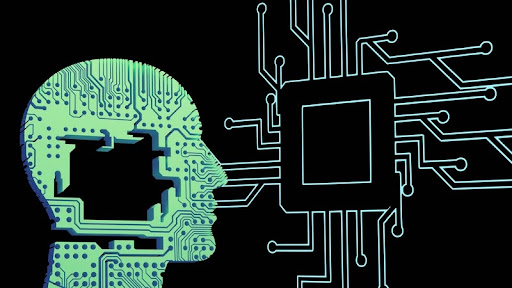
"Five minds, one language—AI lined up in perfect code harmony."
Artificial Intelligence gets all the spotlight. But behind every AI breakthrough, there’s a quiet, tireless worker making it all happen: machine learning algorithms. Think of them as the “brains” that make AI more than just fancy code; they’re what give it the ability to learn, adapt, and get smarter over time.
So, what exactly are these algorithms, and why should you care? Let’s break it down in plain English.
What Is a Machine Learning Algorithm?
A machine learning algorithm is a set of rules or steps that tells a computer how to spot patterns, make predictions, or solve problems, without needing to be explicitly told every detail.
In traditional programming, you’d write out every single instruction. In machine learning, you give the algorithm a bunch of data, and it figures out the rules on its own. It’s like teaching a kid to ride a bike: instead of explaining every possible movement, you let them practice until they figure it out.
How Are Machine Learning Algorithms Different From Traditional Programming?
Here’s the key difference:
- Traditional programming: Humans write the rules, computers follow them.
- Machine learning: Computers learn the rules from data, and those rules can change as they learn more.
This ability to adapt is why machine learning feels a lot like “magic” compared to old-school coding.
What Are the Main Types of Machine Learning Algorithms?
People often ask, “What types of machine learning algorithms are there?” The answer comes down to three main categories: supervised, unsupervised, and reinforcement learning.
1. Supervised Learning, Learning With Guidance
Supervised learning is like studying with an answer key. You feed the algorithm “labeled” data, meaning each piece of information already has the correct answer attached. The algorithm uses this to learn how to make predictions on new data.
2. Unsupervised Learning, Discovering Patterns on Its Own
Here, there’s no answer key. The algorithm gets a pile of “unlabeled” data and has to find structure in it, like grouping similar things together. It’s pure exploration mode.
3. Reinforcement Learning, Learning by Trial and Error
Reinforcement learning is about making decisions based on feedback
. The algorithm tries something, gets a reward or penalty, and uses that information to make better choices next time.
How Do Machine Learning Algorithms Work?
If you’ve ever wondered, “What’s the step-by-step process for how a machine learning algorithm works?”, here’s the short version:
- Data Input & Preprocessing – The raw data is collected, cleaned, and organized so the algorithm can use it effectively.
- Training – The algorithm analyzes data and starts forming rules or models.
- Testing – The model is tested on new data to check its accuracy.
- Optimization – Adjustments are made to improve performance.
- Feedback Loop – Over time, the algorithm learns from new data and keeps improving.
What Are the Common Families of Machine Learning Algorithms?
When people search “What are the different types of algorithms in machine learning?”, they often mean these core families:
- Classification Algorithms – Sort things into categories.
- Regression Algorithms – Predict continuous values, like prices or temperatures.
- Clustering Algorithms – Group similar data points together without pre-labeled categories.
- Dimensionality Reduction Algorithms – Simplify complex datasets by reducing the number of variables while keeping essential information.
Why Are Machine Learning Algorithms So Powerful?
The real magic comes from adaptability. Once trained, an algorithm can handle new, unseen data, sometimes even better than humans in speed and scale. They’re also great at uncovering patterns we’d probably miss.
But here’s the catch: they’re not perfect.
What Are the Limitations of Machine Learning Algorithms?
Machine learning algorithms have their kryptonite:
- Data Dependency – They’re only as good as the data they learn from.
- Bias – If the data is biased, the algorithm will be too.
- Overfitting – Sometimes, they get too focused on the training data and struggle with new information.
- Complexity – Some models are so complex that even experts have a hard time explaining how they work.
How Do Machine Learning Algorithms Drive AI Innovation?
Every major leap in AI, from natural language understanding to pattern recognition, comes from advances in algorithms. They’re the engines turning raw computing power into something intelligent.
They allow AI systems to:
- Learn from massive datasets quickly.
- Adapt to changing conditions.
- Solve problems in creative ways.
What’s the Future of Machine Learning Algorithms?
Looking ahead, we can expect algorithms to become:
- More efficient – Doing more with less data and computing power.
- More ethical – Addressing bias and transparency issues.
- More explainable – Helping humans understand why a model made a decision.
Trends like explainable AI (XAI) and green AI (energy-efficient algorithms) are likely to grow.
Conclusion: Why You Should Care About Machine Learning Algorithms
Without algorithms, AI would just be a pile of code with no ability to learn. They’re the quiet powerhouses that make AI possible, and they’re evolving faster than ever.
Whether you’re in tech or just curious about the future, understanding machine learning algorithms gives you a front-row seat to the next wave of innovation.
FAQ: Machine Learning Algorithms
Q1: What is the simplest machine learning algorithm? A: Linear regression is often considered the simplest, as it’s easy to understand and implement.
Q2: Do machine learning algorithms require coding? A: Yes, most are implemented through coding, but many tools allow non-programmers to use them.
Q3: How long does it take to train a machine learning algorithm? A: It depends on the size of the data and the complexity of the model, from seconds to days.
Q4: Are machine learning algorithms AI? A: They’re a core part of AI, but AI also includes other technologies beyond machine learning.
Q5: Can machine learning algorithms learn without human help? A: They can adapt to new data on their own, but they still need human oversight for guidance and corrections.
About the Author