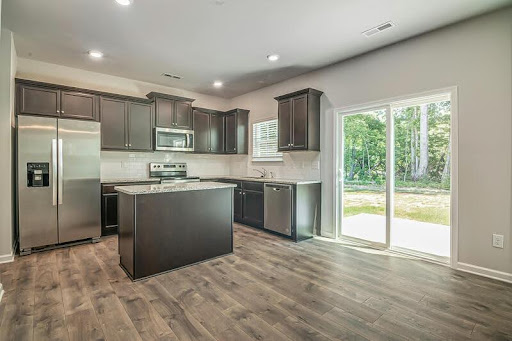
Where form meets function—modern design that turns everyday living into a statement of timeless elegance.
Introduction: The Profit Power of Going Green
What if I told you that designing a building with energy-efficiency in mind doesn’t just help the planet, it actually helps your bottom line? It’s true. More builders are realizing that the right design choices up front can mean far better returns later. In this post we’ll walk through how this works: the shift toward efficiency, how ROI stacks up, which design decisions make the biggest difference, and how you can apply this approach. Let’s dive in.
Why is energy-efficient design becoming a big deal in construction?
Because buyers, tenants and regulators are all changing the game. Over the past few years in the U.S., demand for greener buildings has grown steadily. People care more about utility bills, healthy spaces, and environmental impact. At the same time, building codes and incentives have nudged energy-efficient design into the mainstream. What used to be a nice-to-have is now a smart business decision.
What does ROI really mean when a builder goes energy-efficient?
Just this: you invest a bit more up front and you get measurable gains later, reduced costs, higher value, stronger market appeal. Here are some of the key areas:
- Reduced energy costs: Energy-efficient homes and buildings often cut annual operating costs substantially. One source estimates savings around 20% of annual operating costs for energy-efficient buildings versus conventional ones. (Kaarwan)
- Increased property value: Buildings designed for efficiency tend to command higher market value because they’re seen as lower-risk and more future-proof. (Steers Global Real Assets)
- Faster sale or rental appeal: Tenants and buyers often prefer buildings with greener credentials, and this can mean reduced vacancy and stronger demand.
- Maintenance and lifecycle savings: Better insulation, smarter HVAC systems, and effective windows don’t just save energy, they reduce stress on systems and cut repair/maintenance costs over time.
- Data-driven confidence: When you can back up a design choice with numbers, you gain both credibility and a competitive edge.
So yes, it’s not only about “doing the right thing,” it’s also very much about “making the smart financial move.”
Which design choices really move the needle?
Here are some major ones that show up again and again in builder strategies:
- Insulation and air sealing: Getting the building envelope right, walls, roof, windows, cuts leakage and ensures heating/cooling systems aren’t fighting unnecessary load.
- Smart HVAC systems & energy-efficient appliances: High‐efficiency HVAC units, smart thermostats, and appliances rated for lower energy usage deliver ongoing savings.
- Solar integration or renewables: Adding solar panels (or being “solar ready”) gives long-term energy generation benefits and boosts property appeal.
- Window placement & daylighting: Strategically placing windows for natural light, using low-E glazing, minimizing heat gain in summer and heat loss in winter, small design moves, big payoff.
- Water-saving systems and efficient materials: Low-flow fixtures, efficient plumbing, durable and sustainable materials, these reduce utility costs and maintenance demands.
- Data monitoring & smart controls: Energy management systems and sensors let you track actual performance, adjust systems, and showcase results.
Bottom line? It’s about combining design-smart choices with long-term thinking. The upfront cost might be higher, but the payoff shows up in lower bills and improved value.
How do the numbers stack up in recent times?
Good question. While every project is different, data shows solid gains. For example, a study found that energy-efficient commercial assets recorded total returns of about 11.2% compared to 7.0% for less efficient buildings. (Energy Advice Hub) Another data set shows that investments in efficiency and renewable technology by the U.S. government resulted in benefit-to-cost ratios of many times over, one report noted an aggregate benefit of more than $624 billion compared to ~ $14 billion in investment. (The Department of Energy’s Energy.gov) Another estimation: energy-efficient buildings might slash operating costs by up to 30%. (AEI Consultants) These numbers aren’t guaranteed for every project, but they clearly show the trend: efficiency pays.
What myths should you watch out for?
You might be thinking: “Sure, but maybe it’s just for big companies or luxury builds?” Not exactly. Let’s tackle some common misunderstandings.
Myth: “Energy-efficient design always means way higher cost and long payback.” Truth: Upfront costs can be higher, but smarter choices are narrowing the gap. And with incentives, tax credits (especially in the U.S.), and rising energy costs, payback periods are shorter than many expect. (Legence)
Myth: “The ROI just takes decades to show up.” Truth: While some projects span decades, many show solid savings in just several years, especially when you track and manage performance with data.
Myth: “I’m building in a region where efficiency won’t matter as much.” Truth: Even in milder climates, better insulation, smart HVAC, and efficient systems matter. And future-proofing for changing regulations, weather, and occupant expectations is valuable too.
So don’t let the “it’s too expensive” or “it’s too niche” stories hold you back. With the right planning, efficiency is a smart move across project types.
What lessons have builders learned (without naming names)?
Here are some generalized takeaways that apply pretty broadly:
- Start early: Efficiency decisions work best when baked into design from the start, waiting till the end usually costs more or sacrifices impact.
- Collaborate across disciplines: Architects, engineers, contractors and clients all need to be aligned on energy goals upfront.
- Set realistic but ambitious targets: Decide early what your energy target is (e.g., % reduction compared to code) and design accordingly.
- Monitor and show results: Tracking actual energy usage, maintenance costs, and occupant satisfaction helps validate the investment, and becomes a selling point.
- Think lifecycle, not just first cost: Wiring in savings, durability and occupant health now means fewer surprises later.
- Communicate the value: For buyers, tenants and lenders, showing “this building saves me X on energy and costs me less to maintain” matters.
How does all of this tie into sustainability and profitability?
Here’s where the bigger picture comes together. When you design for energy efficiency, you’re doing more than just cutting utility bills. You’re:
- Lifting your brand and reputation (builders known for “green” or “efficient” projects often get more attention).
- Reducing risk (fewer mechanical breakdowns, better resilience against regulation shifts and energy price swings).
- Gaining market advantage (buyers/tenants increasingly expect energy-smart buildings; you become more competitive).
- Future-proofing your project (as codes tighten, you avoid needing major retrofits later).
In short: sustainability and profitability don’t conflict, they reinforce each other.
What’s the take-away for you right now?
If you are a builder, developer, or involved in design/construction, here’s what I’d suggest:
- Pick one or two high-impact efficiency strategies for your next project (e.g., upgrade insulation and install smart HVAC).
- Run a rough cost-benefit: what’s the up-front cost difference, what are the anticipated energy savings and maintenance savings over 5-10 years?
- Use data to tell your story: collect projections and when you can, actual performance numbers.
- Communicate value to your stakeholders: show how these design choices benefit buyers/tenants, not just “we’re green.”
- Monitor performance: after occupancy, track energy usage, maintenance, and occupant feedback to validate your ROI and refine for next time.
If you get those steps going, you’ll be well on your way to designing smarter and earning stronger returns.
FAQ
Here are some common questions we get answered clearly.
Q: What is the “best way to” start measuring ROI for an energy‐efficient build? A: Begin with baseline figures, how much you expect to spend on energy and maintenance for a standard build. Then estimate savings from your efficiency upgrades (energy, maintenance, vacancy risk) and compare cost difference to savings over a defined period (e.g., 10 years).
Q: How much extra does it cost to build energy-efficient in the U.S.? A: It varies widely by region, project type and how far you go. But many builders find the incremental cost is modest compared to total build, especially when factored against savings over time and available incentives.
Q: What metrics should I track after occupancy? A: Key ones include energy use intensity (EUI), kBtu/sq ft/year, utility cost per square foot, maintenance cost trends, vacancy or tenant turnover if applicable, and occupant satisfaction.
Q: Are there federal or state incentives I should be aware of? A: Yes, depending on your state and project type you may qualify for tax credits, rebates, or utility-company incentives for energy efficiency or renewables. It’s worth checking local programs.
Q: Does energy‐efficient design only make sense for large commercial projects, or can smaller residential builds benefit too? A: Absolutely benefits smaller residential builds too. Lower energy bills, healthier homes, and stronger resale value are advantages across scale. The key is thoughtful, targeted design choices.
About the Author




