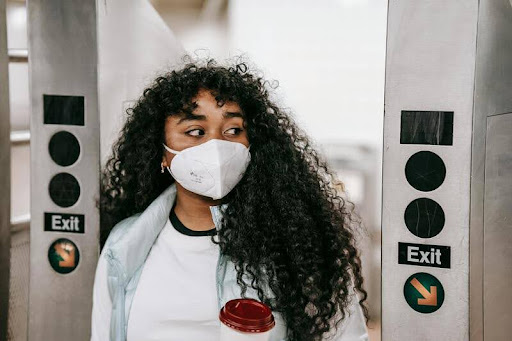
Staying safe on the go: a masked commuter navigates an underground turnstile.
Public safety is a concern for everyone, isn’t it? Whether it’s returning home after dark, sending children off to school, or simply residing in a community where you feel protected, safety is important. However, with the intricate challenges that law enforcement and emergency services encounter today, how can technology assist? That’s where Artificial Intelligence (AI) comes into play. It’s no longer a futuristic concept; AI is increasingly becoming essential for enhancing safety in American neighborhoods. But how is AI positively impacting public safety? And what should we be cautious about as this technology becomes more prevalent?
Let’s explore what AI signifies for public safety in the United States and why it matters to all of us.
What Is AI and How Does It Operate in Public Safety?
In simple terms, Artificial Intelligence refers to computers and machines performing tasks that typically require human intelligence. Consider learning from data, detecting patterns, making forecasts, or even interpreting images and sounds.
AI techniques such as machine learning, computer vision, and predictive analytics are at the forefront of public safety. Machine learning enables systems to improve with increased data, like recognizing trends in crime statistics. Computer vision assists in automatically analyzing video footage, a significant advancement for surveillance. Predictive analytics processes data to anticipate where incidents may arise next.
Combine these technologies, and you create a more intelligent method for monitoring situations and responding swiftly. But what does this look like in reality?
How Is AI Employed to Deter Crime and Protect Communities?
AI aids public safety organizations in anticipating and preventing crime before it arises. By examining data on previous crime locations, times, and types, AI tools can uncover patterns that may not be obvious. This doesn’t imply anticipating specific crimes with precision, but it assists law enforcement in directing their focus towards higher-risk areas.
Additionally, AI enhances surveillance cameras, enabling them to automatically detect suspicious activities. For instance, AI can recognize abnormal movements or identify individuals in prohibited zones, prompting immediate alerts. This accelerates response times and empowers officers to intervene before situations worsen.
In cases of emergencies, AI systems can swiftly process incoming information, whether from 911 calls, social media updates, or sensor data, to ensure the appropriate resources are dispatched quickly.
Therefore, AI is not substituting human roles. Instead, it is equipping first responders with enhanced tools to perform their duties more effectively.
What Are the Advantages of Implementing AI in Public Safety?
Why should we consider AI? The advantages are quite evident:
Enhanced Precision: AI excels at processing vast amounts of data more rapidly than humans, quickly identifying patterns and potential threats.
Quicker Reactions: In critical situations, AI aids emergency teams by providing essential information and resources promptly.
Efficient Resource Use: Rather than stretching resources thin, law enforcement can concentrate on areas identified by AI, optimizing both time and budget.
Safety in Communities: More intelligent systems lead to reduced incidents and overall safer neighborhoods.
Additionally, AI can manage monotonous tasks such as monitoring video feeds or analyzing data, allowing human officers to tackle more intricate duties.
What Obstacles and Ethical Considerations Are Associated with AI in Public Safety?
Naturally, AI isn’t a flawless solution. There are several significant challenges and ethical dilemmas to consider:
Privacy Concerns: Utilizing AI for surveillance can feel intrusive. How can we ensure that individual rights are preserved while prioritizing safety?
AI Bias: If the data AI is trained on contains bias, the decisions made by the system may be unjust or discriminatory. This is a critical issue in policing.
Lack of Transparency: AI decision-making can resemble a “black box”, it can be difficult to ascertain how or why an AI flagged something. This complicates accountability.
Civil Rights: A careful balance exists between security and freedom. To what extent should technology monitor us?
These issues signify that public safety organizations must approach AI usage thoughtfully, developing systems that honor rights, maintain transparency, and undergo routine evaluations.
How Will AI Influence the Future of Public Safety?
Looking forward, AI will continue to advance and become more integrated. Envision AI-driven drones for rapid neighborhood assessments or voice recognition aiding 911 operators in better interpreting calls. Emerging technology could lead to earlier threat detection and faster, more accurate emergency responses.
However, this future necessitates ongoing research, clear guidelines, and strong collaboration among tech developers, law enforcement, and communities.
This approach can foster safer, more trusting relationships instead of merely surveilling individuals from a distance.
Why Is AI in Public Safety Important to You?
Because public safety affects everyone. AI isn’t just a complex technology for specialists; it’s increasingly woven into how our cities and towns ensure our protection each day.
Grasping the mechanics of AI and its implications allows us to be knowledgeable citizens, prepared to ask pertinent questions and advocate for equitable usage.
Are we prepared to adopt AI in a responsible way, or are there dangers we must tackle first? That’s the discussion America should engage in.
Quick FAQ on AI and Public Safety
Q: How can AI forecast crime without breaching privacy? A: AI analyzes patterns in anonymized information such as crime locations and timings, rather than personal data, to pinpoint high-risk zones.
Q: Can AI take the place of police officers? A: No. AI supports officers by managing data analysis and surveillance tasks, enabling humans to concentrate on intricate decisions and community interactions.
Q: What measures can be taken to prevent AI discrimination? A: Agencies need to utilize diverse and balanced datasets and regularly assess AI tools to identify and correct biases.
Q: Is AI surveillance permissible in the U.S.? A: It varies by local regulations and the manner of use. Privacy safeguards and transparency are crucial for ethical and legal implementation.
Want to Discover More About AI and Public Safety?
If this piqued your interest, keep an eye out for more in-depth explorations into how technology is influencing our everyday lives. Feel free to share your opinions. What are your thoughts on AI monitoring your community?
About the Author




