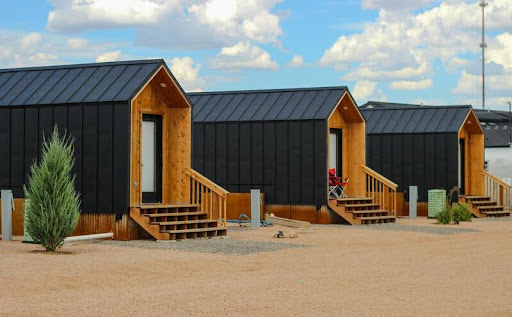
Sleek summer retreats blending modern design with serene landscapes for effortless elegance and refined relaxation.
Introduction
Have you noticed how conversations around home‑building are changing? Less talk of pouring foundations on‑site and more about sections built in factories, dropped into place, ready to go. That shift is exactly what’s happening with modular homes in 2025. Prefab construction, the kind of home built off‑site in modules, has quietly moved from niche to real contender. And it’s not just hype. Let’s walk through why this shift is happening, how it works, and what it might mean for you if you’re thinking about your next home or watching housing trends.
What is a modular home (and how does it differ from traditional construction)?
Answer: A modular home is built in sections, modules, at a factory, transported to the site, and assembled there. Traditional homes? Built fully on‑site, piece by piece.
In more detail, with a modular home, walls, floors, ceilings, and even full rooms are manufactured off‑site. Those modules are then shipped to the lot and stacked or connected, hooked up to utilities, and finished. Compared to conventional construction, where crews build everything from scratch on the property, modular construction offers standardization, controlled conditions, and less on‑site time.
For clarity, prefab (prefabricated) is a broader term; it includes modular, but also panelized homes (walls built off‑site) and other factory‑built components. So when you hear “modular homes” or “prefab construction,” they’re often used interchangeably, though there are technical differences.
Why does this matter? Because the process affects cost, timing, quality, and even design. Understanding what you’re getting helps when you’re scanning headlines: “prefab is the next big thing,” “modular homes are taking off.” You’ll know what that means.
Why are modular homes gaining popularity in 2025?
Answer: Because they bring faster build times, lower costs in many cases, design flexibility, and sustainability, four big drivers are converging now.
Let’s unpack:
- Speed of construction: When modules are built in a factory, construction doesn’t stop if it rains, it doesn’t suffer from the same on‑site labor delays, and many steps are pre‑finished. That means fewer delays.
- Cost efficiency: While not always cheaper in every scenario, many builders find modular methods reduce waste, cut labor hours, and keep costs steadier.
- Design flexibility: Gone are the days of “prefab means cookie‑cutter.” Modern modular homes offer customizable layouts, stylish finishes, and options that rival traditional builds.
- Sustainability: With tighter tolerance in factories, less waste on‑site, more energy‑efficient components, and better insulation, modular homes appeal to buyers looking for greener living. For instance, global prefab construction is increasingly focused on recyclable materials and reduced carbon footprints. (Karmod)
- Market forces and housing pressure: In the U.S., housing shortages, high material and labor costs, and climate‑related disruptions are pushing builders and developers toward more efficient methods. For example, the U.S. prefab construction market is projected to grow significantly, driven by these pressures. (Business Wire)
Put simply: things are lining up for modular homes in 2025. Buyers, builders, and policymakers are all finding value in this model.
How does modular construction actually work?
Answer: It starts in a factory, then comes to the site for assembly, finishing, and connection, with a lot of planning upfront.
Here’s a step‑by‑step:
- Design & engineering, using digital tools (often BIM: Building Information Modeling) and factory‑friendly planning (Design for Manufacturing and Assembly, or DfMA). (What will 2025 bring?”>allplan.com)
- Module fabrication, in a controlled indoor environment, parts are built: walls, floors, ceilings, and modules. Climate and quality control are strong.
- Transport & site preparation, the lot is prepared ahead of time (foundation, utilities, access). Then the modules arrive.
- Assembly & finishing, modules are placed (stacked, connected), utilities hooked up, finishing touches done (interior trim, flooring, external finishes).
- Inspection & occupancy, local building codes apply. Once inspections pass, the home is ready to move in.
Because factory work happens in parallel with site prep, the overall timeline often shrinks. It also reduces many typical on‑site variables (weather delays, labor disruptions, material spoilage). That’s one of the reasons modular is catching on.
What are the biggest advantages of modular homes right now?
Answer: The advantages are clear: faster build times, cost and waste reduction, flexibility, and sustainability. All of which connect to buyer and builder needs in 2025.
Let’s look at each:
- Faster build times: Since site work and factory work occur simultaneously, you can go from start to finish quickly. Which means people move in sooner, reduce holding or financing costs, and avoid long delays.
- Cost & waste savings: Factory production allows tighter control over materials and labor. Fewer mistakes, less waste. This often translates to lower risk for builders and clearer budgets for buyers.
- Design flexibility: Today’s modular homes offer more styles, finishes, and layouts. Want an open‑plan living room, walls of windows, and a loft space? It’s possible. The “modular” look has evolved.
- Sustainability and efficiency: With better insulation, precision manufacturing, and less onsite disruption, modular homes can be more energy‑efficient and climate‑friendly. According to industry research, the global modular/prefab construction market is projected to reach about USD 173.5 billion in 2025. (Future Market Insights)
- Adaptation to pressing problems: In regions facing labor shortages, housing shortages, or extreme weather (which disrupts traditional build timelines), modular methods offer an alternative.
For example, in the U.S., prefab construction is gaining ground due to housing supply shortages and climate concerns. (Business Wire)
So yes, the advantages stack up. And for many homeowners or developers, that adds up to real momentum.
What challenges should you consider before choosing a modular home?
Answer: Nothing is perfect. Modular homes pose some unique challenges, site prep, transport logistics, zoning/regulatory issues, and perception hurdles.
Here are the key ones:
- Site & foundation readiness: Even with a modular build, you still need a properly prepared lot (foundation, utilities, zoning). If site prep is delayed, it stalls the whole project.
- Transport and access constraints: Modules are large. Moving them to the site requires special trucking, access, permits, and often extra costs. Tight lots or difficult terrain can complicate things.
- Regulations and code compliance: Some jurisdictions still treat modular construction differently, or have less experience approving it. That can lead to longer permitting or higher costs.
- Perception and resale value concerns: Some buyers worry that modular homes are “less than” traditional homes. While that’s changing, you may still need to educate yourself (and later a buyer) about quality, warranties, and financing.
- Limited customization (in some cases): Although flexibility has improved, the factory‑modular model still has limits; not everything can be fully customized like a traditional stick‑built home. Modules have to fit transport dimensions, assembly logic, etc.
- Initial cost can be comparable or higher: In certain markets or for very elaborate customization, modular homes may not always be cheaper. The savings often come from efficiency rather than a dramatically lower cost.
If you’re thinking about this route, doing your homework on these aspects pays off. Ask questions like: What’s the site prep cost? What are the transport logistics? Who handles finishing onsite? What’s the warranty and builder’s track record?
How will modular homes evolve in the future, and why does that matter?
Answer: We’re at a moment where modular construction is poised to move into the mainstream. The next few years will bring more innovation, broader adoption, and deeper integration with smart home and sustainability trends.
Here’s what to watch:
- Integration of digital manufacturing: Design tools, robotics, and automation in factories will push modular quality and speed even further. The use of DfMA is growing and means modules are designed from the start to be efficiently manufactured and assembled. (allplan.com)
- Material innovation: Expect more advanced materials, engineered wood, composites, hybrid steel‑wood systems, that offer durability, sustainability, and design flexibility. For example, research shows wood and wood‑based materials are expected to grow significantly in prefab construction. (allplan.com)
- Broader housing segments: While early modular homes were often smaller or niche, now we’re seeing adoption in single-family homes, multi‑family buildings, and even commercial and institutional uses. In the U.S., the modular market in residential and non‑residential sectors is forecast to grow. (Modular Building Institute)
- Sustainability and climate resilience: With construction emissions under pressure, modular building offers ways to reduce waste, increase energy efficiency, and even respond faster after disasters. Systems that allow homes to be built or repaired quickly in storm‑affected areas are gaining more attention.
- Mainstream adoption & normalization: Once a novelty, modular homes are increasingly seen as “just another build method.” As costs, regulations, and perceptions align, more buyers and builders will consider them. That means more inventory, more resale data, and stronger buyer confidence.
What does this mean for you? If you’re in the market now (or will be in 3‑5 years), modular homes are no longer a fringe choice. They’re very much part of the mainstream conversation. If you’re a homeowner, builder, or investor, it’s smart to keep this on your radar.
What does this mean for your home‑buying or building decision?
Pretty simple: If you’re thinking of building a home (or investing in one) in the U.S., you should consider modular as one of your options. Here’s a quick decision checklist:
- Do you want faster construction and less site delay? Modular is a strong fit.
- Are budget and predictability important? Modular can help with that, thanks to factory‑controlled costs and timelines.
- Are environmental or sustainability goals part of your criteria? Modular gives advantages here.
- Do you have a site ready (or nearly ready) and easy access to it? If not, check site‑prep risk.
- Are you comfortable with working through a builder/producer that specializes in modular builds (rather than standard stick‑built)? Finding someone with modular experience is key.
If you’re willing to research, talk to modular‑experienced builders, check local zoning and code, and assess your site conditions carefully, you’re putting yourself ahead.
And yes, down the road, your property may benefit from the innovation and higher buyer demand if modular homes become even more mainstream.
Conclusion
So there you have it: modular homes and prefab construction aren’t future‑fantasy, they’re increasingly a Practical Option in 2025. Faster timelines, better predictability, sustainability perks, and design flexibility all come together to explain why this method is winning in 2025.
Is it right for you? Maybe. If you’re open to a different build method, doing your homework, and weighing the site‑specific factors, you might find the modular route not just viable but smart. Keep your eyes open. The way we build homes is evolving, and it’s evolving fast.
If you liked this deep dive and want help comparing modular vs. traditional builds (costs, process, timeline) or want a list of questions to ask a modular builder, just say the word. I’ve got you covered.
FAQ
Q: What is the main difference between modular and prefab homes? A: “Prefab” is a broad term for off‑site construction methods; “modular” is a specific type where large sections/modules are built in a factory and assembled on‑site.
Q: How much faster are modular homes to build compared to traditional homes? A: While exact numbers vary, factory‑building combined with site prep in parallel often results in significantly shorter build time, sometimes by weeks or months. For example, prefab methods are often cited as up to 50% faster. (Wikipedia)
Q: Are modular homes more expensive than traditional homes? A: Not necessarily. They can offer cost savings through reduced labor and waste, but initial order size, finishes, site conditions, and transport can affect total cost. It’s wise to compare apples to apples (same size, finishes, site).
Q: Will modular homes hold their value? A: Yes, provided they’re built to standard codes, well finished, and sited properly. As modular becomes more mainstream, resale risk is likely to decline further.
Q: Is modular construction sustainable? A: Very much so. Modular homes benefit from factory precision (less waste), potential for better insulation and systems, and often use materials and methods that reduce environmental impact.
About the Author




