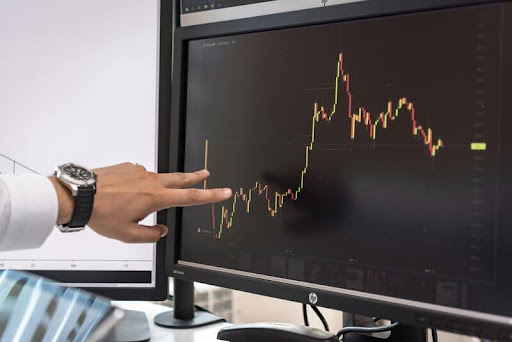
The moment human strategy becomes automated logic.
Introduction: The Rise of Automated Trading
In the digital asset markets, things move fast. We’re talking 24 hours a day, seven days a week, with price swings that can make your head spin. Relying on manually executing trades is tough, maybe even impossible, if you’re trying to keep up with that pace. When the market never sleeps, how can you expect your trading to? That’s where the power of automation steps in.
What is Algorithmic Trading and Why is it Essential for Crypto?
Algorithmic trading, often called “algo trading”, is simply the process of using a predetermined set of rules, or an algorithm, to automatically execute trades. Think of it as turning your trading strategy into a non-stop, digital assistant. You set the conditions for when to buy or sell, and the computer handles the heavy lifting, executing trades instantly and precisely.
The reason this matters so much in the crypto world is simple: Volatility and accessibility. Traditional markets might close for the evening, but decentralized markets are always open. This constant activity, combined with crypto’s inherent price volatility, demands non-stop monitoring and immediate execution. A human can’t stay awake forever, but a well-designed algorithm certainly can.
This fundamental shift is why so many experienced traders are turning away from the keyboard and toward the code. The thesis is clear: Algorithmic trading replaces emotion with objective, programmed logic, empowering traders to execute complex, systematic strategies with maximum efficiency.
The Core Advantages of Algorithm-Based Trading
Why bother coding a system when you could just execute trades yourself? The answer lies in the systemic advantages that a machine offers over human psychology and processing power. Moving from manual trading to automated processes offers powerful benefits that fundamentally redefine how you approach the market.
Why is Emotionless Execution the Best Way to Trade Crypto?
Emotionless execution is the best way to trade crypto because it eliminates the two biggest enemies of any trader: fear and greed.
We all know the feeling: seeing a price drop and panic-selling, or holding onto a rising asset too long because of the hope for just a bit more profit. These human biases, fear, greed, or panic, are often what sabotage even the most rational trading plans. An algorithm doesn’t have emotions.
It simply adheres to the guidelines provided. If the directive is “sell when the price reaches X,” it performs the sale immediately, regardless of the market’s current sentiment. This guarantees a strict, objective commitment to your established strategy, providing your trading with the steadfast consistency required for long-term success.
How Do Algorithms Provide Speed and Efficiency That Humans Cannot Achieve?
Algorithms deliver unparalleled speed and efficiency by analyzing extensive data sets and executing trades in milliseconds, far surpassing human abilities.
In a fluctuating market, every millisecond counts. The divide between a lucrative trade and a missed opportunity can often be captured in the briefest moment. Algorithms can swiftly assess market data (price feeds, volume indicators, signals from technical analysis) from several sources instantly. They do not require time to study a chart, contemplate, validate the strategy, and execute a command. They simply receive a signal and enact the order. This rapid response time is essential for strategies that depend on seizing transient opportunities.
What is the Advantage of Continuous Market Coverage in the Crypto Environment?
The main advantage of continuous market coverage is that it guarantees that no trading possibility is overlooked, regardless of the hour.
Unlike conventional stock markets in the U.S. that maintain designated operating hours, the digital asset market is perpetually open. This nonstop activity indicates that significant price shifts, trend reversals, or crucial breakout events can transpire while you’re asleep, occupied with work, or spending time with family. An algorithm, hosted on a dependable server, does not require sleep, a lunch break, or time off. It provides ongoing surveillance and execution, ensuring your strategy is in effect and seizing opportunities at all times.
Why is the Capability to Backtest Important Before Going Live?
The ability to backtest is crucial because it enables a strategy to be thoroughly simulated against historical data to verify its effectiveness before risking any actual capital.
This is arguably one of the most potent features of automated trading. Even before you press the “Go Live” button, you can input historical market data into your algorithm and observe precisely how it would have performed. Did it withstand a period of consolidation? How did it perform during a significant market upheaval? This procedure uncovers potential vulnerabilities and allows you to optimize parameters and fine-tune your rules based on concrete evidence of previous performance, rather than mere optimistic assumptions.
Core Algorithmic Strategies
The true might of an algorithm resides not only in its speed but also in the sophistication and discipline of the strategies it can implement. Grasping the fundamental principles behind these strategies is the initial step toward creating your own automated system.
What is the Principle Behind Trend Following and Momentum Trading?
The principle of Trend Following is based on the straightforward notion that an asset moving assertively in one direction is likely to persist in that direction for a discernible timeframe.
This is a classic strategy that relies on technical analysis. The algorithm’s job is to identify a confirmed trend, either moving up (bullish) or moving down (bearish). It uses mathematical formulas, often involving various moving averages, to generate signals. For instance, when a faster-moving average crosses above a slower-moving average, the algorithm interprets this as a confirmed, sustained uptrend and executes a long (buy) trade. It holds that position until the trend shows a predefined sign of reversal.
How Does Mean Reversion Trading Work?
Mean reversion trading operates on the fundamental economic principle that, after a temporary deviation, an asset’s price will tend to revert, or return, to its historical average price (the mean).
This strategy is the theoretical opposite of trend following. Instead of betting on continuation, you are betting on a correction. The algorithm monitors the price and determines a statistically significant “norm” or average. When the price dips far below that norm (becoming “oversold”), the algorithm executes a buy order, expecting the price to bounce back up. Conversely, if the price spikes far above the norm (becoming “overbought”), it executes a sell order, anticipating a fall back toward the average.
What is Arbitrage and How Do Algorithms Execute It?
Arbitrage is the act of exploiting tiny, temporary price differences for the same asset between different trading venues or pairs; algorithms execute it by simultaneously buying and selling to capture the price differential.
Since the digital asset market is decentralized, a single asset might trade for slightly different prices on Exchange A versus Exchange B at the exact same moment. An algorithm can spot these fleeting inefficiencies instantly. It will simultaneously issue a buy order on the venue with the lower price and a sell order on the venue with the higher price. Because the difference in price is often minuscule and the window of opportunity is only a fraction of a second, this strategy is practically impossible to execute manually; it requires the immediate, automated coordination of the algorithm.
What is the Best Way to Use High-Frequency Trading and Scalping?
The best way to use high-frequency trading (HFT) and scalping is by relying on high-speed algorithms to execute numerous trades, aiming to profit from minimal price movements and narrow spreads throughout the day.
Scalping is a strategy focused on micro-profits. Instead of trying to capture a large price swing, the goal is to make dozens or even hundreds of tiny profits that accumulate significantly over time.
This requires extreme speed and reliance on low-latency connections to the exchange. The algorithm is constantly looking for moments where the price moves just enough to cover transaction costs and net a fraction of a profit percentage, executing trades many times per minute.
Building and Deploying an Algorithm (The Process)
Turning a concept into a constantly running, profitable bot involves a clear, structured development pipeline. It’s more about meticulous planning than it is about clever code.
How Do I Define My Trading Strategy for Coding?
Defining your strategy for coding requires translating a conceptual idea (e.g., “buy the dip”) into a precise, unambiguous set of coded rule criteria (e.g., “If Price is 2 standard deviations below the 20-period moving average AND Relative Strength Index is below 30, THEN execute a Market Buy Order of 0.1 units”).
This is the most critical step. You must specify the entry condition, the exit condition, and the risk management rules (stop-loss, take-profit). Every single decision the algorithm will ever make must be accounted for in the code. A vague idea is useless; the code demands absolute precision.
What Role Do Data Acquisition and Preparation Play?
Data acquisition and preparation provide the necessary fuel (historical and real-time market data) to both train the algorithm and allow it to make live decisions.
An algorithm is only as good as the data it analyzes. This data must be sourced reliably and, most importantly, cleaned. Errors, missing values, or false readings in the historical data used for backtesting can lead to an algorithm that looks fantastic in testing but fails instantly in the real market. The data needs to be accurate, clean, and in a format that the algorithm can process quickly.
What is The Backtesting and Optimization Loop?
The Backtesting and Optimization Loop is the iterative process of testing the strategy’s performance against historical data, evaluating key metrics, and then systematically adjusting the algorithm’s parameters to maximize simulated returns and minimize risk.
This is where you find the strategy’s weaknesses. You don’t just backtest once; you run the simulation, analyze the results (Did it have too many false signals? Was the maximum loss too high?), tweak variables (like changing a 50-period average to a 60-period average), and run it again. This continuous refinement, without risking actual funds, is how a theory becomes a robust, market-ready system.
Why is Hard-Coding Risk Management Crucial for Algorithm Safety?
Hard-coding risk management is crucial for algorithm safety because it creates an absolute, automated failsafe that prevents catastrophic losses, ensuring discipline even during extreme market movements.
In manual trading, you might hesitate to execute a stop-loss order in a fast-moving environment. Your algorithm won’t hesitate. By integrating risk protocols, such as a rigid stop-loss order that executes if a loss exceeds 1.5% of your capital on a single trade, or a position sizing rule that limits total capital at risk, you build safety directly into the system. This discipline is the difference between a minor setback and a complete portfolio wipeout.
What is the Deployment and Monitoring Phase?
The Deployment and Monitoring Phase involves setting the finalized, backtested, and risk-managed algorithm live on a platform connected to a digital asset exchange, followed by continuous human oversight.
Deployment is not the end; it’s the start of the final testing phase. The algorithm is now trading live, using real capital. The monitoring phase is vital: You must constantly check for technical failures (connection issues, data lag, code errors) and structural failures (the algorithm is working as intended, but the market structure has changed, rendering the strategy obsolete). Algorithmic trading is rarely “set it and forget it.” It requires consistent, disciplined monitoring.
Conclusion
Algorithmic trading is the new standard for navigating the complex and rapid currents of the digital asset space. It provides the necessary trifecta for success: unwavering discipline, blinding speed, and the scale to cover a 24/7 global market. It’s an empowering tool that takes a proven strategy and executes it perfectly, every single time.
Ultimately, an algorithm is simply a tool. It is not a magic key to guaranteed wealth, but rather a powerful instrument that amplifies the quality of the underlying strategy. Your knowledge, your understanding of market principles, and your carefully defined rules are the true drivers of success. The algorithm is just the tireless executioner.
Are you ready to translate your market knowledge into code and step into the future of automated trading? The next step is picking your strategy and defining your rules with the precision the market demands.
Frequently Asked Questions (FAQ)
What is the easiest way to begin with an algorithm?
The easiest way to start is by concentrating on a single, clear strategy, like a basic Trend Following or Mean Reversion rule, and then thoroughly backtesting that rule using historical data.
Do I need to possess advanced coding abilities to develop an algorithm?
Although advanced coding skills (usually in Python) are helpful for more complex strategies, many platforms now provide visual builders or “no-code” options that enable users to set rules without needing to write any code.
How frequently should I check my active trading algorithm?
An algorithm should be monitored continuously, particularly during its initial deployment stage, to identify technical issues, data disconnects, or systemic failures in adapting to shifting market conditions.
Does an algorithm ensure profitability?
No. An algorithm only ensures the flawless, emotionless execution of the strategy it has been programmed with. If the foundational strategy is flawed, the algorithm will perfectly carry out those errors, resulting in losses.
What is the greatest risk associated with using algorithmic trading?
The greatest risk is technical failure (such as a server or data feed malfunction) or an issue in the strategy’s logic, which can result in rapid and unexpected capital losses if not safeguarded by coded risk management measures.
Is this akin to High-Frequency Trading (HFT)?
HFT is a specific, highly advanced, speed-optimized form of algorithmic trading. Most retail algorithms operate at a slower pace but still rely on the same fundamental principle of automated, logic-driven execution.
About the Author




