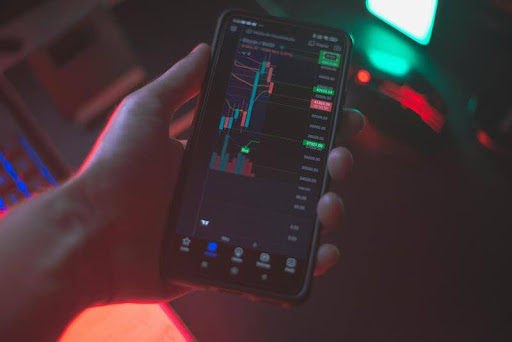
Real-time data feeds like this stock chart help oracles keep DeFi smart contracts connected to market conditions.
So, you’ve heard about DeFi, maybe from a friend, a podcast, or scrolling through crypto Twitter, and now you’re trying to figure out how all these so-called “smart contracts” actually work in the real world. How does a piece of code know the price of Ethereum in dollars? Or when should a loan be liquidated? That’s where oracles come in.
If DeFi were a car, smart contracts would be the engine. But oracles? They’re the GPS, feeding it directions from the real world. Without oracles, smart contracts are powerful but clueless. Let’s break it all down.
What is an oracle in DeFi?
A blockchain oracle is a service that connects smart contracts with data from the outside world.
Oracles act like messengers between two totally different worlds: the closed, self-contained world of blockchains and the unpredictable, data-rich world we live in. Blockchains can’t just reach out and pull in info from the internet. They need someone, or something, to do it for them.
And that’s exactly what oracles do. Whether it’s a crypto price feed, the result of a sports game, or even the weather, oracles bring that data into the blockchain so smart contracts can use it.
Why do smart contracts need oracles?
Because smart contracts can’t access external data on their own.
Blockchains are designed to be secure and trustless, which also means they’re isolated. This isolation is great for security, but terrible for interacting with real-world events. A smart contract might be perfectly programmed to issue a loan or execute a trade, but unless it knows something like the current price of ETH, it can’t do much.
Imagine trying to bake a cake without knowing the temperature of your oven. That’s what running a smart contract without oracles is like. You have the recipe, but you’re missing the critical feedback.
What are the different types of oracles in DeFi?
Oracles come in different flavors, depending on what kind of data they provide and how they deliver it.
Let’s go through a few main types:
1. Software Oracles
These grab digital information from APIs, websites, and databases, things like asset prices, exchange rates, or stock prices.
2. Hardware Oracles
These are tied to physical devices, like sensors or scanners. They might be used to confirm that a shipment arrived or that a piece of equipment was turned off.
3. Inbound vs. Outbound Oracles
- Inbound oracles bring data into the blockchain.
- Outbound oracles send data from the blockchain to the outside world. Think of triggering a bank transfer or alert.
4. Consensus-Based Oracles
Instead of relying on one data source, these pull info from multiple sources and come to an agreement. It’s like getting a second opinion, but from a dozen different experts.
5. Decentralized Oracles
These are networks of oracles, not just one. They’re built to avoid single points of failure and reduce manipulation.
Oracles can be tailored to fit the job they’re hired to do. The key is understanding how they get their data and how trustworthy that data is.
How do oracles actually work in DeFi?
They collect off-chain data, validate it, and send it to the blockchain where smart contracts can act on it.
Here’s the general workflow:
- A smart contract needs a data point (like the current ETH/USD rate).
- It sends a request to the oracle.
- The oracle fetches the data from a trusted source or aggregator.
- It transmits that data to the blockchain.
- The smart contract receives the info and executes its logic.
Seems simple enough, right? But here’s the catch: it has to be done securely, accurately, and quickly. Otherwise, you’re asking for chaos. Especially when large sums of money are involved.
What is the “oracle problem” in DeFi?
The oracle problem is the challenge of trusting external data in a trustless system.
Let’s say you’ve got a smart contract handling $100 million in loans. It relies on price data from an oracle to determine if someone’s collateral should be liquidated.
What happens if that oracle provides incorrect data? Or worse, gets manipulated?
That’s the oracle problem: Blockchains are trustless, but oracles introduce trust back into the system. And if you’re not careful, you’re back to square one, putting your trust in a single point of failure.
What are the risks of using oracles in DeFi?
Oracles add a layer of risk because they operate outside the blockchain’s secure environment.
Here are some of the biggest concerns:
- Centralization: Relying on a single data source or oracle provider increases the risk of manipulation or downtime.
- Data Manipulation: If an attacker controls or bribes an oracle, they can feed false data and exploit smart contracts.
- Latency: If data doesn’t come in fast enough, users can front-run or manipulate outcomes.
- Reliability: An oracle that goes offline can freeze an entire protocol.
Bottom line? Even one bad data feed can create a domino effect that takes down a DeFi app, or worse, the entire network of apps connected to it.
How are DeFi protocols solving the oracle problem?
The best way to solve the oracle problem is to decentralize the data sources and add verification layers.
Here’s how projects are tackling it:
- Aggregation: Instead of using a single source, they pull from many and take the average. That way, one bad input doesn’t ruin the result.
- Cryptographic Proofs: Some oracles are now using tools like zero-knowledge proofs to verify that data is valid before it reaches the blockchain.
- Incentive Models: Oracle networks often reward participants for honest behavior and punish them for false reporting.
- Reputation Systems: The more accurate an oracle is over time, the more trustworthy it becomes. Think of it like a Yelp rating for data feeds.
It’s not a perfect system yet, but it’s evolving fast, and with billions in DeFi value depending on it, there’s real pressure to get it right.
Why are oracles important for the future of DeFi?
Because the more complex and mainstream DeFi gets, the more real-world data it needs to function.
DeFi is no longer just about swapping tokens or earning yield. It’s about creating entire financial ecosystems, everything from insurance and loans to synthetic stocks and prediction markets.
And all of that depends on timely, accurate information from outside the blockchain. Without oracles, DeFi would be stuck in a sandbox. With them, it becomes a full-fledged financial system.
As DeFi matures, expect oracles to play an even bigger role, feeding in more types of data, from credit scores to supply chain updates. The future of smart contracts depends on smart data.
Quick FAQ: Oracles in DeFi
What is the purpose of an oracle in blockchain?
To deliver real-world data to smart contracts so they can respond to external events.
Are oracles decentralized?
Some are. Decentralized oracle networks use multiple sources and nodes to improve security and reduce manipulation.
Can oracles be hacked?
Yes. If not properly secured, oracles can be manipulated, which could lead to major vulnerabilities in DeFi apps.
What’s the difference between an API and an oracle?
An API provides raw data. An oracle takes that data, processes it, and sends it to a blockchain in a secure and verifiable way.
Do oracles cost money to use?
Yes, most oracles charge a fee, either for the data itself or for accessing the network providing it.
Final Thoughts: Oracles Make DeFi Smarter
If you’re diving into DeFi, it’s easy to focus on tokens, wallets, or yield strategies. But oracles? They’re the unsung heroes making the magic happen behind the scenes.
Think of them as the invisible wires connecting code to reality. Without them, smart contracts would be stuck playing pretend in a closed loop. With them, they become powerful tools capable of reacting to anything the world throws at them.
About the Author