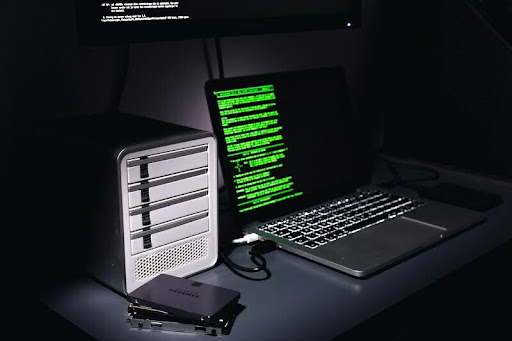
Coding in style: precision and innovation meet in a modern workspace designed for digital brilliance.
What Is Web 4.0, And Why Does It Matter?
Web 4.0 is often called the “intelligent web,” and for good reason. Unlike the Web 1.0 of static pages, or Web 2.0, where social media and user‑generated content took over, Web 4.0 is about a web that thinks. It’s not just reactive, it anticipates. It learns from your habits, adapts to your needs, and connects not just people, but devices, data, and intelligence.
At its core, Web 4.0 is defined by the convergence of advanced artificial intelligence (AI), the Internet of Things (IoT), and decentralized technologies like blockchain. (Blockchain Council) What does that mean in practice? It means a smarter, more personalized web, but also a more secure, more private one.
So why does Web 4.0 matter? Because this is the kind of internet that feels less like a tool and more like a partner. It could shift power back to users, boost trust, and open up new ways of interacting online.
How Is Web 4.0 Different from Web 3.0?
Good question. Web 3.0 introduced user ownership of data, decentralized apps (dApps), and some level of trustless interaction. Web 4.0 builds on that, but it brings a new dimension: intelligence. According to experts, Web 4.0 aims for real‑time decision-making, human-AI symbiosis, and cross‑platform integration. (Blockchain Council)
Web 3.0 was about distributing power. Web 4.0 is about amplifying what each user can do, with the help of AI and a decentralized backbone. The web stops being just something you visit; it becomes something you live with.
What Are the Key Features of Web 4.0?
Here are the big building blocks everyone is talking about when it comes to Web 4.0:
- AI at the Core: AI and machine learning power everything. They’re not just recommending content — they’re predicting needs, automating tasks, and even making decisions in real time. (GeeksforGeeks)
- Natural Language Understanding Web 4.0 uses advanced natural language processing (NLP). That means virtual assistants, chatbots, or even “agents” that speak and listen like humans. (GeeksforGeeks)
- IoT & Ubiquitous Connectivity Think smart devices everywhere , fridges, cars, wearables, all talking to each other.
Web 4.0 weaves those together, making the internet part of your everyday physical world.
- Decentralized Architecture (Blockchain) Blockchain brings decentralization, transparency, and trust. Instead of relying on big tech to own your data, blockchain can give you control. (The Future of an Intelligent Internet”>Netguru)
- Immersive Experiences Extended reality (XR), like virtual and augmented reality, is a major piece of Web 4.0. It blurs the lines between digital and physical worlds. (Netguru)
- Autonomous Systems Web 4.0 increasingly features systems that act autonomously: agents, smart contracts, and even decision-making AI working together without human micromanagement. (IJRPR)
What Exactly Is Blockchain, In Simple Terms?
Blockchain is basically a distributed ledger, a way to record data across many computers, so no single entity controls it. (Wikipedia) Every time something is recorded (say, a transaction or a piece of data), it’s added into a “block,” and these blocks are cryptographically linked, making it very hard to tamper with anything.
Three qualities make blockchain especially powerful:
- Decentralization: No central server, no single point of failure.
- Transparency: Everyone (or a defined group) can see what’s going on.
- Immutability: Once something is on the chain, it’s extremely hard to change.
These features support trustless systems; you don’t have to blindly trust another party, because the system enforces integrity.
Why Does Blockchain Matter for Web 4.0?
So how do these two, Web 4.0 and blockchain, connect? They reinforce each other in some pretty powerful ways.
- User Data Ownership: With blockchain, you can own your identity and your data. Web 4.0’s smart systems can improve personalization, without turning your personal data into someone else’s product.
- Secure Interactions: Blockchain offers a secure foundation for transactions, whether it’s money, data, or actions triggered by AI agents. That builds trust in a world where machines communicate.
- Decentralized apps (dApps): Web 4.0 will rely even more on decentralized applications, which run on blockchain. That means apps that aren’t controlled by a central entity, and potentially more resilient, open, and fair.
- Interoperability: Smart contracts and blockchain standards can help Web 4.0 components (AI, IoT, XR) talk to each other across platforms without proprietary lock-in.
In short, blockchain is not just a tool in Web 4.0; it’s a foundation. Without it, many of Web 4.0’s promises fall apart.
What Benefits Could Web 4.0 + Blockchain Bring?
Why should you care about this evolution? Here’s what’s potentially in it for users, everyday people, not just tech geeks:
- Better Security & Privacy: Because data is decentralized and cryptographically secured, it’s much harder for bad actors or big companies to abuse it.
- Ownership & Control: You could truly own your digital identity and data. Not just “your account” on a centralized server, you.
- Smarter Experiences: Predictive AI + real-time data from your devices = a web experience that feels far more intuitive, helpful, and human.
- Trust Without Middlemen: Smart contracts can automate tasks and agreements without relying on intermediaries. You could transact or share data confidently.
- Interconnected Ecosystem: Devices, apps, AI agents, all playing nicely together. That means more fluid, cross-device experiences.
What Are the Challenges of Web 4.0 + Blockchain?
Of course, nothing is flawless. There are some real obstacles to making this vision happen, and they’re not trivial.
- Scalability: Blockchain networks can struggle under heavy loads. As Web 4.0 grows, can the infrastructure keep up?
- Technical Complexity Combining AI, IoT, blockchain, and XR into one seamless system is a huge engineering challenge; coordinating all these parts is not easy.
- Regulation & Governance: Who governs decentralized systems? How do we enforce rules or rights when no single entity is in charge? And how do we do this across countries?
- Energy Consumption Both blockchain (especially proof-of-work) and highly connected AI/IoT systems can be energy-hungry. Sustainability is a big concern.
- Usability: For all its power, decentralized tech is still harder to use for most people. Making Web 4.0 as friendly as Web 2.0, that’s going to take work.
What Does the Future Look Like?
Let me ask you: imagine an internet that knows you, respects you, and protects you. That’s the kind of future Web 4.0 + blockchain could build.
- We might see smart agents that negotiate on your behalf, maybe they earn you micropayments, make data trades, or automate your digital life.
- Devices could talk to each other more intelligently: your smartwatch, car, fridge, and phone might sync with you rather than just collect data.
- Identity could become portable and sovereign: you carry a cryptographic identity with you instead of relying on a company’s login system.
- The immersive web could explode: virtual reality, augmented reality, and mixed reality environments might become as normal as opening a browser.
That being said, the timeline won’t be immediate. These technologies will develop, potentially over the next decade or longer, and their influence will rely on acceptance, regulations, and advancements.
Why Should You Focus on This Now?
If you’re reading this, you’re already ahead of the curve. But whether you’re a developer, a businessperson, or simply an interested individual, here’s why it’s essential to keep an eye on Web 4.0 and blockchain:
Possibilities for innovation: If you’re creating products, applications, services, or devices, having a grasp on this technology stack now puts you in a strong position.
Empowering yourself: Even as a user, understanding how to manage your data, identity, and online presence is a significant advantage.
Influencing policy: This progression will bring up critical governance issues. Being informed allows you to engage in conversations about decentralization, privacy, and fairness.
Anticipating long-term changes: This isn’t merely a technological trend; it represents a fundamental shift in how the internet operates.
So indeed, it’s worth your attention.
FAQ: Frequently Asked Questions About Web 4.0 and Blockchain
Q1: Is Web 4.0 currently available? A: Not entirely. We’re witnessing early indicators, increased AI integration, a rise in connected devices, a growing number of blockchain applications, but the complete vision of Web 4.0 (an intelligent, symbiotic web) is still developing.
Q2: How does blockchain enhance privacy in Web 4.0? A: The decentralized nature of blockchain grants users greater control over their data, while the permanence of the ledger promotes transparency and trust.
Q3: Will Web 4.0 only advantage to technology-savvy users? A: Ideally, no. One of the objectives is to make these systems user-friendly. However, accomplishing that, ensuring blockchain or AI is seamless for everyone, poses a significant challenge.
Q4: What types of businesses will gain the most from Web 4.0 and blockchain? A: Any organization that prioritizes data security, user trust, and automation, including finance, IoT, identity solutions, decentralized applications, and immersive experiences, could see substantial benefits.
Q5: Are there genuine risks associated with Web 4.0? A: Yes. Issues related to energy consumption, governance, technical limitations, and the possibility of powerful AI being misused are all valid concerns that we must address.
Final Thoughts
Web 4.0 is not just the upcoming stage of the internet; it’s a rethinking of what the internet can become. When you incorporate blockchain, you don’t just achieve more intelligent systems:
You get trust, user control, and a more human‑centered web.
Sure, there are deep challenges ahead. But if we get it right, this could be the internet we’ve always hoped for: intelligent, equitable, and truly ours.
Curious to dive deeper? Stay tuned for the latest on AI‑blockchain integration, or drop your thoughts below. I’d love to hear how you imagine Web 4.0 playing out in your life.
About the Author




