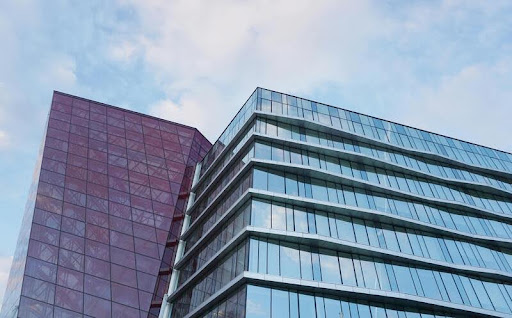
Modern architecture meets sustainability in today’s forward-thinking construction projects.
The U.S. construction sector is rapidly evolving in 2025, and if you’re not paying attention, you might overlook the next developments. Whether you’re a contractor, a property developer, an architect, or simply interested in the factors influencing your city’s skyline, this guide outlines the primary trends impacting the industry this year.
So, what’s fresh? What’s evolving? And how do these changes affect building processes across the nation?
Let’s dive in.
Why has sustainability become so crucial in construction now?
Sustainability has transitioned from being just a trendy term to a core principle of contemporary building practices in 2025.
With increasing demands from regulators, eco-aware clients, and communities, construction firms are enhancing their green initiatives. This year, a larger number of builders are opting for energy-efficient materials, low-emission machinery, and waste-reduction methods on job sites. Furthermore, it’s not solely about being environmentally friendly; it’s also about complying with stricter environmental regulations that are becoming standard in various U.S. states.
Green certifications such as LEED (Leadership in Energy and Environmental Design) are experiencing greater demand. Buildings that emphasize sustainability are enjoying improved long-term value, consider lower utility expenses, enhanced resale attractiveness, and better indoor air quality.
In summary: If your construction approach isn’t sustainable in 2025, you’re already lagging behind.
How is construction technology reshaping job sites in 2025?
In short: A significant amount. Technology is revolutionizing how construction projects are designed, executed, and overseen.
Here’s a brief overview of what’s trending this year:
Drones are surveying sites and inspecting structures more quickly and safely than conventional teams.
Augmented reality (AR) and virtual reality (VR) are enabling architects and clients to visualize projects before any physical work begins.
Wearable technology is monitoring worker safety and enhancing communication on job sites.
3D scanning and modeling tools are minimizing rework by identifying errors at early stages.
And we can’t ignore BIM (Building Information Modeling), which has become a crucial component of contemporary project planning. BIM facilitates real-time collaboration among teams, helps avoid expensive errors, and ensures everyone stays aligned from design to completion.
If you’re still relying on paper plans and walkie-talkies to manage your sites… it might be time for an upgrade.
Is modular construction still gaining ground?
Absolutely. In fact, modular and prefabricated construction is more popular than ever in 2025.
Why? Because it’s faster, cleaner, and often cheaper. More companies are embracing off-site construction techniques to build everything from homes and offices to hotels and schools. These components are assembled in controlled environments, then delivered and pieced together like giant Legos at the final site.
This method dramatically cuts down on weather delays, labor waste, and job site mess. It also allows for more consistent quality control since much of the work happens in factory-like settings.
And in a time when speed matters, modular is winning.
What’s going on with the construction labor shortage?
If you’ve worked in construction at any point in the past decade, you’ve likely felt the pinch.
In 2025, the labor shortage will still be one of the industry’s biggest challenges. Baby boomers are retiring, younger generations aren’t rushing into trades, and the demand for skilled workers just keeps rising. According to recent reports, the industry needs to hire hundreds of thousands of new workers to keep pace with demand.
To cope, companies are:
- Offering better wages and benefits
- Investing in training programs
- Using remote project management tools to do more with fewer people
- Turning to automation to fill gaps in repetitive or dangerous tasks
The result? A slow but steady shift toward a more tech-savvy, digitally fluent construction workforce.
How are material costs and supply chains affecting projects?
Let’s be real, material costs are still volatile in 2025.
Between inflation, geopolitical shifts, and transportation delays, supply chains have taken a hit in recent years. Builders are dealing with unpredictable price swings on everything from lumber and steel to concrete and insulation.
To adapt, many construction firms are:
- Sourcing materials locally to reduce dependency on global supply chains
- Building stronger relationships with multiple vendors
- Using digital supply chain tools to monitor prices and delivery schedules in real time
This shift isn’t just about saving money. It’s about staying flexible and avoiding costly delays.
What is smart infrastructure and why does it matter?
The push toward smart and resilient infrastructure is reshaping the way we think about public and private spaces.
In 2025, more construction projects will be focused on building climate-resilient structures that can withstand extreme weather, wildfires, and flooding.
This holds particular significance in coastal regions and areas prone to high risks, where the cost of insurance is climbing and climate threats are on the rise.
We’re observing infrastructure initiatives that incorporate technology, such as roads that monitor traffic patterns, bridges that identify stress points, and buildings that enhance energy efficiency through automation.
These initiatives not only enhance safety and effectiveness but also establish the foundation for more intelligent, interconnected communities.
What safety enhancements are emerging on construction sites?
Safety has consistently been a leading concern, but in 2025, it is receiving a technological upgrade.
Construction firms are utilizing:
Devices that monitor fatigue, exposure to hazardous materials, or unsafe practices.
Real-time alert systems that inform workers of nearby dangers.
Digital tools for reporting that track incidents and simplify compliance.
Additionally, AI-driven cameras and sensors are assisting supervisors in identifying potential safety risks before they escalate into serious concerns.
With more stringent federal and state regulations, compliance has become essential. Advanced safety tools are not merely a good practice; they are a requirement.
How are data and analytics enhancing construction planning?
If you want to minimize delays, optimize budgeting, and improve project outcomes, you need to adopt data and analytics.
In 2025, data is no longer just a luxury; it is fundamental to decision-making.
Construction teams are leveraging cloud-based systems to:
Monitor timelines, budgets, and resource allocation in real time.
Anticipate risks and delays ahead of time.
Create reports for clients and regulatory bodies.
This type of insight enables managers to make adjustments during a project rather than waiting for issues to escalate. Consider it your GPS for construction, steering your team toward more favorable results.
What are the expectations for construction companies from today’s clients?
Expectations have significantly increased on all fronts.
Clients in 2025 are searching for more than just physical buildings, they seek transparency, efficiency, and customization. They demand regular updates, quick turnaround times, and clear responses to their inquiries.
Many are choosing design-build models, where design and construction are managed in tandem. This reduces misunderstandings and accelerates the process.
Simultaneously, clients are increasingly concerned about the long-term functionality of their buildings. They desire spaces that are intelligent, adaptable, and energy-efficient, without incurring excessive costs.
Therefore, if your business model still resembles what it was five years ago, it may be time to reevaluate your approach to client experience.
Final Reflections: What Lies Ahead for Construction in the U.S.?
The fact is clear: the construction sector is undergoing a significant transformation.
The construction landscape for 2025 is rapidly changing, influenced by trends like sustainability, smart technology, labor transitions, and modular methods.
For professionals in the construction industry, being well-informed is not just advantageous; it’s essential.
Consider this: Are you aligning your projects with the expectations of the past or the realities of the future?
The positive aspect? If you’re open to adapting, learning, and embracing new developments, there’s much to anticipate in the future of construction.
Frequently Asked Questions About Trends in the U.S. Construction Industry for 2025
Q: What is the foremost trend in construction for 2025? A: The focus is on sustainability and the integration of technology. Builders are concentrating on practices that are energy-efficient and utilizing tools such as drones, augmented reality, and building information modeling.
Q: What is driving the rise of modular construction? A: It offers quicker timelines, is often more cost-effective, and minimizes waste. Modular construction is particularly suited for projects with tight deadlines and allows for enhanced quality control.
Q: How can the construction industry effectively address labor shortages? A: Numerous companies are prioritizing training, embracing tech-driven tools, and implementing automation to boost effectiveness.
Q: In what ways is construction becoming more environmentally friendly? A: By incorporating sustainable materials, minimizing waste, enhancing energy efficiency, and achieving green certification benchmarks.
Q: Are construction expenses continuing to rise in 2025? A: Yes. Fluctuations in material costs persist, prompting builders to focus on local sourcing and improved supply chain management strategies to maintain progress.
About the Author