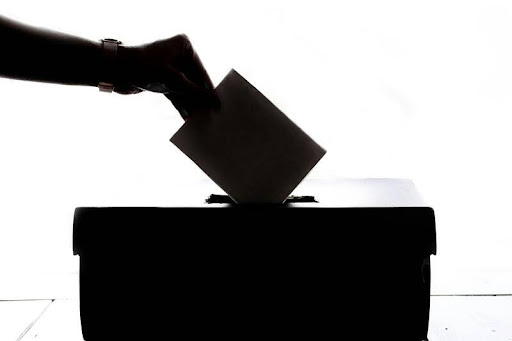
Casting a vote—the core of democracy in action.
You’ve probably heard that artificial intelligence (AI) is pervasive these days, from Netflix recommendations to the virtual assistant on your phone. However, have you ever considered how AI is influencing American politics and the decision-making process of voters? It’s significant. AI is subtly altering election security, voter behavior, and even campaign strategies. Let’s examine the situation, its significance, and its implications for democracy.
What Part Does AI Now Play in Political Campaigns?
AI can be thought of as a very intelligent campaign assistant. It gives candidates and parties a deeper understanding of voters than ever before. However, how precisely?
AI tools are used by campaigns to examine vast amounts of data, such as social media and voter records.
Campaigns can more precisely target their messages thanks to this data crunching. Voters receive interest-based emails and advertisements rather than a speech that is generic speech.
However, AI is more than just data. It can aid in content creation as well. Campaigns use AI-powered software to create speeches, videos, and social media posts that appeal to particular demographics. Which messages are most likely to attract attention and persuade are determined by algorithms.
You may be wondering if this is just smarter campaigning or if it’s going too far. Next, we’ll investigate that.
What Effect Does AI Have on Voter Behavior?
The problem is that voters don’t make choices in a vacuum. What they see in the news, on the internet, and in their social networks shapes their decisions. AI systems are an extremely important part of directing that flow of information.
Social media companies use artificial intelligence (AI) to determine what content should show up in your feed based on your clicks, shares, likes, and previous activity. This implies that AI can select and rank political content according to your beliefs, occasionally producing “echo chambers” in which you are only exposed to viewpoints that support your own.
By limiting exposure to opposing views, this personalization can both increase divisions and make politics seem more relevant. Additionally, because AI learns from user interaction, it frequently promotes content that evokes strong feelings like fear or outrage, which can further polarize voters.
To what extent, then, is AI influencing people’s political views? AI reflects the data it is fed, even though it is not biased in and of itself.
This implies that the design and training of algorithms are crucial.
Is AI Able to Combat Misinformation and Safeguard Elections?
Conversely, AI is also being employed to protect the integrity of elections. AI tools can quickly identify false information in vast amounts of online content, which is important given concerns about misinformation, fake news, and cyber threats. They can flag coordinated disinformation campaigns, dubious accounts, and deepfake videos.
By identifying odd voting trends or possible cyberattacks on voting systems, AI is also assisting in election security monitoring. This provides an additional line of protection against interference.
AI isn’t flawless, though. It occasionally has trouble telling the difference between harmful misinformation, opinion, and satire. AI-based defenses must also continue to advance since malicious actors are constantly coming up with new ways to take advantage of technology.
This poses a crucial query: Is it possible for AI to achieve the ideal balance between safeguarding free expression and elections? Society is still working through that problem.
What Privacy and Ethical Issues Are Raised by AI in Politics?
AI in politics is about people’s privacy and trust, not just technology. Millions of voters’ personal information is gathered by campaigns. A major concern is how that data is used, stored, and safeguarded.
Additionally, there is the matter of transparency. Because many AI tools work in the background, voters may find it difficult to understand why they are seeing particular advertisements or messages. People may become suspicious of manipulation due to this lack of clarity.
There are also ethical issues. AI systems may inadvertently discriminate against particular groups or spread false information if they pick up biases from the data they are trained on.
AI has the potential to unfairly influence elections if it is not properly regulated.
Ultimately, the key question is: How can we guarantee that AI is applied responsibly in politics without violating people’s privacy or threatening democracy?
How Might AI Affect U.S. Elections in the Future?
Rapid advancements in AI technology will only increase its influence in politics. Even more advanced AI may be used in future campaigns to interact with voters via chatbots, virtual reality, or predictive analytics that foresee political trends.
If AI makes politics more approachable and individualized by delivering the appropriate information at the appropriate moment, voter engagement may increase.
But the risks remain: manipulation, misinformation, privacy breaches, and deepening divisions.
That’s why there’s a growing call for regulation, ethical AI guidelines, and public awareness. We need systems that keep elections fair and open while respecting voter rights.
Why Should You Care About AI’s Role in Politics?
Because AI isn’t some distant tech, it’s shaping the news you see, the ads you get, and how you think about politics. Being aware helps you spot when things might be skewed or overly targeted.
Ask yourself: Are you seeing a balanced view of political issues, or is your feed mostly showing you one side? Questioning what you consume is the best defense against manipulation.
The more informed we all are, the better we can make democracy work for everyone.
FAQ: Common Questions About AI and U.S. Politics
Q: How does AI target voters in political campaigns? A: AI analyzes large datasets to identify voter preferences and delivers personalized messages to engage specific groups.
Q: Can AI spread misinformation during elections? A: AI can unintentionally promote misleading content if it prioritizes engagement over accuracy, but it’s also used to detect and reduce misinformation.
Q: Is my voting data safe with AI systems? A: Privacy concerns exist because political campaigns collect detailed data, so ensuring data protection and transparency is critical.
Q: Will AI replace human decision-making in politics? A: No, AI assists by providing insights and tools, but doesn’t replace human judgment or the democratic process.
Q: How can voters protect themselves from AI-driven manipulation? A: Stay informed, diversify your news sources, and critically evaluate the information you receive online.
If you’re curious about how AI is influencing your own political experience or want to learn how to spot AI-driven manipulation, feel free to ask! Staying aware is the first step toward being a savvy voter in today’s digital age.
About the Author