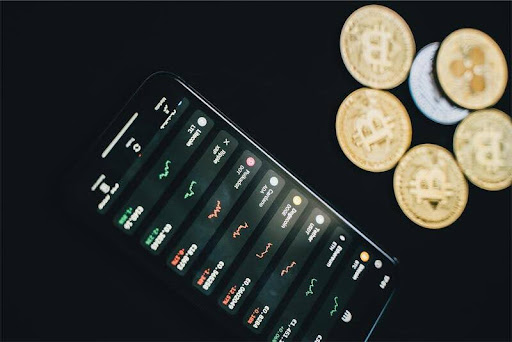
The ultimate control over your assets starts now. The future of crypto trading is non-custodial.
Hello there! If you’ve been anywhere near the world of digital assets, you know that trading is the engine that drives the whole ecosystem. But when you trade, who is really in control of your funds? That question is at the heart of the single biggest change happening in cryptocurrency today.
I. Introduction: The Paradigm Shift in Trading
What is the concept of cryptocurrency trading platforms?
The concept of cryptocurrency trading platforms is simple: they are digital marketplaces designed to facilitate the buying and selling of digital assets, like tokens, using another currency or asset. For years, the landscape was dominated by large, centrally managed institutions, acting much like traditional stockbrokers. However, the foundational idea of cryptocurrency, decentralization, is now coming home to roost in the very places where most trades happen.
What are the two primary types of crypto exchanges?
The two primary types are Centralized Exchanges (CEXs) and Decentralized Exchanges (DEXs). CEXs operate under a single governing body, while DEXs operate on the blockchain via automated code. The emergence of the latter has opened a massive philosophical and practical debate about ownership and trust.
Why do Decentralized Exchanges represent a revolutionary return to core principles?
DEXs represent a revolutionary return to core principles because they fundamentally change user ownership and eliminate the need for trust in a third-party financial institution. They put the user, not the institution, in ultimate control of the assets throughout the entire trading process. This is the core thesis: decentralization is finally taking over the exchange model itself.
II. Centralized Exchanges (CEXs): The Traditional Model
What is the core function of Centralized Exchanges (CEXs)?
The core function of a CEX is to act as a trusted intermediary, connecting buyers and sellers and settling their transactions through a private, off-chain system. Think of them as the digital banks of the crypto world. They maintain the order book, manage the matching engine, and guarantee that when you hit the “Buy” button, the asset appears in your account.
Why is the custodial nature of CEXs a crucial point?
The custodial nature of CEXs means they hold your funds on your behalf, requiring you to trust them completely. When you deposit funds into a CEX, you are transferring custody of your private keys to the exchange.
You become the guardian, placing your trust in their security protocols, financial stability, and ethical standards regarding your complete portfolio.
What are the primary benefits of utilizing a Centralized Exchange?
CEXs are typically praised for their ease of use and substantial liquidity. For those who are just starting, their familiar design, supportive customer service, and seamless connection to traditional currency deposits make them the simplest way to enter the world of digital assets. Their large trading volumes also facilitate deep liquidity, allowing you to carry out significant trades swiftly with minimal effect on pricing.
What are the dangers linked to centralized custody and identity verification?
The main risks can be categorized into two areas: security and privacy. Because CEXs manage large sums of user funds in centralized wallets, they become a highly attractive target for cybercriminals, creating a serious security risk known as a “single point of failure.” Additionally, the majority of CEXs must comply with Know Your Customer (KYC) and Anti-Money Laundering (AML) regulations, which require users to provide personal details and government-issued ID. For individuals who prioritize financial privacy, this obligatory disclosure of personal information to a centralized organization is a considerable disadvantage. This brings us to the decentralized option.
III. Decentralized Exchanges (DEXs): A Trustless Solution
What is a Decentralized Exchange (DEX) in basic terms?
A DEX is a trading platform where transactions occur directly between users through code, specifically, self-executing contracts known as smart contracts, without a central organization overseeing the activity. Instead of having a company act as the intermediary, the terms of the trade are encoded directly into immutable code on a public blockchain ledger.
What does the “Non-Custodial Principle” entail, and why is it the greatest advantage of a DEX?
The non-custodial principle is the key characteristic of a DEX: the user retains complete control over their private keys and assets throughout the entire transaction. You do not transfer funds to the exchange itself. Rather, you link your personal, external digital wallet (your self-custody wallet) directly to the DEX protocol.
When you make a trade, the smart contract interacts with your wallet to swap the assets, meaning your assets are only ever in your possession or actively moving on the blockchain, never sitting idle on the exchange’s server. This completely removes the “counterparty risk” associated with centralized platforms.
How do DEXs work? What is an Automated Market Maker (AMM)?
Instead of relying on a traditional order book, the vast majority of modern DEXs rely on a system called the Automated Market Maker (AMM). An AMM is a type of smart contract that holds a “liquidity pool” of two different tokens.
The AMM uses an algorithmic pricing formula, such as the well-known x multiplied by y must equal k formula (where x and y are the quantities of the two tokens in the pool, and k is a constant). When a trader swaps Token A for Token B, they reduce the amount of Token B in the pool and increase the amount of Token A. This shift in the ratio immediately and automatically changes the price of both tokens according to the constant formula. The AMM, therefore, serves as an automated, always-available counterparty, meaning you trade against the pool of assets, not another specific person. This ingenious mechanism solves the liquidity problem that plagued early, order-book-based decentralized exchanges.
What is the role of Liquidity Providers (LPs) in DEXs?
Liquidity Providers (LPs) are everyday users who supply the necessary digital assets to the liquidity pools to enable trading, and in return, they earn a portion of the trading fees. Since the AMM mechanism relies entirely on these pools to function, LPs are the backbone of the decentralized system. They “lock up” equal value amounts of two different tokens into a specific pool (for instance, a 50/50 split of Asset X and Asset Y). This process incentivizes users to become market makers themselves, spreading the responsibility and benefits of market facilitation across the network.
IV. DEX vs. CEX: A Comparative Analysis
When deciding between a DEX and a CEX, traders must weigh control and privacy against convenience and institutional depth. It’s a choice between two fundamentally different financial philosophies.
What is the difference between non-custodial and custodial in terms of custody and security?
The key difference is where your assets reside. CEXs require custodial storage; they take physical control of your assets, making them responsible for security, but exposing you to the risk of platform failure or hacking. DEXs enforce non-custodial trading; your funds never leave your personal wallet, which drastically reduces counterparty risk but places the entire responsibility of protecting your private keys squarely on you.
Why do traders choose non-custodial exchanges? Because in the world of decentralized assets, control of the private keys is synonymous with true ownership.
How do access and privacy differ between CEXs and DEXs?
CEXs are typically permissioned and require full identity verification (KYC/AML), while DEXs are permissionless and generally offer superior privacy. Because DEXs operate on smart contracts, anyone can connect their wallet and trade without creating an account, providing a level of financial anonymity that aligns with the founding spirit of cryptocurrency. CEXs, in contrast, must comply with traditional financial regulations, requiring verification that links your trading activity to your real-world identity.
What is the cost difference between Exchange trading fees and Network gas fees?
CEXs typically charge clearly defined trading fees (percentage of the trade value), while DEX costs are primarily driven by variable blockchain transaction fees (gas fees). On a CEX, your fees are a percentage that goes to the company. On a DEX, you still pay a small fee to the liquidity providers, but you also pay the underlying blockchain’s gas fee to execute the smart contract. How do network gas fees impact DEX trading? When the underlying network is congested (processing many transactions), gas fees can spike, making small or frequent DEX trades prohibitively expensive, even if the actual exchange fee is low.
What is the difference in Asset Availability between the two platforms?
DEXs offer access to a vastly wider array of tokens, including early, nascent, and niche projects, while CEXs limit listings to vetted assets. Since DEXs are permissionless, any developer can create a liquidity pool and list their token. This provides traders with the earliest access to new projects. CEXs, being regulated entities, must undergo lengthy vetting processes before listing an asset, meaning their offerings are safer but much more limited. This access to the “long tail” of crypto assets is one of the strongest reasons why experienced traders use DEXs.
V. Challenges and Future Outlook of DEXs
Despite their philosophical appeal and technological superiority in terms of ownership, DEXs still face practical hurdles that are currently being addressed by the broader development community.
What makes the user experience on a DEX challenging for beginners?
The primary challenge is the technical requirement of managing self-custody wallets, understanding gas fees, and navigating complex interfaces. While CEXs offer intuitive, all-in-one platforms with customer support, using a DEX means a user must take full responsibility. If you make a mistake, sending funds to the wrong address or mismanaging your private keys, there is no customer support desk to call; the assets are simply lost forever.
This steeper learning curve can be a significant barrier to entry for the average person.
How does liquidity and slippage affect trading on Decentralized Exchanges?
Compared to the massive, aggregated order books of CEXs, liquidity on DEXs is often lower, which can lead to price slippage on large trades. Slippage is the difference between the price you expect to pay and the price you actually execute the trade at. If you attempt to swap a very large quantity of a token, you can significantly alter the balance of the liquidity pool, causing the price to move against you immediately. While AMM models have improved this dramatically, it remains a factor, especially for smaller, less popular asset pairs.
What are the main limitations regarding the speed and scalability of DEXs?
DEX transaction speed and scalability are fundamentally tied to the performance of the underlying blockchain network, often resulting in slower transaction times and high fees during peak congestion. Unlike CEXs, which match and settle trades instantly off-chain, DEX trades must be processed and confirmed on-chain. Why is blockchain speed a concern for DEXs? If the blockchain is busy, your trade might be stuck in the queue, or you might have to pay higher priority fees (gas) to ensure it executes quickly, which slows down the high-frequency trading typical of centralized platforms.
What are the continuous development efforts designed to solve these issues?
The industry is actively developing Layer-2 scaling solutions, sidechains, and aggregator services to address the current limitations of DEXs. Layer-2 networks process transactions much faster and cheaper off the main blockchain, then periodically bundle them for confirmation, solving the speed and gas fee problems. Furthermore, DEX aggregators are emerging as a vital tool. These services scan dozens of different DEXs simultaneously to find the best possible price and liquidity for the user, mitigating slippage and complexity in one go. These innovations suggest a future where the philosophical benefits of decentralization are matched by practical convenience.
VI. Conclusion: The Future is Non-Custodial
Decentralized Exchanges are more than just a passing trend; they are a critical evolution of the digital asset ecosystem. They take the foundational promise of cryptocurrency, financial self-sovereignty apply it directly to the core activity of trading. This shift means that you no longer have to trust a company to hold your assets and manage your trades; instead, you trust the code.
By combining the security of non-custody with the rising efficiency of AMMs and Layer-2 scaling, DEXs are systematically dismantling the legacy advantages of centralized exchanges. The power is shifting decisively from platforms to the individual trader.
The issue is no longer about whether decentralized exchanges will shape the future of trading, but rather how quickly you are prepared to adapt to this transformation.
VII. Common Questions (FAQ)
What is the most effective method to identify if a cryptocurrency exchange is centralized or decentralized?
The most effective way to assess this is by examining the exchange’s custody model. If the exchange necessitates that you deposit assets into a wallet managed by the platform and you do not possess the private keys, it is considered centralized (custodial). Conversely, if you link your external, self-custodial wallet and your assets remain there, it is classified as decentralized (non-custodial).
What is the primary risk associated with utilizing a DEX?
The primary risk linked to using a DEX is the possibility of user error and mistakes in self-custody. Since the DEX does not manage your assets and cannot recover them, losing your private keys or sending funds to an incorrect address results in permanent loss of the assets.
What does “slippage” signify in DEX trading?
Slippage denotes the discrepancy between the anticipated price of a trade and the actual price at which the trade is executed, often happening in large transactions due to insufficient liquidity in the pools. High slippage indicates that you received fewer tokens than expected.
Is KYC necessary for Decentralized Exchanges?
Typically, KYC (Know Your Customer) processes are not necessary for Decentralized Exchanges, as they function as permissionless protocols that do not engage with conventional banking or regulatory frameworks. This is one reason why many users prefer DEXs for greater privacy.
About the Author




