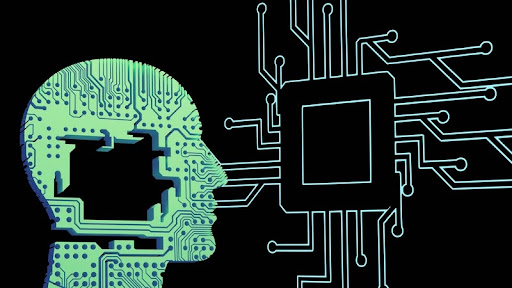
A closer look at the face of modern AI—designed by humans, trained by data
Artificial intelligence. It’s a phrase that’s everywhere, on the news, in your phone settings, even in conversations about job security or self-driving cars. But what is artificial intelligence? And why does it seem to be changing everything?
If you’ve ever wondered what AI does, how it works, or whether it’s something you should care about, you’re not alone. In this beginner’s guide, we’ll break it all down in simple terms, no tech degree required.
Let’s dive in.
What Is Artificial Intelligence, in Simple Terms?
Artificial intelligence (AI) refers to machines or software that can perform tasks typically associated with human thinking, such as learning, reasoning, problem-solving, or understanding language.
In short, it’s the science of making computers “smart.” But not smart like a person, more like trained to perform specific tasks using data and algorithms.
And here’s the thing: AI isn’t one single technology. It’s a comprehensive collection of approaches that enables machines to mimic human behavior in various ways.
How Is AI Different From Machine Learning and Deep Learning?
People often mix up these terms, and it’s easy to see why.
- AI is the big-picture concept: teaching machines to think or act like humans.
- Machine learning (ML) is a subset of AI. It allows systems to “learn” from data and improve without being explicitly programmed.
- Deep learning is an even smaller subset of ML. It uses neural networks to handle more complex tasks, like voice recognition or image classification.
Think of it like this:
Artificial intelligence is the umbrella. Machine learning is a branch under that umbrella. Deep learning is a branch of machine learning.
How Does Artificial Intelligence Work?
So how do machines “learn” or “think”? It starts with data, a lot of it.
AI systems are trained on massive amounts of information. They use algorithms (basically step-by-step rules) to analyze data, find patterns, and make predictions or decisions based on what they’ve learned.
Here’s a simplified breakdown of how AI works:
- Input data (like images, speech, or numbers) is collected.
- The system analyzes the data using preset rules or models.
- It makes a prediction or decision (for example, recognizing a face or suggesting a product).
- Over time, it learns from results and gets better with more data.
No magic involved, just math and code. But when done right, it can feel pretty magical.
What Are the Main Types of AI?
Not all AI is created equal. There are three broad types you’ll hear about:
1. Narrow AI (Weak AI)
This is the kind we use today. It’s designed to do one specific task, like voice assistants, spam filters, or language translation. It’s smart in its lane but can’t think outside the box.
2. General AI (Strong AI)
This is still theoretical. It would have human-like intelligence and be able to handle a wide range of tasks, just like you or me. We’re not there yet.
3. Superintelligent AI
This goes even further, machines that surpass human intelligence in every field. This concept raises big ethical questions and is the focus of many sci-fi plots and academic debates.
Right now, we’re living in the age of narrow AI, which, to be fair, is still pretty impressive.
What Can AI Do? (Common Functions Explained)
AI isn’t just about robots or futuristic tech. It’s already embedded in everyday digital tools and processes. Here’s how it functions in different ways:
Learning
AI can learn from data. This includes detecting trends, making predictions, or adapting based on what it has seen before.
Reasoning and Problem-Solving
Some systems can evaluate different options and figure out the best solution to a problem, like recommending the fastest route on a map.
Perception
This is AI’s ability to “sense” the world using data from cameras, microphones, or sensors, then interpret what it sees or hears.
Natural Language Processing (NLP)
AI can understand, interpret, and even respond to human language. That includes chatbots, translation tools, and voice assistants.
Motion and Manipulation
Used in fields like robotics, this is AI that controls physical movements, like assembling products or navigating through a space.
What Are the Technologies Behind AI?
AI might feel abstract, but it’s built on real-world technologies that have been in development for decades. Some key ones include:
- Algorithms: The step-by-step instructions that drive AI decisions.
- Neural Networks: Inspired by the human brain, these systems recognize patterns and help with complex tasks like facial recognition.
- Natural Language Processing (NLP): Powers everything from spam detection to smart voice assistants.
Computer Vision: Enables machines to “see” and make sense of visual information.
Robotics: Merges AI with mechanical engineering to perform tasks physically.
These technologies together provide AI systems with the necessary “intelligence” to function.
Where Is AI Present in Everyday Life?
Even if you’re unaware, AI surrounds you. It’s integrated into the devices, platforms, and services that many of us utilize daily.
It assists in personalizing your news feed, recommending films for your next watch, filtering out potential phishing emails, and even helping to identify fraud when you use your credit card.
AI isn’t confined to personal technology; it’s utilized in various sectors, including education, healthcare, finance, agriculture, and logistics.
What Are the Advantages and Challenges of Artificial Intelligence?
Like any influential technology, AI has its strengths and weaknesses. Let’s explore them.
Advantages of AI:
Efficiency: Automates monotonous tasks and enhances productivity.
Accuracy: Frequently more correct than humans, particularly in data-centric tasks.
Constant Availability: Machines do not require sleep, breaks, or holidays.
Data-Driven Decisions: AI can quickly process large data sets to facilitate informed decision-making.
Challenges and Concerns:
Bias in Data: If the data contains biases, so will AI, and this can lead to significant consequences.
Privacy Concerns: AI often depends on personal information, sparking worries about surveillance or abuse.
Job Displacement: Automation may eliminate certain positions, particularly in repetitive roles.
Lack of Regulation: As AI progresses quickly than legislation, ethical issues frequently remain unaddressed.
In summary, AI holds immense potential, but it must be managed responsibly.
What Does the Future Hold for AI?
AI is not going to slow down. It is advancing rapidly.
We are already witnessing:
More intelligent virtual assistants
Tailored learning and healthcare solutions
Self-driving systems in transportation and manufacturing
Furthermore, research is delving into even more advanced fields, such as emotional AI, tools for creativity, and general intelligence.
In the United States, businesses and academic institutions are pouring billions into AI research and development. According to the White House’s 2024 AI budget proposal, federal investments in AI-related research saw a rise of over 20% compared to the previous year, indicating a pronounced national emphasis.
What’s the conclusion? AI is influencing how we live, work, and communicate, and remaining knowledgeable is one of the best ways to stay abreast.
Final Thoughts
Is AI Something You Should Familiarize Yourself With?
The brief answer is: Yes.
You don’t have to become a data scientist, but grasping the basics of AI can assist you in:
Utilize everyday technology more effectively.
Safeguard your information and privacy.
Maintain a competitive edge in the job market.
Reflect critically on the tools that shape your life.
We are all engaging with AI, often without realizing it. The more you comprehend it, the better equipped you’ll be to use it effectively.
Frequently Asked Questions About Artificial Intelligence
(Organized for SEO and Schema Markup)
What is artificial intelligence in basic terms?
AI refers to machines or software that can execute tasks typically requiring human cognition, such as learning, problem-solving, or language comprehension.
What distinguishes AI from machine learning?
AI is the overarching concept of machines performing intelligent tasks, whereas machine learning is a subset of AI where systems improve by learning from data over time.
How is AI integrated into our daily lives?
AI enhances voice assistants, recommendation systems, spam detection, fraud prevention, and numerous behind-the-scenes functions in applications and services.
Is AI a threat?
AI itself is not inherently threatening, but without proper management, it can result in challenges like bias, privacy infringements, or job displacement.
Will AI replace human jobs?
AI might automate specific tasks, but it also generates new opportunities. The crucial factor is adapting to these changes and cultivating human-centric skills. Have questions or opinions about AI? Share them in the comments below. We’d love to hear your perspective.
About the Author