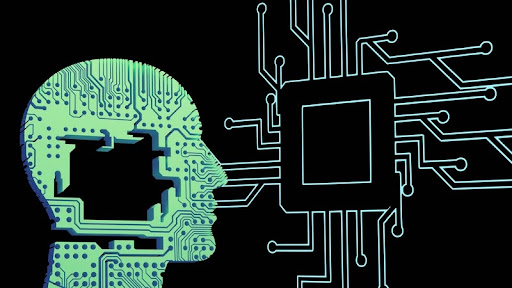
Behind the screen: where your personal data lives, moves, and now—thanks to new laws—can be better controlled
At its core, quantum computing is a whole new way of processing information. Traditional computers, like the one you’re probably reading this on, use bits. Each bit is either a 0 or a 1. It’s like flipping a switch on or off. Everything from your Instagram feed to your online bank transactions is powered by countless sequences of these bits.
Quantum computers? They use qubits. And qubits are weird, in a good way. Thanks to quantum mechanics (the strange rules that govern particles at the tiniest level), qubits can be both 0 and 1 at the same time. This is called superposition. And they can be linked together in a way that one qubit instantly affects another. That’s entanglement.
Because of this, quantum computers can process many possibilities at once, not just one thing at a time like traditional computers. It’s like comparing a flashlight (one beam of light) to the sun (lighting everything at once). Quantum’s potential? It’s massive.
Why does quantum computing matter in the real world?
So, what’s the big deal? Why should the average person care?
Here’s the thing: quantum computing isn’t just a cool science project. It’s expected to revolutionize industries that affect everyday life. Think:
- Healthcare: Faster drug discovery. Imagine curing diseases in months instead of decades.
- Finance: Smarter investment modeling, fraud detection, and market predictions.
- Cybersecurity: Breaking old encryption and building unbreakable new ones.
- Logistics: Optimizing delivery routes in seconds for companies like Amazon or UPS.
In 2023, McKinsey & Company predicted that quantum computing could create up to .3 trillion in value by 2035 across major sectors. That’s not just hype, companies like IBM, Google, and Intel are pouring billions into this space.
How does quantum computing work in simple terms?
Let’s simplify.
- Superposition: Imagine spinning a coin. It’s not heads or tails, it’s both until it lands. Qubits can hold multiple states at once.
- Entanglement: Two qubits can be connected even if they’re miles apart. Change one, and the other reacts instantly.
- Quantum interference: This helps cancel out wrong answers and highlight the right ones during calculations.
Put these together and you get a system that can handle problems way too complex for classical computers, like simulating molecules or crunching giant datasets in seconds.
What problems can quantum computing solve that regular computers can’t?
This is where things get exciting.
- Drug discovery: Traditional computers struggle to model complex molecules. Quantum computers could simulate them accurately, leading to faster and cheaper drug development.
- Climate modeling: Predicting climate change is hard because the atmosphere is super complex. Quantum systems could improve long-term forecasts and energy simulations.
- Cryptography: Many current encryption methods (like RSA) would be toast once quantum computing scales. But quantum computing could also help create next-gen secure communication systems.
- Supply chain optimization: Big retailers and delivery companies deal with endless variables. Quantum could optimize routes and inventory on the fly.
If it involves a lot of variables, probabilities, or complicated math, quantum can help.
Is quantum computing being used today?
Yes, but we’re still early in the game.
Right now, most quantum computers are still experimental. They’re not replacing laptops or running your favorite apps. But companies and researchers are testing them on real-world problems through cloud-based quantum platforms. IBM’s Quantum System One and Google’s Sycamore chip are two examples already pushing boundaries.
Some current uses:
- JP Morgan Chase is using quantum algorithms to price financial options.
- BASF, the chemical company, is testing quantum systems to optimize chemical reactions.
- Volkswagen is exploring quantum for traffic flow optimization.
So while you can’t buy a quantum laptop at Best Buy (yet), the groundwork is being laid behind the scenes.
How close are we to everyday use of quantum computers?
Real talk: We’re not quite there yet, but we’re getting closer every year.
There are still a few big hurdles:
- Error rates: Qubits are sensitive and can “flip” unexpectedly. That’s a huge problem in precision computing.
- Scaling: We need thousands, or millions, of stable qubits to tackle most problems. Today’s systems have 50–1,000 qubits tops.
- Temperature control: Quantum computers often run near absolute zero (colder than outer space) to stay stable. That’s not exactly home-office friendly.
But progress is rapid. In 2024, IBM launched a 1,000+ qubit chip, and they’re planning to hit 10,000+ by 2026.
That could be a tipping point. Once we have stable, error-corrected qubits at scale, quantum computing could truly break into mainstream applications.
What are the risks of quantum computing?
Great power, as they say, comes with some major questions.
One of the biggest concerns? Breaking encryption. Many security systems today rely on the fact that classical computers can’t solve certain math problems quickly. Quantum computers could crack those codes in a fraction of the time. The U.S. government is already working on post-quantum cryptography to stay ahead of the curve.
Another risk is inequality. Quantum tech is expensive. If only a few countries or mega-corporations control it, that could widen global digital gaps. There’s also the issue of data privacy and potential misuse in surveillance or AI systems.
That said, the tech world is also investing heavily in ethical frameworks and public-private partnerships to guide quantum development in the right direction.
Do I need to learn quantum computing?
Not unless you want to build one. But understanding it? That’s a smart move.
As this tech grows, there will be more opportunities, not just for scientists, but for everyday people in marketing, management, policy, and education. Quantum literacy could soon be as valuable as basic coding knowledge was in the early 2000s.
There are also tons of free tools and beginner platforms popping up:
- IBM Quantum Composer – a drag-and-drop quantum simulator
- Qiskit – open-source tools for Python developers
- Quantum Country – an interactive textbook with memory tools
So even if you’re just quantum-curious, now’s a great time to dip your toes in.
Will quantum computers replace classical computers?
Not really. Quantum computers are not better at everything, they’re just better at certain things.
Your phone, your laptop, and even your smart fridge? They’re here to stay. Classical computers are great at everyday tasks like word processing, streaming video, or gaming.
Quantum computers will likely work alongside classical systems, tackling the massive calculations while traditional computers handle the user-friendly stuff. Think of them as powerful sidekicks, not replacements.
Quick FAQ: Quantum Computing Explained Simply
What is quantum computing in layman’s terms?
It’s a new kind of computing that uses quantum physics to solve complex problems faster than traditional computers.
Can quantum computers break passwords?
Eventually, yes. They could crack current encryption methods.
That’s why new “quantum-safe” encryption is being developed.
Is quantum computing real or just theoretical?
It’s very real; companies like IBM and Google already have working models, but it’s still in the early stages.
Will I ever own a quantum computer?
Probably not. But you might use apps or services powered by one shortly, kind of like how you use AI without needing your supercomputer.
How long before quantum computers go mainstream?
Experts estimate 5–10 years before we see mainstream, large-scale use. But some niche applications are already happening today.
Wrapping it up: Why quantum computing matters now
Quantum computing isn’t just another tech buzzword. It’s a game-changer, a powerful tool that could transform industries, shake up how we handle data, and maybe even solve problems we thought were impossible.
But here’s the thing: you don’t have to be a scientist to be part of the quantum conversation. Start with curiosity.
About the Author