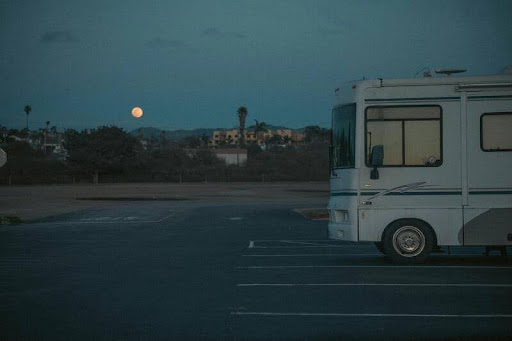
Settling in for the night—this is what free, legal RV parking can look like after hours.
How to save money, stay safe, and keep your RV journey stress-free
Let’s be real, RV life can be freeing, exciting, and budget-friendly. But one of the trickiest parts of the journey? Figuring out where to park overnight without spending a fortune or getting a knock on the window at 2 a.m. from someone telling you to move along.
So, where can you park your RV overnight for free without breaking any laws or stepping on toes?
Good news, you’ve got options. And even better, most of them are easier to find than you might think once you know what to look for.
This guide breaks it all down in simple, no-fluff terms. Whether you’re a full-time RVer, weekend warrior, or just testing the waters, let’s talk about where you can park your rig overnight, for free, and legally.
What does “free overnight RV parking” really mean?
Free overnight RV parking typically means you’re allowed to stay somewhere with your RV for a short period (usually just one night) without paying a fee or reserving a site. But there’s a catch: it’s not the same as camping.
Think of it more like stopping for the night to rest before hitting the road again. You’re not setting up camp with awnings, lawn chairs, or a grill. You’re parking, sleeping, and moving on.
And yes, there is a legal side to all this. Not every empty lot is fair game, and parking laws vary widely between cities, counties, and even individual businesses.
Where can you legally park your RV overnight for free?
Let’s break down the most common legal options for free RV parking. These spots are generally low-hassle, as long as you follow the rules and use common sense.
1. Can you park overnight at stores or large parking lots?
Sometimes, if they allow it. Some big retail chains or large parking areas may permit overnight RV parking, but permission is key. While some lots have historically welcomed RVers, local ordinances and property management rules often override any unspoken “tradition.”
Look for signs posted near entrances. If you’re unsure, walk in and ask a manager. A quick conversation could save you a fine, or worse, a tow.
2. Is overnight parking allowed at rest stops?
In many states, yes, but it depends. Several U.S. states allow you to park your RV at rest areas overnight, but each has its own rules. Some have strict time limits (like 8 hours max), while others ban overnight stays altogether. And even where it’s allowed, you’re expected to stay in your RV, not set up a full campsite.
The Federal Highway Administration leaves the decision to the states, so check that state’s Department of Transportation website if you’re unsure.
3. What about truck stops and travel plazas?
Often yes, but respect the space. Truck stops can be great overnight options for RVers. They’re designed for large vehicles, usually open 24/7, and often have food, restrooms, and security. Just don’t take up spots meant for long-haul truckers unless it’s clearly allowed.
Stick to marked RV areas if available. And maybe grab a snack or fill up your tank, showing a little support can go a long way.
4. Can you park on public land for free?
Yes, in some areas, and usually with limits. Certain types of public lands, like areas managed by the Bureau of Land Management (BLM) or National Forests, may allow dispersed camping, which is essentially free camping without hookups or designated spots.
However, you’ll need to make sure:
- It’s not a restricted or protected area
- You follow local stay limits (typically 14 days)
- You pack out everything you pack in
These spots offer peace and seclusion but zero amenities, so you’ll need to be fully self-contained.
5. Can you park overnight in a church or school parking lot?
Only with explicit permission. Some community buildings might be open to hosting travelers for a night, but this always requires a polite request and a “yes” from someone in charge. It’s not an open invitation, and assuming it’s okay can get you in trouble fast.
6. What about staying in a friend’s or family member’s driveway?
Yes, with permission and local compliance. If someone you know has space, parking in a private driveway can be a comfy, legal option. Just be aware of local zoning laws and HOA rules, especially in suburban neighborhoods where overnight street or driveway parking might be restricted.
How can you tell if overnight RV parking is legal?
Don’t assume, it varies by location. Here’s how to know you’re in the clear:
- Check for signs. “No Overnight Parking” means exactly that. Even if others are parked there, don’t risk it.
- Look up local ordinances. Some towns ban RV parking altogether in certain areas.
- Ask permission. If it’s private property, even a parking lot, it’s better to ask than wake up to flashing lights.
And remember, what works in one city might be a big no-no 20 miles down the road.
What are the best practices for free overnight RV parking?
Want to avoid hassle and keep the free spots available for others?
Follow these golden rules:
- Arrive late, leave early. You’re resting, not setting up camp.
- Stay self-contained. That means no dumping, no generators roaring all night, and no trash left behind.
- Don’t extend slides or set up camp gear. Keep a low profile; this isn’t the time to roll out your outdoor rug and fire pit.
- Leave no trace. Be respectful and clean up everything before you go.
How do you stay safe while parking overnight?
Safety’s a big deal when you’re sleeping somewhere unfamiliar. Here’s how to play it smart:
- Stick to well-lit areas. Darkness may offer privacy, but it also brings more risk.
- Trust your gut. If a place feels sketchy, it probably is.
- Park with an exit strategy. Don’t back yourself into a corner; always leave a clear way out.
- Lock up. Seems obvious, but double-check that everything’s secure before bed.
And one more tip: Stay alert, not paranoid. Most overnight spots are perfectly fine, but it’s better to be cautious than careless.
Are there tools to help you find legal, free RV parking?
Absolutely, and they make life a lot easier.
There are apps and websites designed specifically to help RVers find free, legal places to park, complete with user reviews and safety ratings. Many let you filter for location type, amenities, and rules. Even better, they’re often updated in real-time by fellow travelers.
Planning ahead, even just a few hours in advance, can save you time and frustration later.
Final Thoughts: Keep it legal, respectful, and low-stress
There are plenty of places where you can park your RV overnight for free, legally. The key is knowing the rules, being respectful, and using a bit of common sense. Just because a spot seems empty doesn’t mean it’s legal. And just because someone else is parked there doesn’t mean you won’t get ticketed.
When in doubt? Ask, check signage, and be courteous.
This way, you’re not only keeping your trip on track, you’re helping ensure those free overnight options stay available for everyone else down the road, too.
Frequently Asked Questions (FAQ)
Can I sleep in my RV at a rest stop? Yes, in many states, but rules vary. Some allow overnight stays while others only permit short rest periods (2–8 hours). Always check local signage.
Is it legal to park an RV on the street overnight? It depends on the city. Some areas allow it, but many have bans or time limits. Always check local parking ordinances before doing so.
How do I find places to park my RV for free?
Use apps and websites designed for RVers to locate free, legal overnight spots. These tools often include user reviews and updated rules.
What’s the difference between parking and camping in an RV? Parking is a temporary stop to rest, without setting up outdoor gear. Camping involves extended stays and setting up camp-like amenities.
Do I need permission to park overnight at a store or business? Yes. Even if others are parked there, always ask a manager or check posted signs to avoid fines or towing.
About the Author